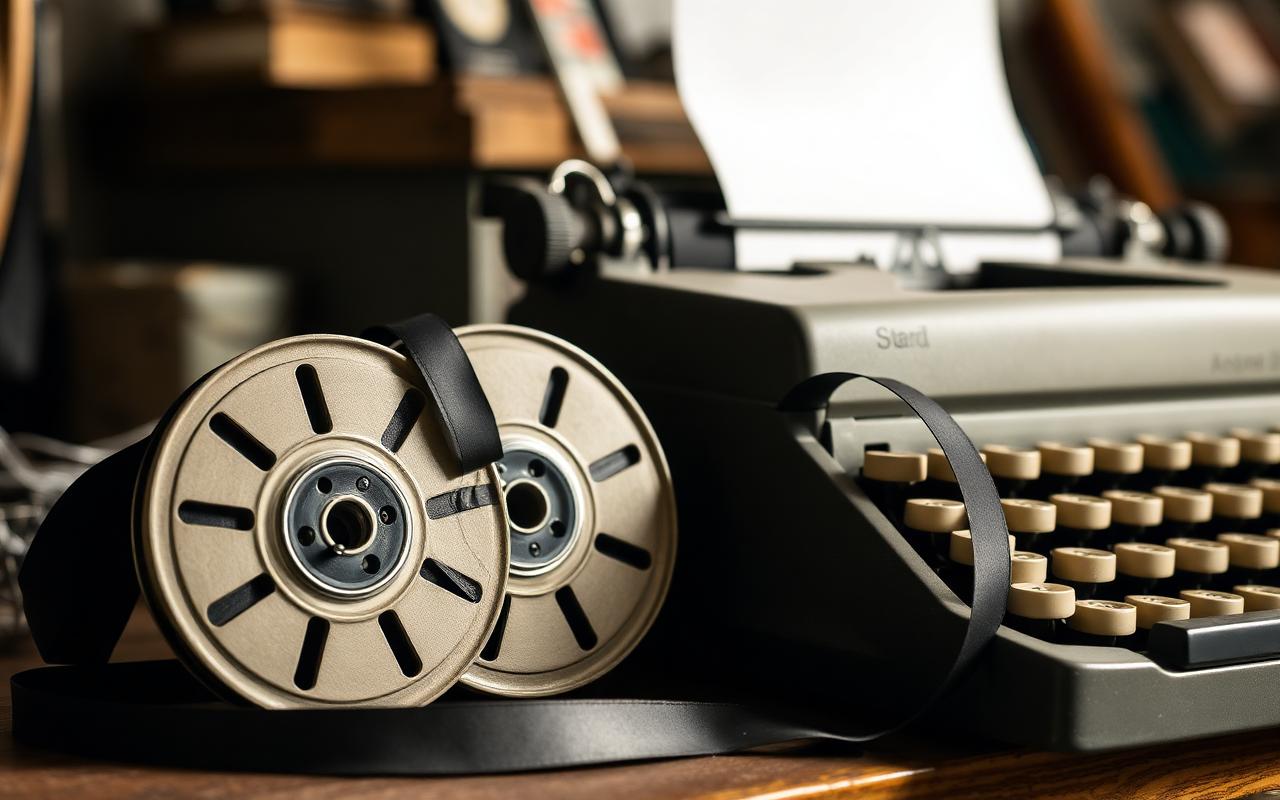
Unsticking Frozen Typebars Without Bending Anything
The typebars are almost always fine. It is the dried grease in the segment slots that has become concrete. Here is the calm way to dissolve it without turning a straight bar into a bent one.

A stuck typebar has a personality. It comes back to rest too slowly, or it comes back most of the way and hangs at the edge of the segment, or it refuses to move at all until three of its neighbours have been pressed. Each pattern points at the same underlying condition — dried lubricant in the segment slot — and none of it is best solved by force.
Diagnose before you touch
Sit at the bench with the machine facing you and the ribbon removed. Press the keys of the alphabet in order, one at a time, waiting a full second between each. Note which bars fall cleanly, which fall slowly, and which do not return at all. A pattern will emerge. Slow returns clustered on one side of the segment usually mean the machine has been stored tilted and gravity has pooled old oil to that side. Slow returns spread evenly indicate a general segment cleaning is due. A single dead bar in an otherwise clean segment usually means a broken return spring, not a stuck slot.
Sight down the top of the segment from behind. Every typebar should sit in a shallow arc; the pivot end should be at the same height for all of them, and the resting tips should form a smooth curve. A bar that sits higher or lower than its neighbours is bent at the shoulder. A bar that leans left or right is bent at the tip. A bar that looks straight but drags is a lubrication problem, not a mechanical one.
Before using a solvent
Mineral spirits sold as Stoddard solvent are combustible. NIOSH lists inhalation, skin contact, and eye contact as exposure routes, so an “odorless” label is not a safety guarantee. Work with effective ventilation, remove flames and other ignition sources, and use the protective equipment required by the exact product label and safety data sheet. Product formulations vary; confirm that the chosen cleaner is compatible with the machine's paint, decals, rubber, and plastics, and test an inconspicuous spot first. If the product guidance or material compatibility is unclear, stop and use a safer, documented method or consult a restorer.
The floss method
For one or two isolated slots, no solvent bath is necessary. Cut a strip of ordinary printer paper about a centimetre wide and long enough to reach through the slot with room to hold at both ends. Fold it once for stiffness. Wet the fold with a drop of mineral spirits — not saturated — and thread it through the slot from front to back, on either side of the typebar wire. Draw it back and forth ten or twelve times. The paper will come out grey with dissolved varnish. Change the paper and repeat with a fresh solvent drop until the paper comes out clean. Actuate the bar. In most cases, this alone fixes the fault.
The brush method
For a segment where most bars drag, work systematically across the segment with a small artist's brush loaded with mineral spirits. Two brush loads per slot, actuate the bar four times, move on. Do not soak. Do not spray. Do not walk away. When you have covered the whole segment, blot beneath it with a folded paper towel, then let the machine sit open for ten minutes so the solvent flashes off. Repeat once more if any bars still drag.
The solvent choice matters. Some mineral-spirit products can cut oxidised oil on metal mechanisms, but no solvent name guarantees compatibility with every finish, decal, rubber, or plastic. Follow the product-specific cautions above. Acetone can damage nearby finishes. Water-displacing sprays such as WD-40 can leave a film that captures dust and may cause renewed sticking; do not substitute a spray for a controlled cleaning method.
When a bar is actually bent
You have looked down the segment, spotted the outlier, and confirmed that it prints high, low, left, or right on paper. The correction tool is a typebar bender — a slotted steel handle that grips the bar just below the type slug and lets you flex it in a controlled arc. In a pinch, a slot cut into a hardwood dowel does the same job with less precision.
The correction is always small. Fractions of a millimetre at the shoulder translate into full character heights at the platen. Bend, test-print one letter, evaluate, bend again. Do not correct three bars in a row before testing; the interactions are subtle and easy to over-shoot. Never use pliers on a typebar. Pliers leave marks, kink the metal, and remove the ability to make future micro-corrections.
After the fix
Type the alphabet at speed, twice, and note any letter that still misbehaves. Sluggish returns after a clean segment usually mean the mainspring is weak, the escapement is dry, or a return spring has lost tension — all separate problems with separate procedures. Sticking that returns within a week means solvent evaporated too quickly and re-deposited varnish; do the segment pass one more time, more thoroughly, and be patient with the drying step.
A properly freed segment is quiet. The bars fall with a small, uniform thump. The machine sounds like it did when it was new, and a few minutes of writing confirms what the ear already knows.
You can, and it will work briefly, then run into the mainspring and cause a new problem. Brush application is slower and correct.
Sight down the segment from behind at eye level. A bent bar breaks the arc line before you see it under the platen.
Clean that one slot with a folded strip of typing paper drawn back and forth like dental floss, wetted with mineral spirits.
This article is original writing for The Ribbon & Platen and may not be reproduced without permission. Sources consulted:
- Ted Munk, 'The Typewriter Database' repair threads
- Author's bench logs
- NIOSH Pocket Guide: Stoddard solvent (mineral spirits)