Choosing a Travel Typewriter That Will Actually Leave the House
A travel typewriter is the one you actually pack. Weight, case, typing tolerance for hotel desks, and repair robustness matter more than typing feel. Here is how to choose.
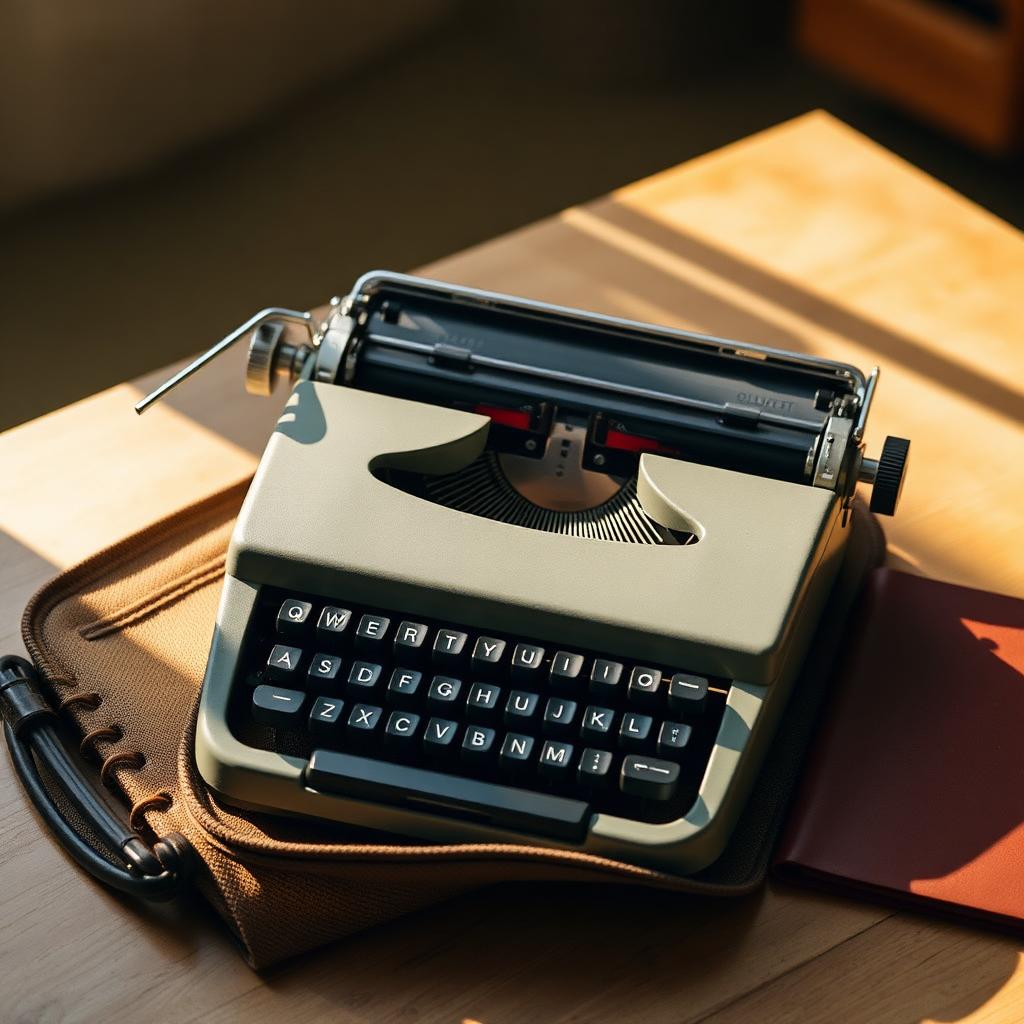
The best travel typewriter is the one you actually take with you. That is the whole test, and every buying criterion for the category has to be judged against it. A machine that types beautifully but weighs five kilograms in its case will stay on the shelf. A modest ultra-portable that weighs three and fits in your existing luggage will come along and be used, and that is the point.
What "travel" actually asks of a typewriter
Four demands, in rough order of importance.
- Weight and bulk. You will carry this by hand, through airports and hotel lobbies, alongside other luggage. Under four kilograms in case; smaller in dimension than a hardback book laid flat.
- A case that protects, latches, and does not open on its own. Cases are the difference between a machine that arrives typing and one that arrives with a bent typebar.
- Tolerance for imperfect surfaces. Hotel desks are rickety, café tables are wobbly, aircraft tray tables are laughable. A travel typewriter has to type acceptably on suboptimal surfaces.
- Repair robustness. If something breaks in Lisbon on the fourth day of a trip, you need the machine to remain usable in some form until you get home. Fragile mechanisms are punished by travel.
Typing feel matters, but it matters less than any of the four above. A travel typewriter that types perfectly and stays home is worse than a merely adequate one that goes everywhere.
Four categories of contender
The ultra-flat originals
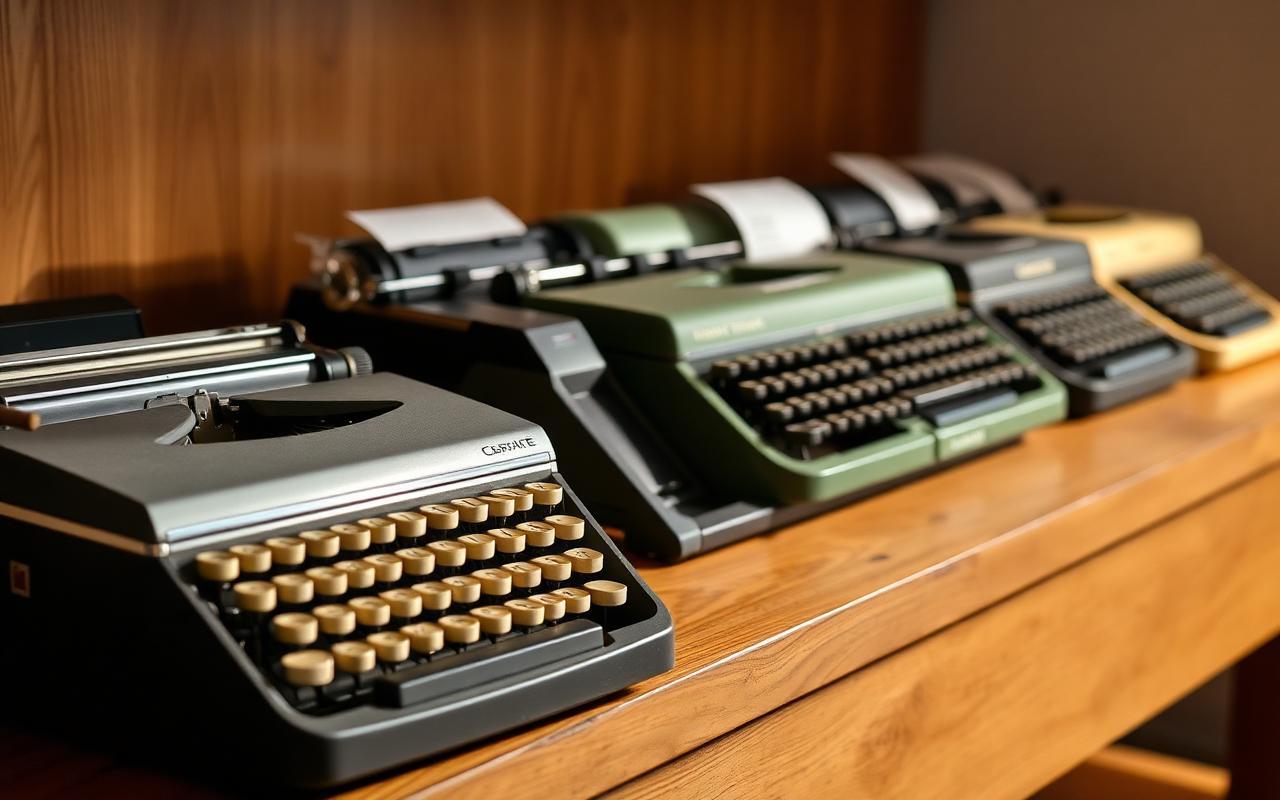
The Groma Kolibri and the Hermes Baby are the two canonical ultra-flat portables. Both are under 3.5 cm tall in their cases and both weigh under 3.5 kilograms. Both fit into any small piece of luggage.
The Baby is the more robust travel machine. Its case is a hard clamshell with a positive latch, the mechanism is straightforward, and Hermes parts are still findable. Typing on hotel desks is adequate — the machine has enough mass and enough case footprint to stay put.
The Kolibri is the more beautiful object but the less practical traveller. Its case latch is a small chrome catch that can be knocked open in a bag; its low case footprint gives it less resistance to rocking on uneven surfaces; its shallow-arc typebars are more prone to bending under abuse. Take one to Paris for a week, not to Iceland for a month.
The Olivetti Letteras
The Lettera 22 (1950–1963) and Lettera 32 (1963–1970s) are the practical travel typewriters most working writers actually use. Slightly heavier than the ultra-flat originals — around 4 kilograms in case — but with much better typing feel and cases that survive real transport.
The 22 is the cleaner design, the more sought-after object, and the machine that appeared on the covers of writers' memoirs from the period. The 32 has slightly better typebar tension and a slightly wider carriage, and is more available at moderate prices. Either will travel well and outlast most trips.
Small portables from the major full-size makers
Royal Companion, Smith-Corona Skyriter, and various small Olympias occupy a category between the Letteras and full portables. Weight climbs above 4 kilograms, cases become more suitcase-like, and the typewriter is closer to a full portable's typing feel than to an ultra-portable's compromises.
These are the correct choice if travel is occasional rather than frequent — an annual writing retreat, a two-week research trip — and the machine will spend most of its time at a home desk. They are the wrong choice for a genuine road machine.
The disqualified
Full portables like the Hermes 3000, Olympia SM3, and Royal Quiet De Luxe. All excellent typewriters. None practical to travel with unless you drive with them. Any air travel with a full portable is a battle with airline weight limits and a source of damage anxiety that undermines the trip.
Case-quality tests
Before buying any candidate travel typewriter, evaluate the case.
Does the latch lock positively? Close the case, pick it up by the handle, and shake gently. Any movement between case halves is a fail.
Does the handle attach to the case at two points that can bear the weight of the machine? Single-attachment handles fail eventually, and always at the worst time. Two-point handles distribute load.
Is the case shape suited to being packed? A case with rounded corners packs better than a case with sharp ones. A case with a flat bottom stacks under other luggage without sliding.
Does the machine sit securely inside the case? Try tipping the closed case on its side. The typewriter should stay put. If it slides, the internal cushioning has failed and needs replacement or the machine needs a new case.
Travel practice
Once you have the machine, some travel habits matter.
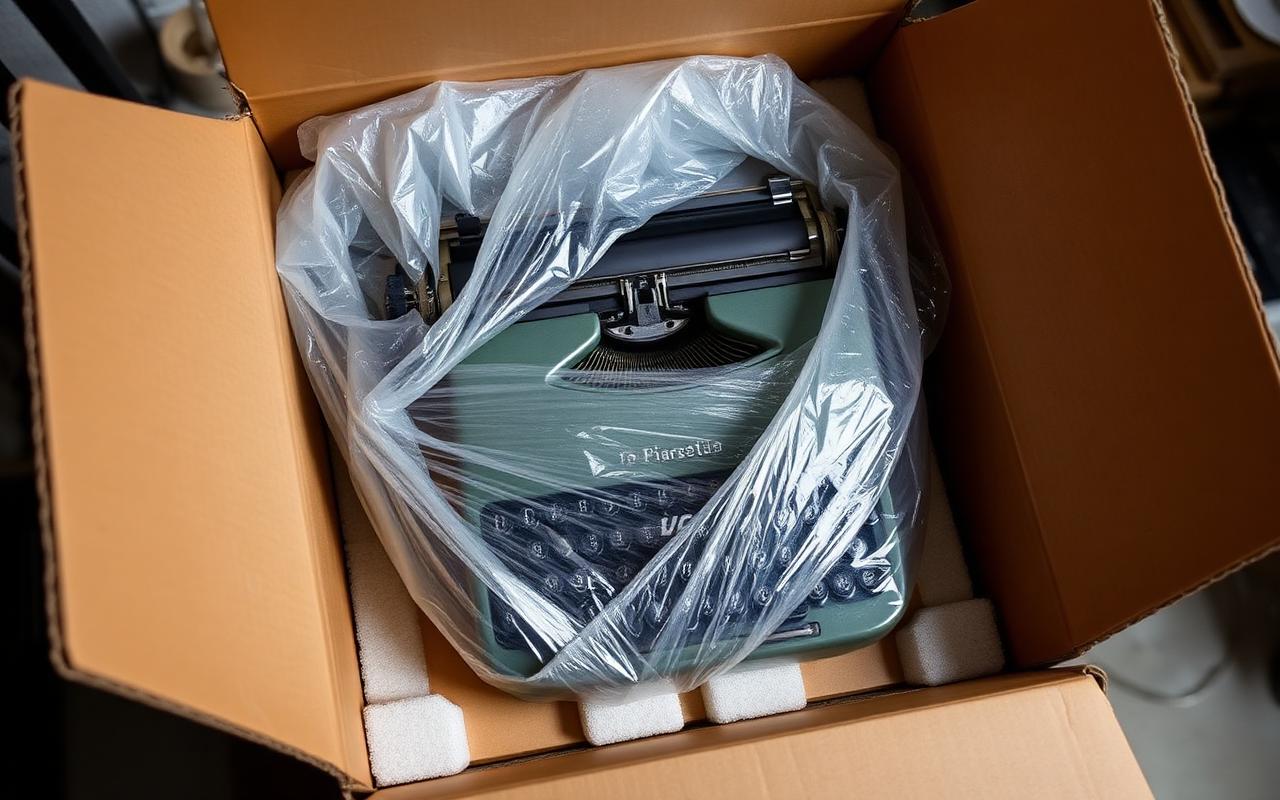
- Never check it. Travel typewriters go with you as carry-on. Airlines are unpredictable; hold luggage is thrown; a checked ultra-portable is a broken ultra-portable eventually.
- Ribbon and case together. A spare ribbon in a small sealed bag lives in the case. Buying ribbon on a trip is often impossible.
- A small tool kit. A single screwdriver in the correct blade size and a small brush live in the case. Nothing else is worth the weight; anything more complex is a repair to defer until home.
- A cloth. A microfiber cloth folded flat under the machine in the case cleans the platen and wipes the machine down at the end of each day. Museums recommend this too.
The right travel typewriter is smaller and more compromised than the machine you would choose to type at home. That is the point. It is the machine that lets you write anywhere, which is worth more than the machine that lets you write beautifully at one specific desk. Once you have found one that meets the four criteria above and fits your luggage habits, it will earn its keep many times over — and after a year or two of use, you will find it developing a character that no home-desk typewriter can match, because it will have been in more places and heard more of your thinking than any other machine you own.
Four kilograms including case. Above that a typewriter stops being genuinely portable and becomes a machine you carry once and then leave home.
Baby if you value build quality; Lettera 22 or 32 if you value typing feel. Both are correct answers.
As objects yes, as writers yes, as travel typewriters occasionally — the case latch is fragile and the machine is small enough that hotel keys often bounce off it.
This article is original writing for The Ribbon & Platen and may not be reproduced without permission. Sources consulted:
- Hermes Baby service literature, 1955
- Olivetti Lettera 32 promotional brochure, 1963
- Author's travel notes from five trips with four different ultra-portables