The Royal Quiet De Luxe: An American Portable Grows Up
Ernest Hemingway typed on one. Ian Fleming typed on one gold-plated. But the Quiet De Luxe's real achievement was making a serious portable typewriter feel like a proper writing instrument.
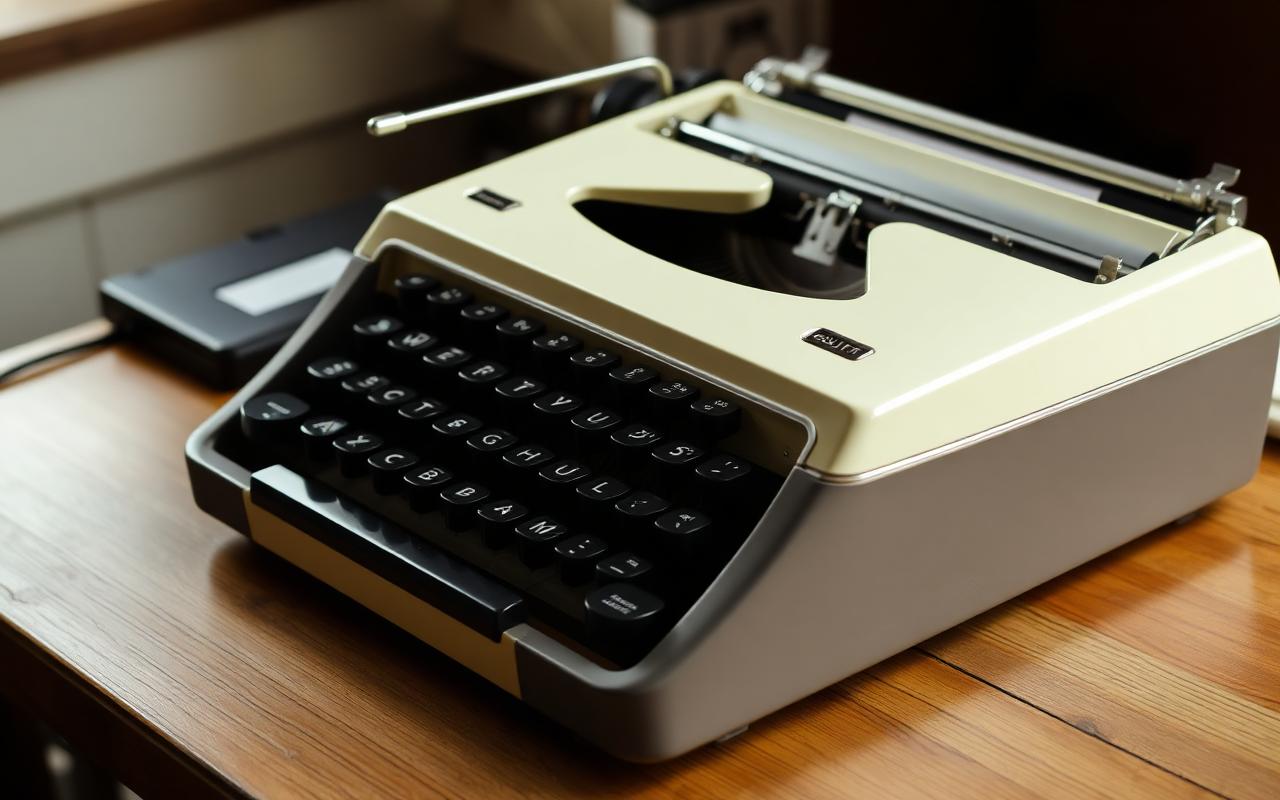
A portable typewriter is a compromise. Something has to give: weight, key throw, carriage travel, or the machine's ability to survive an actual journey in an actual bag. Royal's engineers spent the 1930s trying to arrive at a portable that made those compromises invisible. The result, introduced in 1939 as the Quiet De Luxe, was so convincing that writers stopped apologising for using a portable and started demanding it.
Before the Quiet De Luxe
Royal had made portables since the Royal Model P of 1926, a competent but conservative machine that shared a lineage with the company's dominant standard typewriters. Through the mid-1930s the portable line was refined incrementally. Royal's advertising called them "portable" but reviewers routinely noted that the machines were still heavy enough to feel like desktop typewriters that had lost their bases.
The problem was engineering. Reducing weight meant reducing metal, which risked flex under a hard keystroke, which produced misaligned print. Royal's answer was structural rather than material: a cast-alloy frame stiffer than its steel predecessor, combined with a redesigned segment that transferred impact directly into the frame rather than through the keyboard bed. The Quiet De Luxe emerged in 1939 as a lighter machine that felt firmer, not softer, under the fingers.
The 1939–1947 period
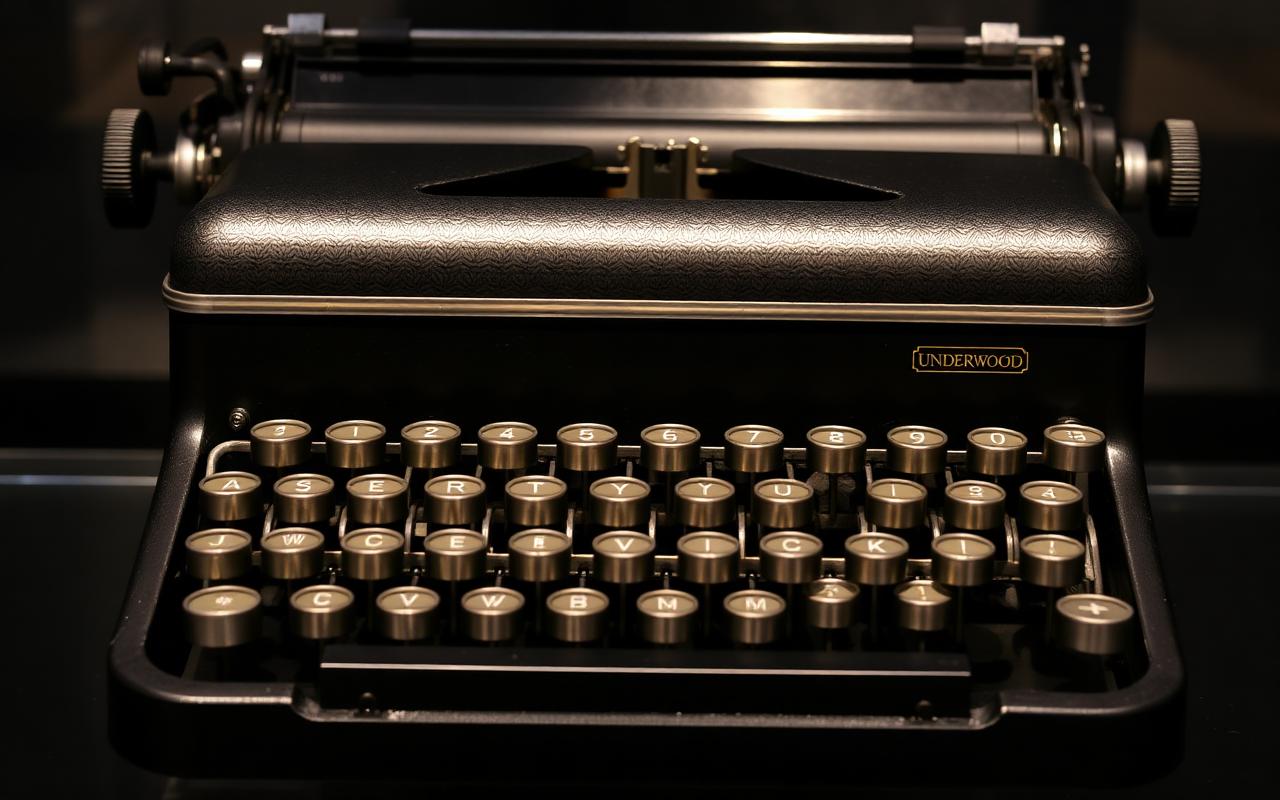
The pre-war Quiet De Luxe is a dark-lacquered machine, usually black or deep grey-blue, with gold decals and glass keytops. The paint plate is heavy and the finish holds up remarkably well; surviving examples often show only the faintest wear along the front edge of the carriage.
Wartime production shifted priorities. Royal delivered typewriters to military and government contracts, sometimes in olive drab. Civilian Quiet De Luxe production continued at reduced volume, and examples with early wartime dates are recognisable by simplified trim.
The tombstone years, 1948–1952
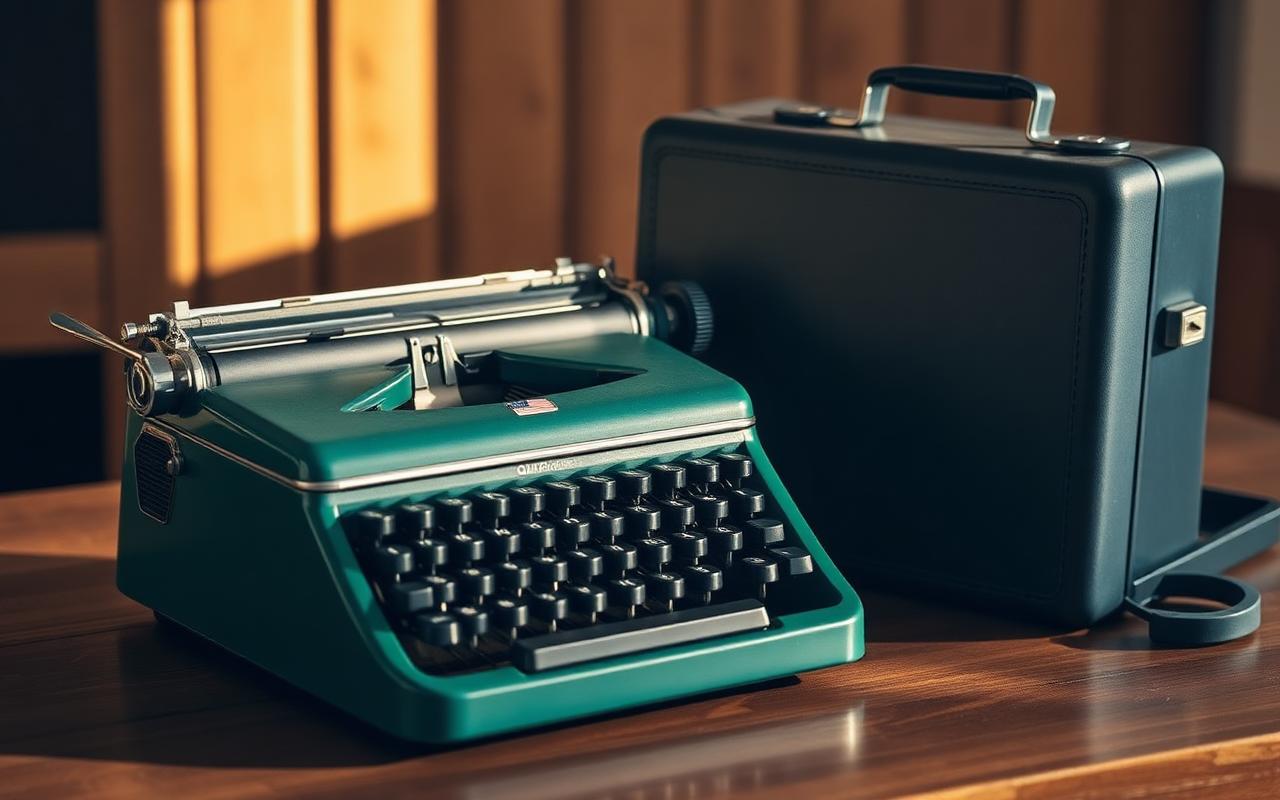
After the war, Royal redesigned the Quiet De Luxe with rounded, softer body panels and — most distinctively — curved rectangular keytops with rounded edges that collectors nickname "tombstone keys." The tombstone Quiet De Luxe is the machine most people picture when they picture a mid-century American writer's typewriter. Ernest Hemingway used a variant in Cuba. Countless newspapermen owned one. In the 1950s a Royal Quiet De Luxe was the default gift for a graduating student headed to college.
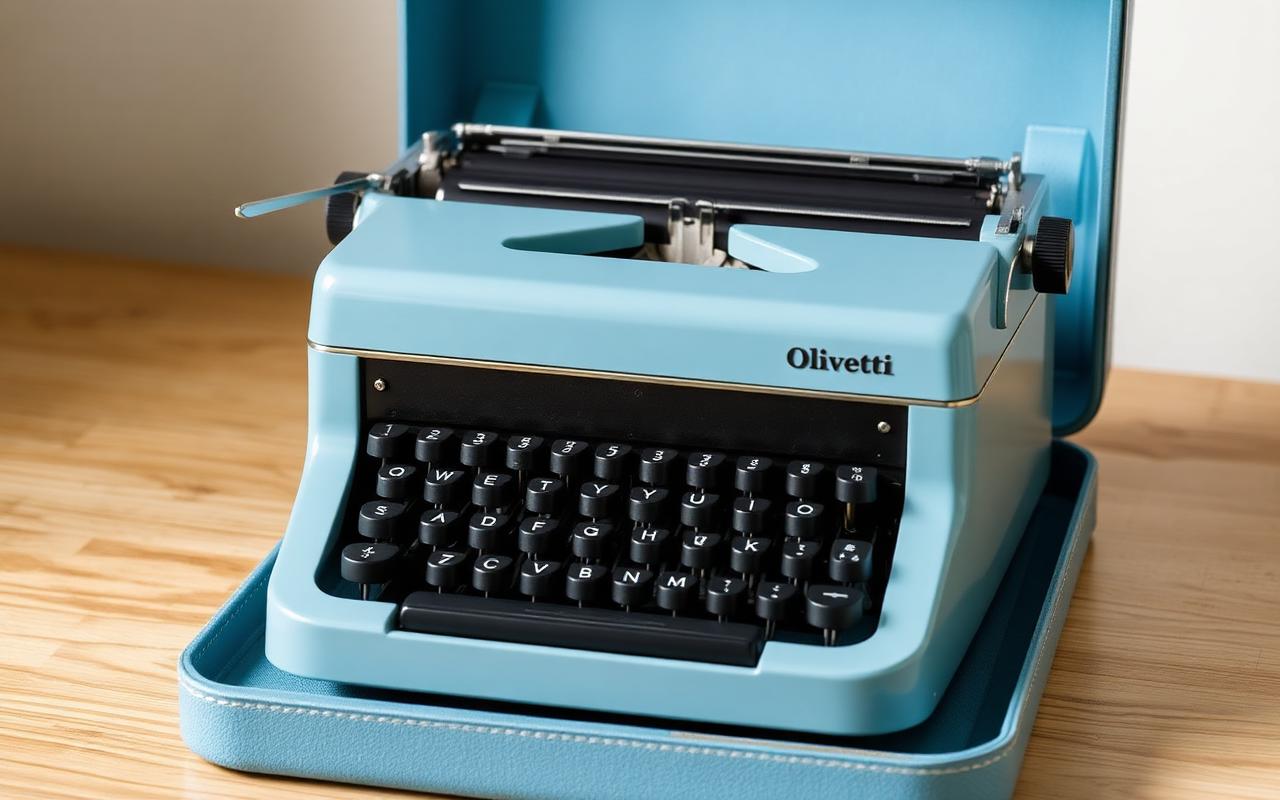
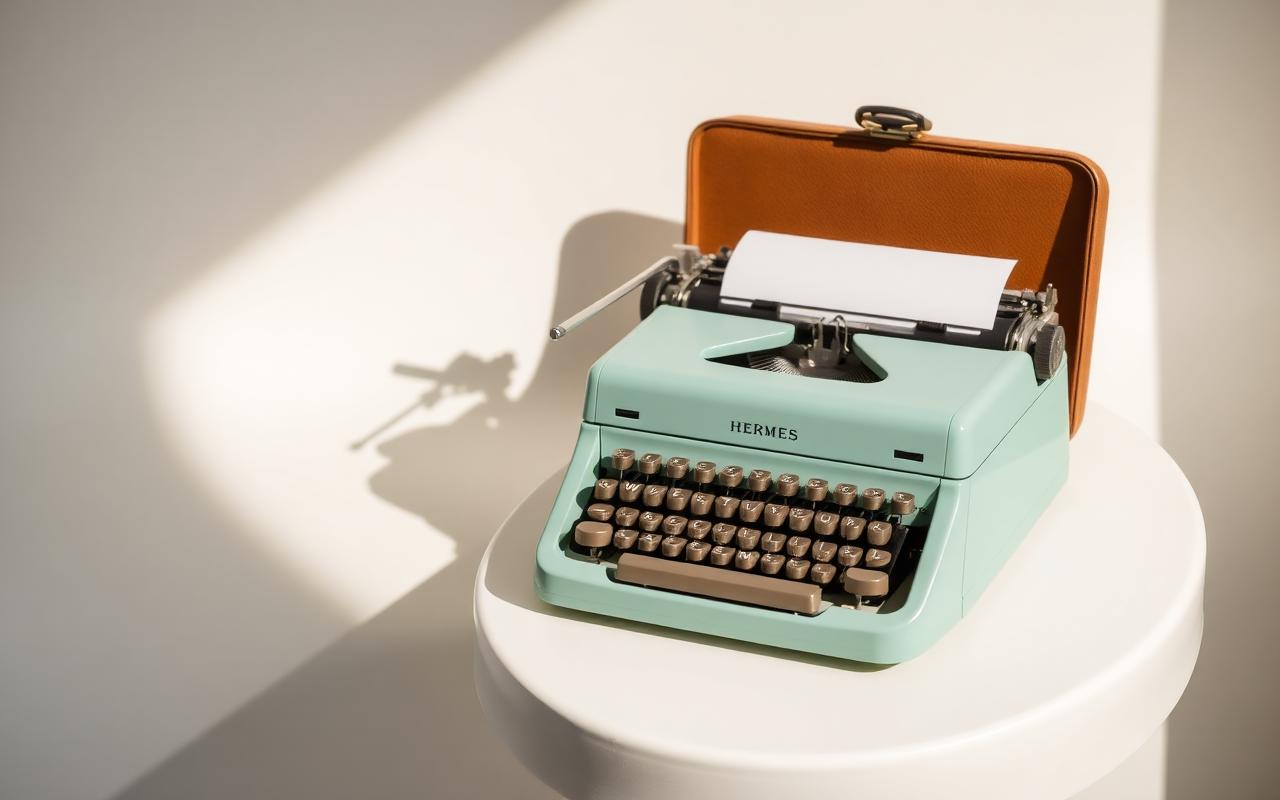
The tombstone models are the most collectable of the Quiet De Luxe line. Good examples in original colours (grey, green, tan, and the rare pink and blue) command a steady premium and print with a snap that feels closer to a light standard machine than to a portable.
The 1953–1958 flat-top years
Royal simplified the body again in 1953, replacing tombstone keys with flat rectangular keytops. Marketing pushed newer models — the Futura and later the Quiet De Luxe Deluxe — but the underlying mechanism remained largely unchanged. These late-Quiet De Luxe machines are excellent daily writers and often the best value in the market, because collector demand focuses on the tombstone era.
Ian Fleming's Quiet De Luxe
The most famous single Quiet De Luxe in the world is the gold-plated example Ian Fleming ordered from Royal after finishing the manuscript for Casino Royale in 1952. Fleming reportedly wanted a machine that would mark the moment he became a professional novelist. The typewriter — still occasionally exhibited — is a standard 1952 Quiet De Luxe with the body panels plated in 24-karat gold. It typed most of the subsequent Bond novels and passed through several private collections before being sold at Christie's in 1995 for a sum that made the newspapers.
The Magic Margin
Royal's engineering contribution most worth remembering is the Magic Margin. Setting margins on a typical typewriter meant lifting a small metal tab, sliding it along a rail behind the platen, and locking it in position — a fiddly job done twice for every page. Royal replaced this with a single lever on the front of the machine: move the carriage to the desired left margin, pull the lever, and the machine remembered the position. Repeat for the right margin. The effect on daily use was significant, and it explains why so many writers preferred Royals: they trusted the machine to remember what they had set.
Buying a Quiet De Luxe today
A tombstone-key Quiet De Luxe in G2 condition costs meaningfully more than a flat-top in the same condition, sometimes double, and collector premiums for the rare pastel colours can push prices higher still. A flat-top in G3 condition remains one of the best introductions to serious portable typing available, at prices that beginners can justify.
Watch for:
- Original paint and unbroken decals; repaints halve the collector value.
- Complete case with intact latches; portable cases suffer more than the machines they carry.
- Correct paper table decal ("Royal Quiet De Luxe" in period script).
- Ribbon spools with visible Royal branding; correct spools add small value.
The Quiet De Luxe is not a rare machine. It is, however, the machine that convinced a generation of writers that a portable could be a permanent tool rather than a travel accessory. That cultural achievement is why it remains, nearly a century after its introduction, one of the most desired portables in the hobby.
One of them was. Hemingway owned several machines across his life; the Quiet De Luxe was among the most photographed.
The 1948–1952 Quiet De Luxe used curved, rounded keytops that resembled small tombstones. Prized by collectors for their look and touch.
Pre-war models are heavier and darker. Post-war models are lighter, more curved, and available in bolder colours.
This article is original writing for The Ribbon & Platen and may not be reproduced without permission. Sources consulted:
- Robert Messenger, 'oz.Typewriter' historical posts
- Royal Typewriter advertising archive, LIFE and Saturday Evening Post, 1939–1958