Olympia's SM Series: The German Portable's Golden Age
If the Olivetti Lettera 32 is the portable a writer chose for beauty, the Olympia SM is the portable an engineer chose for feel. Twenty years of production, ten model numbers, and one of the finest keyboards ever put on a portable.
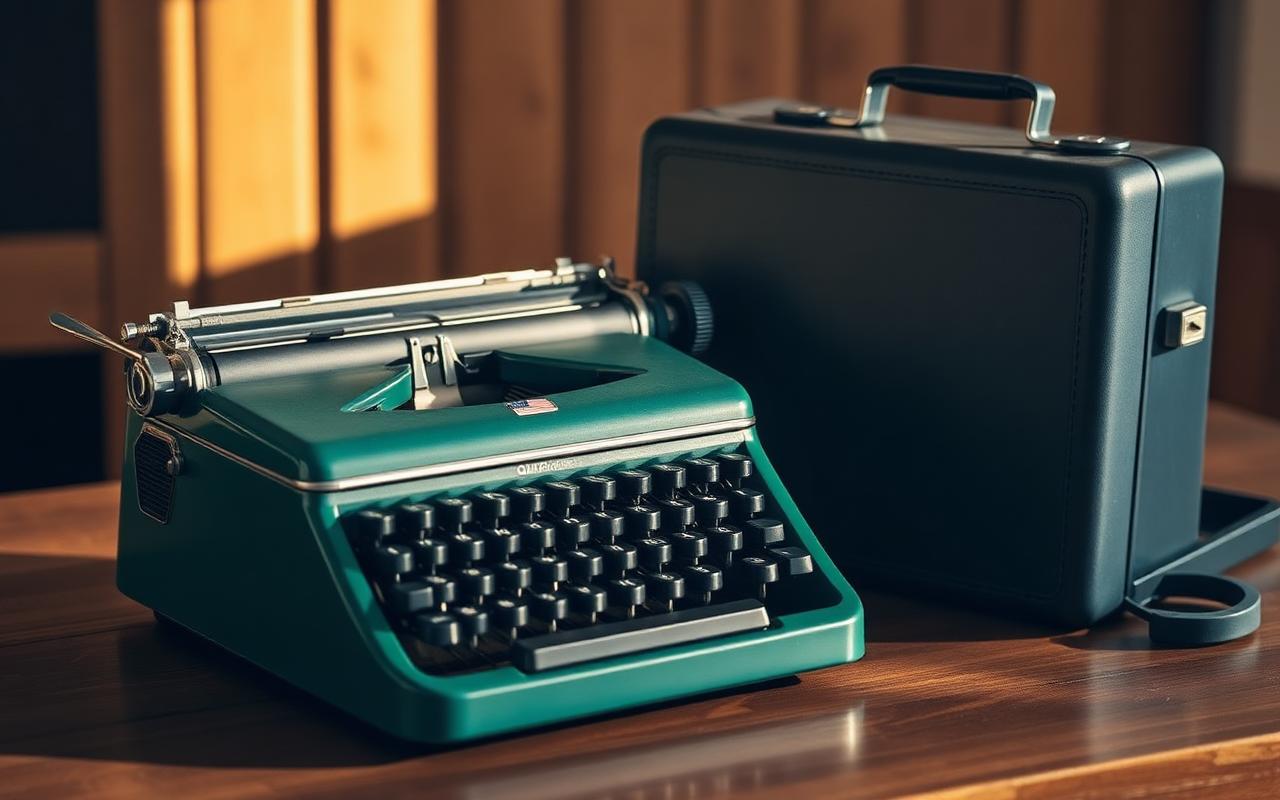
An Olympia SM is a machine to sit down with and lose track of an afternoon. The keyboard is unusually consistent from key to key; the segment is quiet; the return is firm without being tiring. Twenty years of continuous refinement produced a family of portables that made every other German portable look like a first draft.
The postwar reset
Olympia Werke AG traced its origins to the pre-war AEG typewriter division and had been headquartered in Erfurt until the end of the Second World War. The postwar partition of Germany placed Erfurt in the Soviet zone; the western operations of the company reorganised in Wilhelmshaven under the name Olympia Werke West, and by 1949 they had launched the first machine in what would become the SM series.
The SM stood for Schreibmaschine — "typewriter" — with a suffix number for model generation. The SM1 and SM2 were transitional, the SM3 was the first fully realised expression of the design, and the numbering continued through the SM4, SM7, SM8, and SM9 across the 1950s and 1960s.
The SM3 (1954–1958)
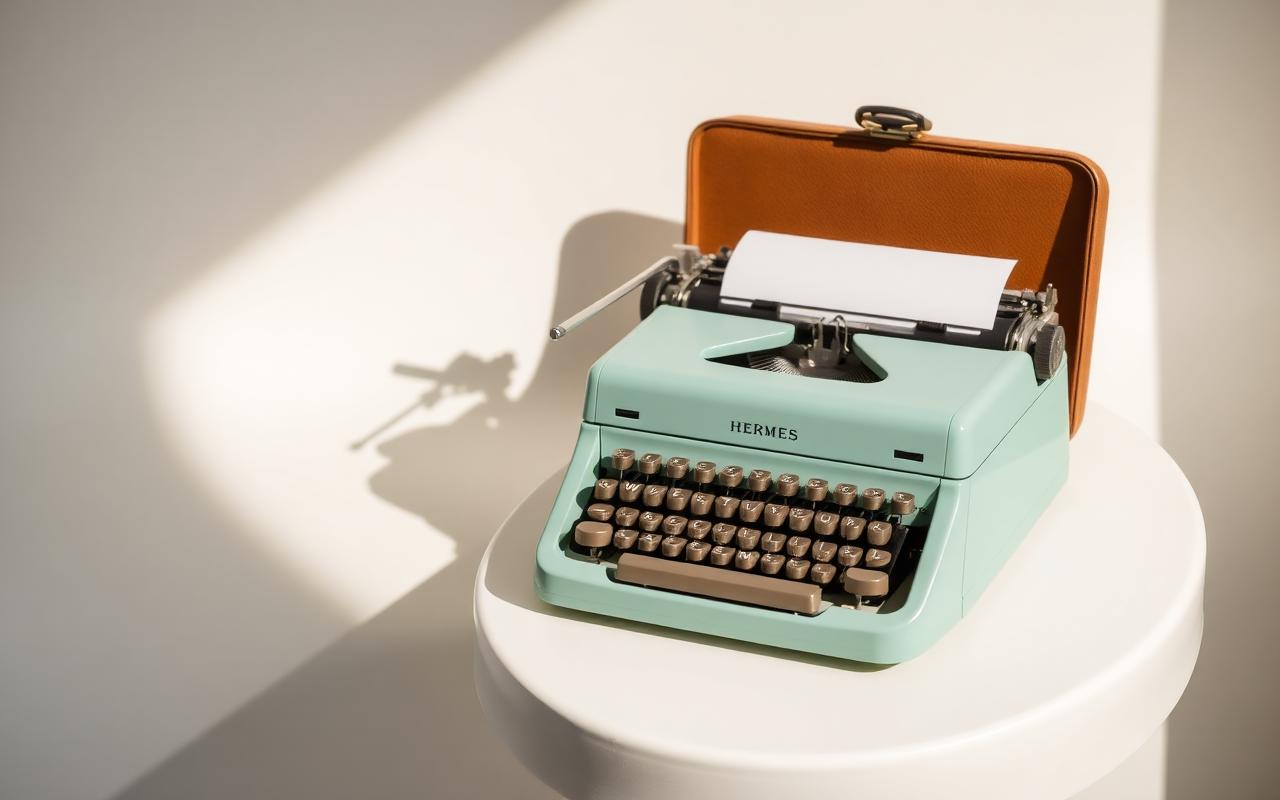
The SM3 is the model that fixed the series' identity. It appeared in seafoam green, medium grey, and black crinkle finishes and combined a compact case with a full-width carriage that could handle standard sheet paper without margins feeling cramped.
Two design features stood out. The tabulator was integrated into the top row rather than requiring a separate lever, which speeded tabular work. And the ribbon vibrator lifted the ribbon in front of the type slug rather than behind, which meant the writer could see the character on the moment it was struck rather than a fraction of a second after.
Collectors particularly prize the seafoam green SM3. Original examples in that colour with unbroken decals and intact cases regularly command double the price of the same machine in more common finishes.
The SM4 and SM7 (1958–1965)
The SM4 refined the SM3 mechanically without changing the visible design significantly. Reliability improved, particularly at the ribbon reversal mechanism, which had been the SM3's one common failure point. The SM7, sold in parallel, added a wider carriage aimed at the office market.
By 1960 Olympia was producing SM-series machines at a scale that made them the default premium German portable, competing directly with Adler and Triumph and reaching foreign markets from Sweden to Argentina.
The SM9 (1964–1972)
The SM9 is where the series arrived at its final form. The chassis is slightly wider than the SM3 but has the same footprint on a desk; the keys are firmer without being heavier; the ribbon system is fully self-contained; and the paint finishes moved toward more sober colours — beige, olive, deep grey — that suited the changing tastes of the mid-1960s office.
The SM9 is the model most experienced collectors point to when asked to name the finest portable typewriter ever made. The claim is subjective; comparable arguments can be made for the Hermes 3000, the Groma Kolibri, the Torpedo 18a, and one or two Japanese portables of the same era. What is not subjective is that the SM9 produces a keystroke as consistent, quiet, and confident as any portable ever engineered, and it does so for decades of daily use with only routine service.
What to know when buying
- The lever on the right of the carriage is the paper injector, not a carriage release. Pressing it advances a fresh sheet into typing position, which many buyers accustomed to other portables have never encountered.
- The ribbon system uses metal spools with proprietary hub geometry. Universal ribbons are used, but the spools themselves should stay with the machine.
- The seafoam green paint on the SM3 is famously stable but does bleach in direct sunlight over decades.
- Feet. Olympia rubber feet degrade to a sticky black tar with age. Replacement feet are readily available and take fifteen minutes to install.
- Case. Later SM4 and SM9 cases had a tan or grey vinyl covering that is prone to lifting. The underlying case structure is nearly always sound.
Service notes
Olympia SMs are among the most serviceable portables ever made. The segment lifts out cleanly for cleaning; the ribbon covers come off with one screw each; the key linkage is accessible without disassembling the frame. A first service on a stored-for-decades SM is typically an evening's work, and the machine emerges ready for another twenty years.
The one persistent SM problem is the carriage return spring, which weakens over the course of thousands of return cycles. Symptoms are a slow return and a tendency to stop short of the left margin. Replacement is a specialist job, but donor springs are common and the procedure is well documented.
The SM series is a case study in what happens when a manufacturer refines the same design for twenty years without diluting it. Nothing about an SM3 is dramatic. Nothing about an SM9 shouts. What both do is type — cleanly, quietly, reliably, and better than most machines you will ever sit at.
For a first purchase, an SM3 or SM4 in good condition is the sweet spot: excellent mechanism, moderate price, easily serviced. SM9s cost more and are marginally better.
The seafoam green SM3 is iconic and commands a premium. The black-crinkle finish is more common and equally excellent.
Olympia parts are shared across the entire SM series with minor variations. Donor machines are the main parts source, and they are common.
This article is original writing for The Ribbon & Platen and may not be reproduced without permission. Sources consulted:
- Olympia Werke AG service manuals for SM3–SM9
- Author's bench notes on 14 SM-series machines