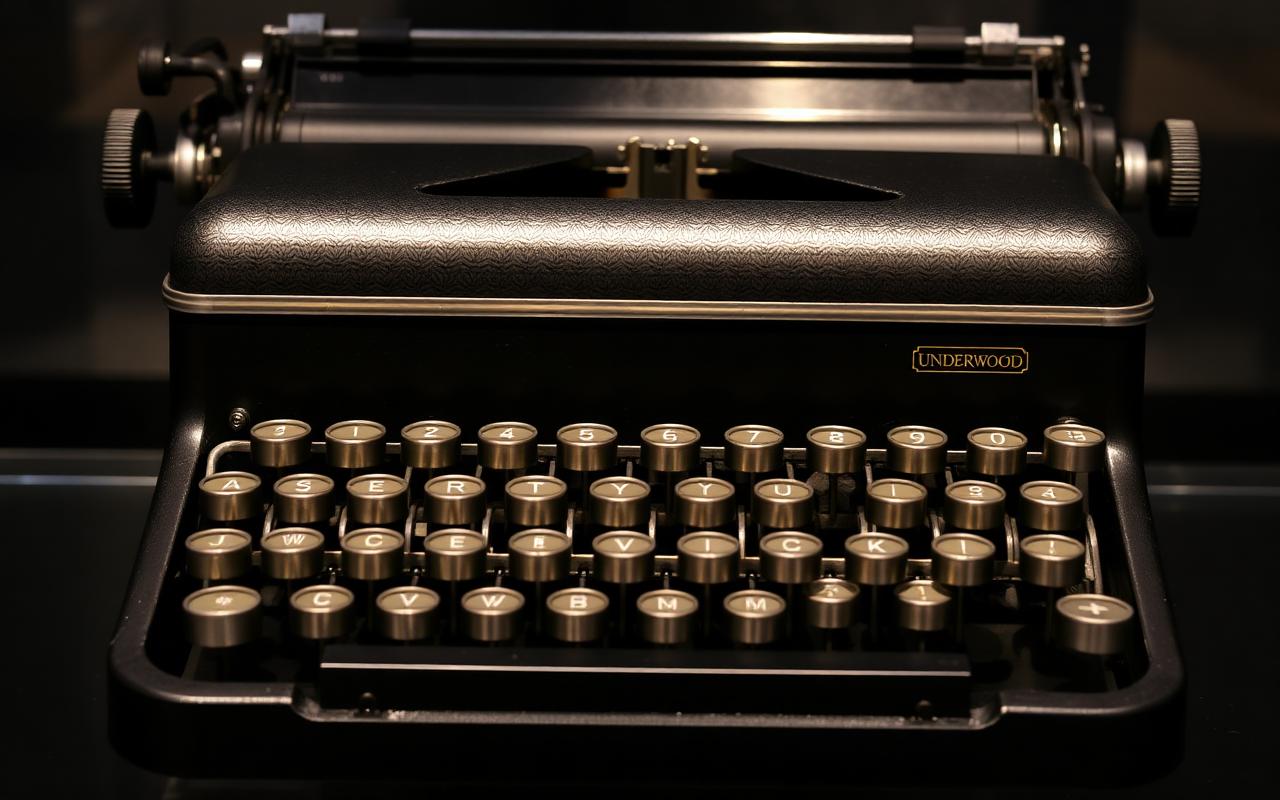
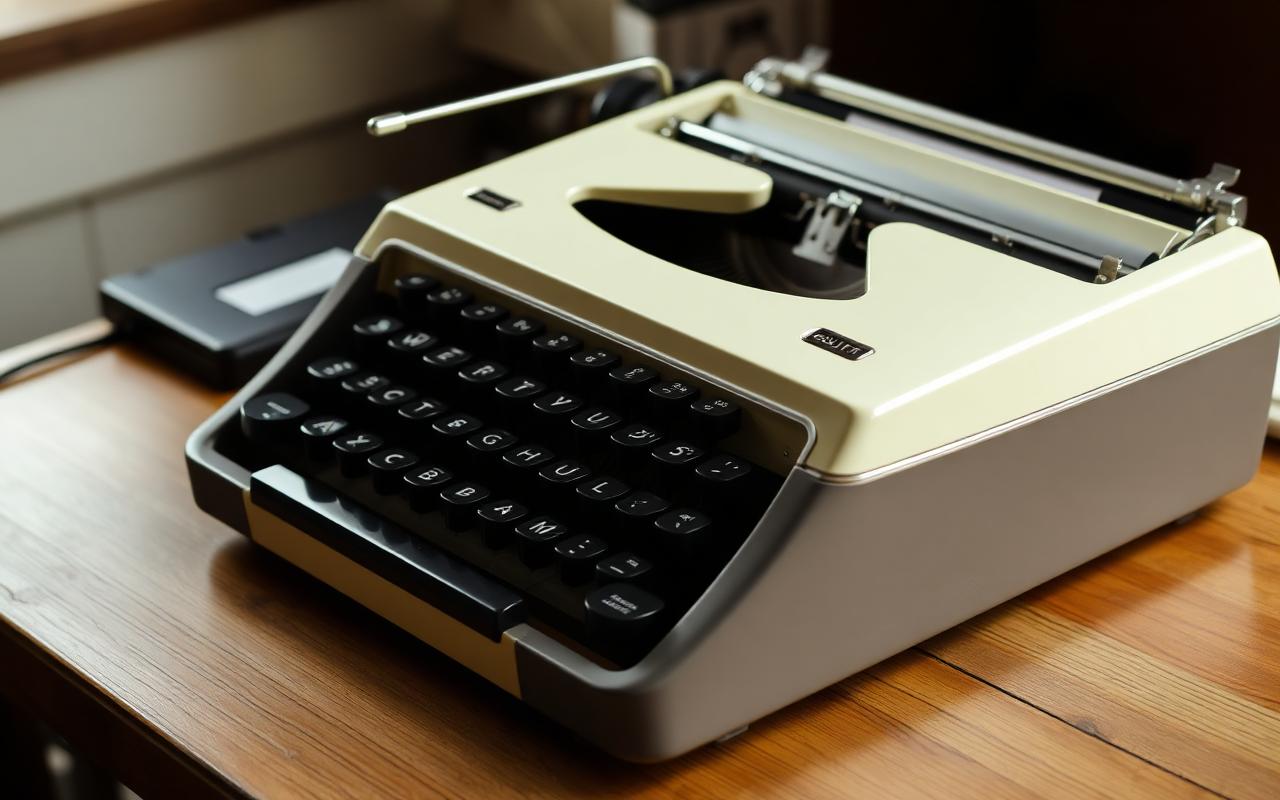
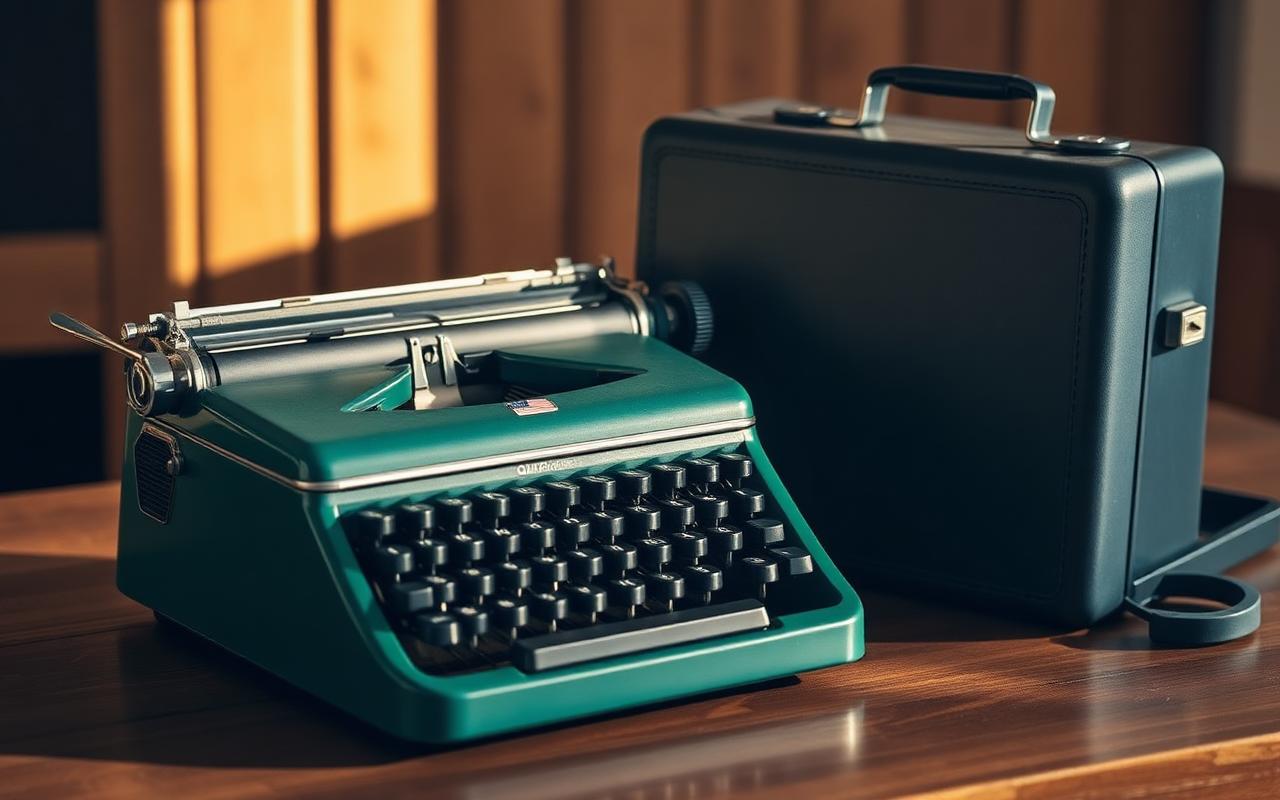
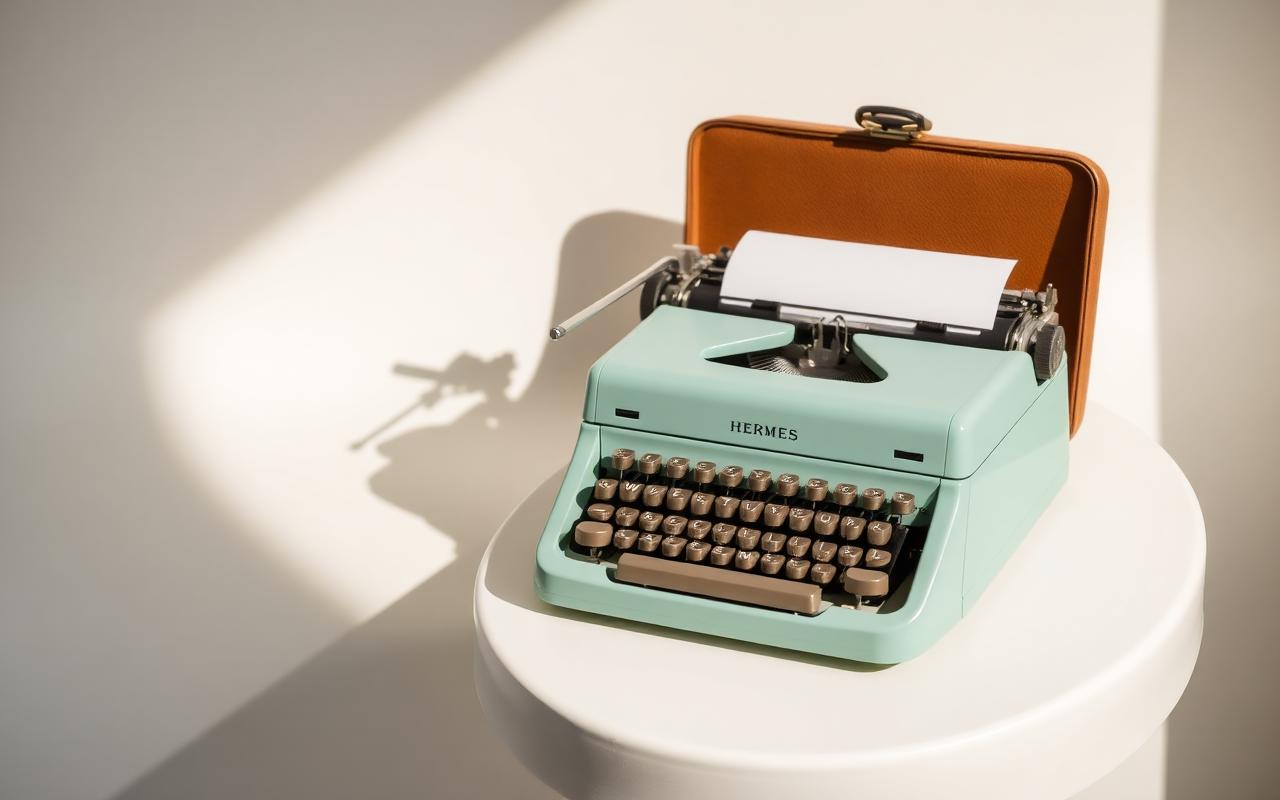
Olivetti Lettera 32: The Italian Portable That Designed Itself Into the Museum
Designed by Marcello Nizzoli in 1963, the Lettera 32 was small enough to travel and beautiful enough to enter the permanent collection of MoMA. Sixty years later it is still the most-recommended vintage portable in the hobby.
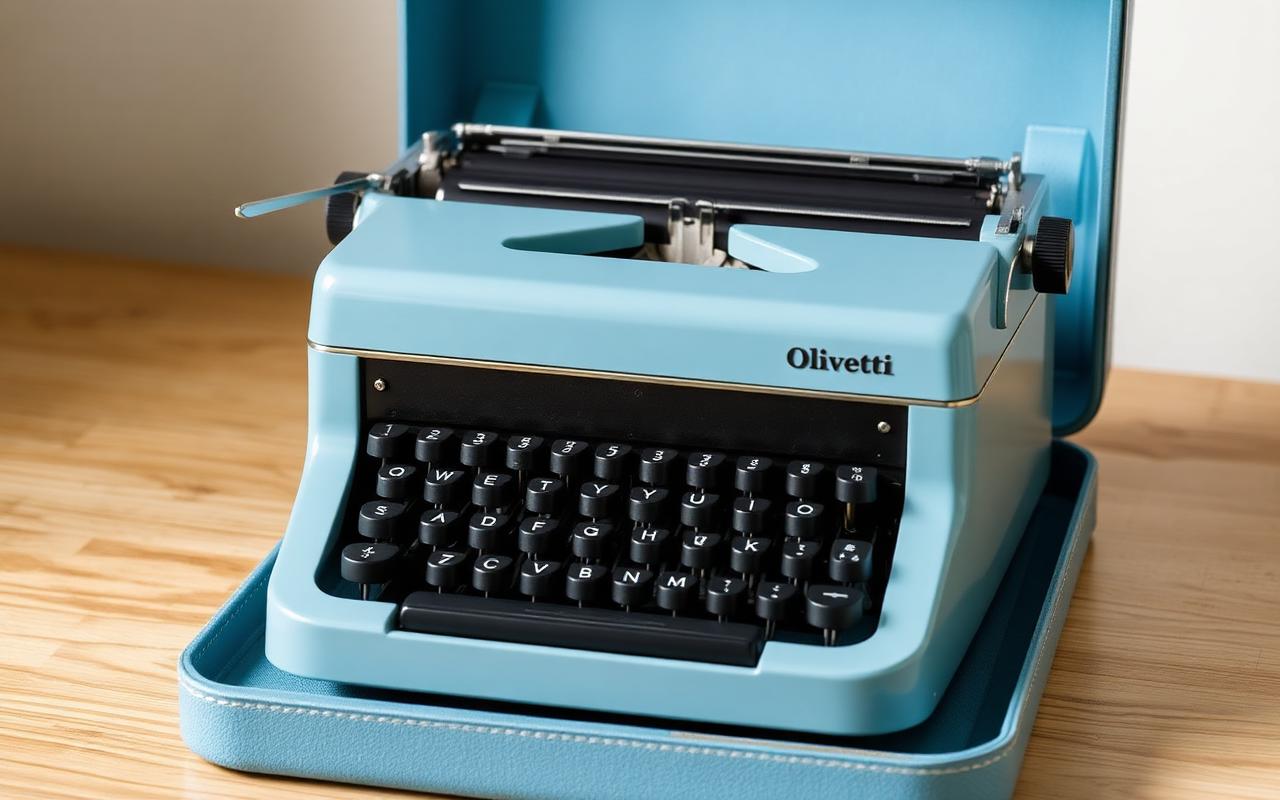
Olivetti in the 1960s was a company that behaved more like a design studio than a manufacturer. The Ivrea factory in Piedmont employed architects to draw its buildings, graphic designers to draw its letterheads, industrial designers to draw its machines, and copywriters who wrote the advertising alongside novelists who wrote the annual report. This is well documented and slightly hard to believe, and the Lettera 32 is one of its most persistent physical outputs.
Marcello Nizzoli, who had designed the earlier Lettera 22 in 1950 to enormous acclaim, was still Olivetti's principal industrial designer when the successor project began. Nizzoli wanted a machine that felt inevitable — that looked, once you had seen it, as though no other shape had ever been possible. The Lettera 32 emerged in 1963 as the result.
What Nizzoli got right
The proportions of the Lettera 32 are unusual for a portable typewriter. It is wider than it is deep, and shallower than any of its competitors. The carriage sits low. The paint plate is a single continuous surface rather than a set of joined panels. The keyboard is subtly recessed into the top surface, which makes the machine appear to have grown its keys rather than had them installed.
The colour palette was deliberate. The default pale blue-grey (Olivetti called it "azzurro") was chosen to look modern in an office and elegant in a home. Later colours — a sober beige, a warmer sand, occasional pale reds and rare blacks — appeared as marketing variations without altering the underlying design.
Everything on the machine has a reason. The paper table folds flat rather than removing entirely. The margin release is a small tab exactly where the right thumb rests. The ribbon cover is a single moulded piece that opens with one motion. The case is a moulded plastic clamshell with an integrated handle, and it protects the machine on aircraft cabin luggage racks better than any leatherette case of its era.
Engineering under the design
The Lettera 32 is not merely a beautiful object. Its mechanical design is quietly excellent. The segment is fully enclosed against dust — a feature borrowed from Olivetti's earlier standard models — which means the machine tolerates neglect better than most portables of the period. The keyboard action is light and consistent, which explains why writers who typed all day on a Lettera 32 rarely complained of fatigue.
The escapement is precise enough that alignment problems, common on cheaper portables, are rare. The carriage return lever is short but well-shaped; long typing sessions on the machine feel neither heavy nor cramped. The typebar geometry is unusually forgiving of a hard touch, which is one reason journalists carried them.
The writers who used them
The Lettera 32 traveled with an extraordinary number of twentieth-century writers. Cormac McCarthy typed most of his novels on one — the machine sold at auction in 2009 for over $250,000 to a benefactor of the McCarthy Society, which is by orders of magnitude the highest price ever paid for a portable typewriter. Günter Grass, Enrique Vila-Matas, and countless journalists carried Lettera 32s through the assignments of the 1960s and 1970s.
The reason was practical as well as aesthetic. The Lettera 32 weighed about five kilograms in its case, could be checked as flight baggage without concern, and would type reliably in any climate short of monsoon humidity. When a writer's typewriter was also their portable office, the Lettera 32 was the reasonable choice.
Owning one today
The Lettera 32 is among the most-listed vintage typewriters on any given day, worldwide. Prices are stable rather than climbing sharply; a G2 example in the standard blue-grey typically sells for one hundred to two hundred dollars, more in Europe, less in general estate sales.
The most common issue on a Lettera 32 is not mechanical. It is the ribbon spool problem. The machine uses proprietary Olivetti plastic spools that were sold as consumables in an era when consumables were expected to be replaced. Original spools are common in good cases, and reproduction spools are widely available; but a beginner who buys a Lettera 32 without its original spools and tries to install a standard universal ribbon will find nothing fits, and will conclude that the machine is broken. It is not.
The second most common issue is the plastic case. Cases develop stress cracks around the hinge and latch points after decades of travel. A cracked case is not a fatal defect but does reduce value; look for machines with intact cases when buying at the collector end of the market.
The third is the paint. Olivetti paint was superb but not indestructible; long exposure to sunlight bleaches the standard blue-grey toward a paler, greyer tone. Machines that have lived in filing cabinets look nearly new; machines that have lived on writers' desks by windows look their age.
Why it endures
Design that is trying to look modern ages badly. Design that is trying to be right ages better. The Lettera 32 is a machine of the second kind. It is a machine that looks, in 2026, roughly the way it looked in 1963: patient, considered, and slightly better than everything around it. That is the achievement Nizzoli was after, and it is why an Olivetti sits in the Museum of Modern Art's permanent collection and simultaneously sits on desks all over the world, still being used.
The 22 is smaller and older; the 32 is slightly heavier but has a fuller carriage and a firmer keystroke. Most writers prefer the 32.
The pale blue-grey is the standard colour. True rare colours are red, sand, and the very late black.
The Lettera 36 is electric and a separate machine; different feel, different service concerns, larger and heavier.
This article is original writing for The Ribbon & Platen and may not be reproduced without permission. Sources consulted:
- Marcello Nizzoli design archive, Ivrea
- Kenneth Grange, retrospective interview, Design Museum London, 2018