The Repair Shop Problem: Where to Take a Machine When the Bench Is Gone
The typewriter repair shop was a fixture of every business district until the 1980s. Now there are a few dozen left in the world. Here is how to find one, when to ship, and when to learn the bench yourself.
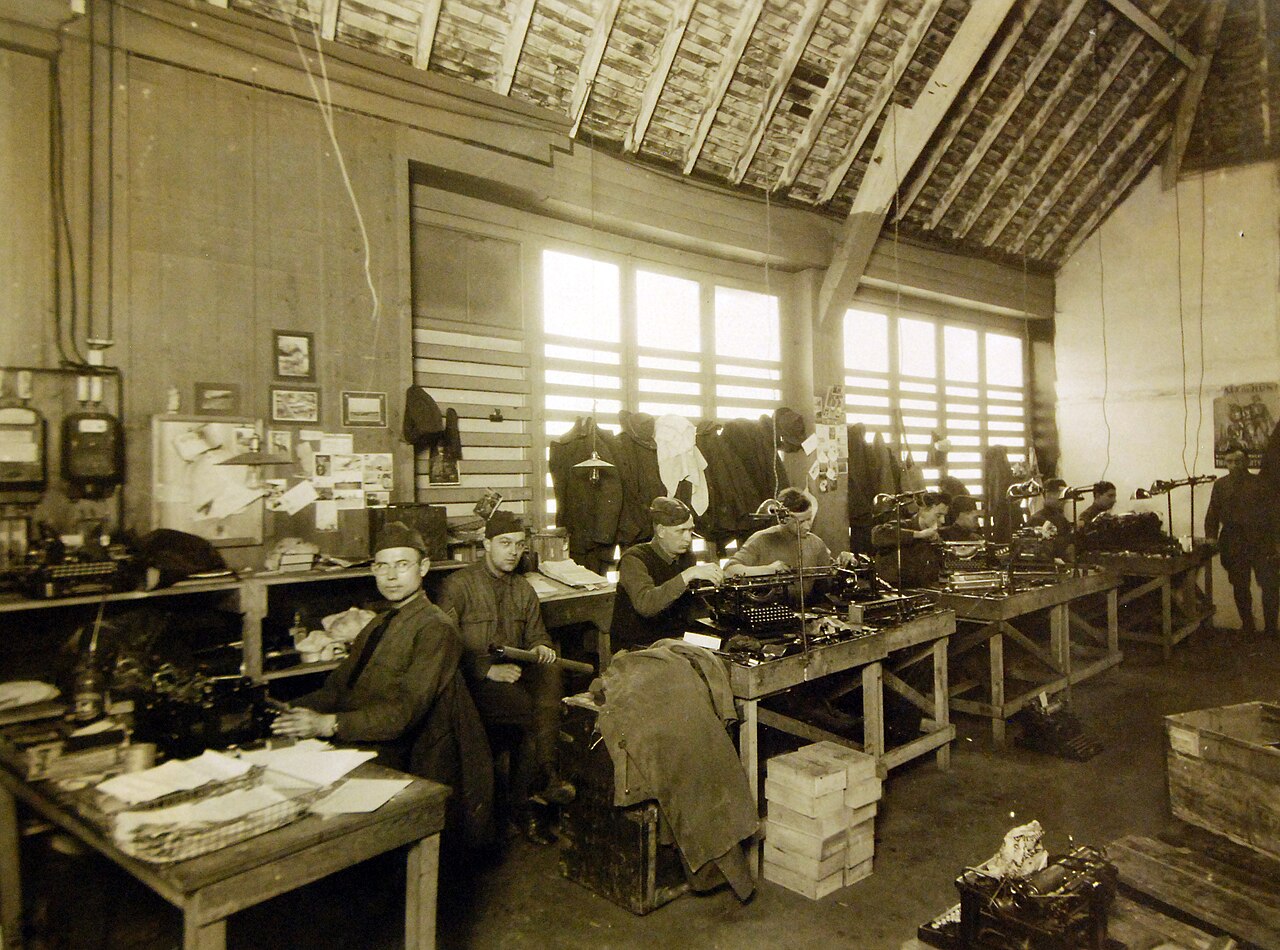
The typewriter repair shop was once as ordinary as the shoe repair shop and the watchmaker — a small business on a secondary street, run by a person who had apprenticed or inherited the trade, serving a clientele that came in weekly. Every business district had one. The typewriter was office equipment, office equipment broke, and the repair shop was where it went.
That world is gone. The typewriter left the office in the 1970s, the repair shops lost their clientele in the 1980s, and the generation of mechanics who had served offices retired in the 1990s. What remains is a thin network of working shops, a larger number of retired mechanics who take occasional work, and a growing population of collectors who have learned to service their own machines. Navigating this landscape is now a core skill of the hobby.
What is left
The working repair shop — a business that will accept a mechanical typewriter, diagnose it, and return it typing for a fee — is rare. A 2025 survey identified fewer than forty such shops globally, concentrated in a handful of cities: New York, London, Berlin, Tokyo, and a scattering across the American Midwest and central Europe. Most are one-person operations run by mechanics in their fifties and sixties who learned the trade in the last years of the typewriter's commercial life.
A larger but less reliable tier consists of retired or semi-retired mechanics who take work through word of mouth. They are often more skilled than the working shops — some came from the last generation of factory service departments — but they are not findable through a directory, do not advertise, and may stop taking work without notice. The relationship is personal and the wait is long.
A third tier has emerged in the last decade: collectors who have taught themselves bench work to a serviceable standard and take work from other collectors. They are findable through online communities, charge less than professional shops, and vary widely in skill. Some are excellent; some are learning on your machine. References matter.
When to use a shop, when to use yourself
The decision turns on the machine's value and the work's complexity.
- Routine service — cleaning, lubrication, ribbon replacement, adjustment — is within the reach of any collector who has read a manual and bought a screwdriver. Paying a shop for routine work is expensive and slow, and the machine comes back with less learned than if you had done it.
- Bent typebars and alignment work — require a typebar bender and the confidence to use it. Learnable, but the first few attempts are risky. A shop is the safer choice for a machine you value.
- Platen recovery — requires specialised equipment and is almost always sent out. There are a handful of platen recovery services in each region; your local shop, if you have one, will know who they use.
- Major restoration — a seized machine, a broken frame, a missing segment — is shop work or a long personal project. If the machine is valuable, use a shop. If it is a parts machine you are learning on, do it yourself.
The collector who can perform routine service and adjustment independently, and who sends out only for work that requires specialised tooling, has the right balance. The collector who sends every machine to a shop for every service is paying for convenience the hobby does not offer at scale, and the collector who attempts every repair personally will eventually damage a machine worth more than the learning.
Finding a shop
The Typewriter Database maintains a community-edited directory of repair shops, which is the best starting point. Confirm that the shop is still operating before shipping — the directory goes out of date faster than the shops do.
For a shop within driving distance, visit in person with the machine. A face-to-face diagnosis is more accurate than a description by email, and the mechanic's assessment of the machine's prospects is worth hearing before you commit to the work.
For a distant shop, telephone before shipping. Describe the machine and the symptom, ask for a rough estimate and a wait time, and confirm they will accept the work. Shops that are too busy to talk on the telephone are too busy to service your machine in a reasonable timeframe. Ship only after this conversation, and ship in a crate, not a case.
The knowledge transfer problem
The deeper issue is that the skills are leaving the hobby faster than they are entering it. The working mechanics are retiring, and the apprenticeship system that produced them does not exist. The knowledge that remains is in three places: the service manuals (which are incomplete and assume a trained reader), the online communities (where working mechanics occasionally answer questions), and the benches of the collectors who have taught themselves.
If you are learning bench work, document what you do. Photograph each step, write down the adjustments that worked and the ones that did not, and share the result. The hobby's next decade depends on collectors becoming the mechanics the shops can no longer supply, and the documentation that makes that possible is the contribution every learning restorer can make.
The repair shop is not coming back. The bench skills can stay, but only if the people who have them write them down and the people who want them pick up the screwdriver. That is where the hobby is now, and it is a better place than it looks — because the resources to learn have never been more available, even as the shops to do it for you have never been fewer.
Estimates vary, but the global count of shops that will service a mechanical typewriter for a fee is in the low dozens. Most are one-person operations; a few employ several mechanics.
Only for machines worth the shipping and the wait. A common portable is better serviced locally or by you; a rare or high-value machine justifies the cost and risk of shipping.
Yes, and many collectors now do. The bench skills are learnable from manuals, online communities, and practice on cheap parts machines. The learning curve is steep but the resources are better than they have ever been.
This article is original writing for The Ribbon & Platen and may not be reproduced without permission. Sources consulted:
- Author's survey of repair shops, 2024–2025
- Typewriter Database repair shop directory