The Restorer Who Rebuilt a City's Typewriters: A Conversation With Rita Duarte
In fifteen years, Rita Duarte has repaired more than two thousand typewriters from her small workshop in Lisbon's Alfama district. She talks about learning the trade, the machines she has come to love, and the ones she refuses to work on.
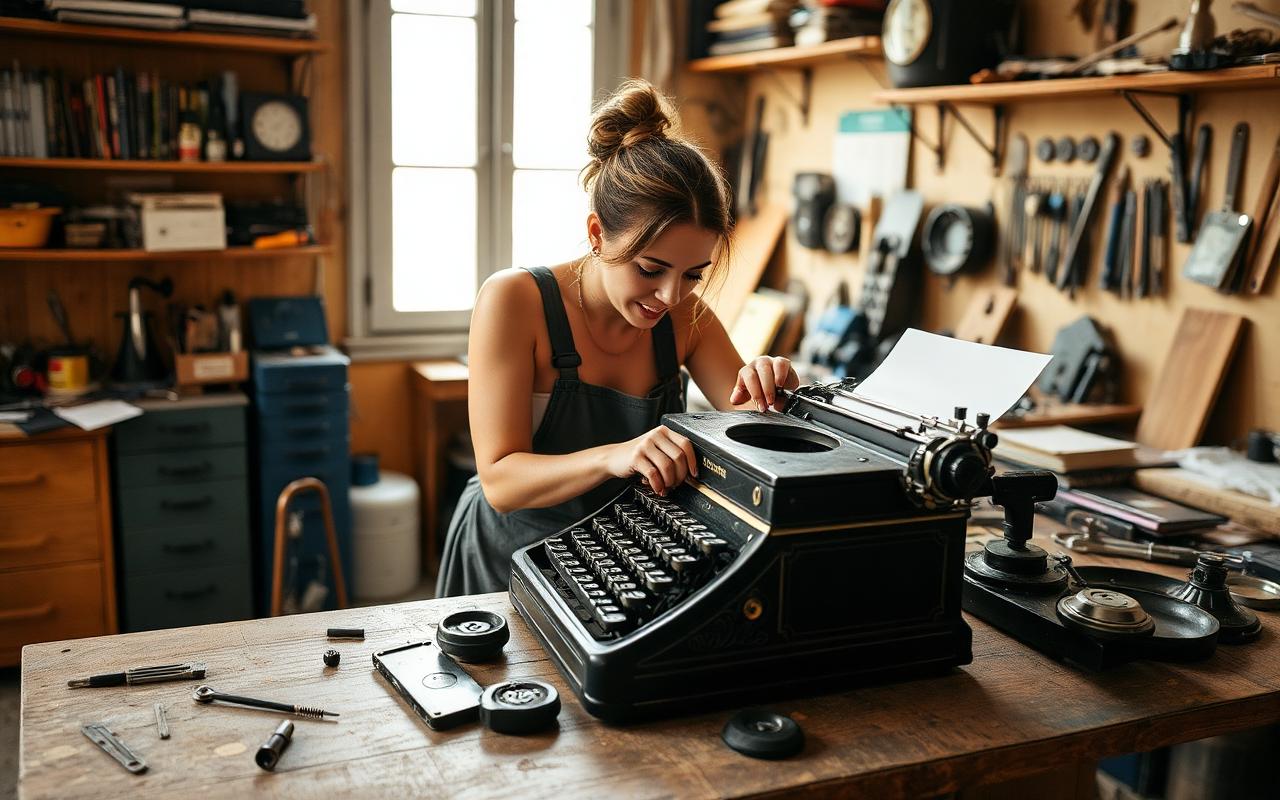
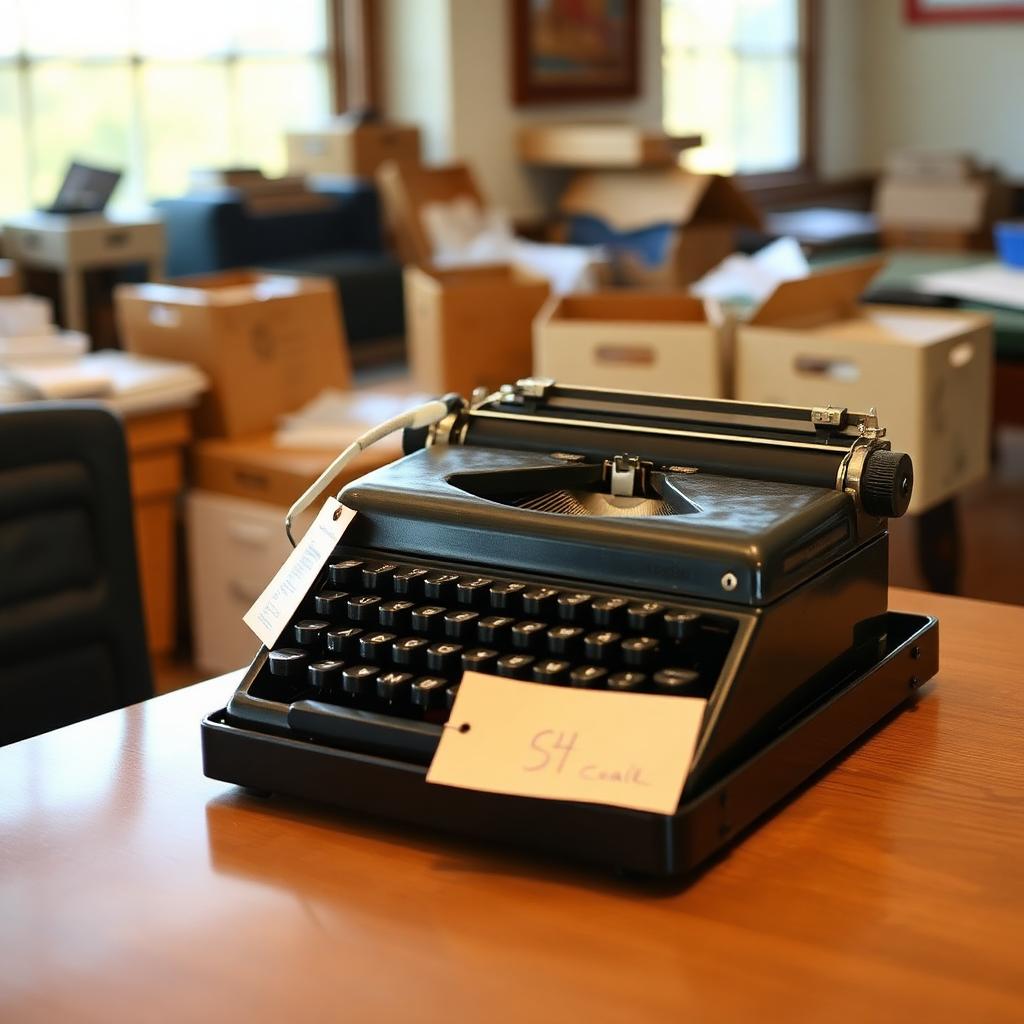
Rita Duarte works from a small workshop on a side street below the Castelo de São Jorge, in an eighteenth-century building whose ground floor has been a tradesman's shop of some kind for two centuries. When I visited on a March afternoon, three portables were in various stages of disassembly on the bench, a fourth was being tested at a writing desk in the corner, and a fifth waited under a linen cover for a customer to collect it the following morning.
Duarte is forty-one, laconic, and unusually good-humoured about a trade that most engineers of her generation would consider a peculiar career choice. Over an hour of coffee and periodic interruption from the shop bell, we talked about how she arrived at this workshop and what she has learned since.
How she started
"I was an engineer at a firm making industrial pumps," she said. "It was fine work. The person who ran this shop was my grandfather's friend — João Silveira, seventy-something at the time, wanting to close because he had no one to leave the tools to. I came to see the shop for the last time and I stayed."
She trained under Silveira for four months before he retired formally. The training was not systematic. "He would hand me a machine and say, 'This one needs to work by Thursday.' I would ask what was wrong. He would say, 'You have four days to find out.' Then he would go for lunch. It was excellent teaching."
Silveira died in 2013. Duarte kept the shop under her own name, kept most of his tools, and — significantly — kept his notebook, a bound ledger dating from 1961 in which he had documented specific repair procedures for over three hundred machine variants. The notebook, she says, is worth more than any single object in the shop.
The machines she loves
I asked her which machines she reaches for when she has a free afternoon and wants to type.
"An Olympia SM4 in olive green. I have one that came in for a full service and the owner never came back for it — six years now — so it is mine. The keyboard is like nothing else. And an Olivetti Lettera 32 with the Portuguese layout, which I use for correspondence. It types more slowly than the Olympia but it is prettier on the desk."
The machine she loves working on but rarely gets to touch is the Hermes 3000. "They come in perhaps four times a year. Each one is a small holiday. The engineering is delightful. Every part is where it should be, and nothing has been cheapened. It is the Swiss watch of typewriters."
The machines she refuses
She does not, as a policy, work on electric typewriters made after about 1972. "The Selectrics I will handle if I know the customer. Later electrics, the electronic daisy wheels, no. The parts are gone. The service manuals are gone. I would spend a month on one and produce a machine that would fail again in six weeks. That is not a service I can offer honestly."
She also refuses machines that have been previously restored badly. "I get calls: 'I bought this typewriter, someone repainted it, can you fix the mechanism?' Sometimes yes. But if the segment has been sprayed with something wrong, or the internal springs have been replaced with the wrong tension, I say no. The customer paid to have the machine ruined; I cannot un-ruin it in any economical way."
The Portuguese connection
Duarte has become the specialist for the Portuguese-market Olivetti Lettera 32 and 22, which used a keyboard layout distinct from the Italian original: the tilde, cedilla, and specific accented characters are placed differently to suit Portuguese orthography.
"There were perhaps forty thousand of these produced. Most survive in Portuguese homes. Owners bring them in expecting to spend three hundred euros and go home with a machine their grandmother typed on. It is a wonderful part of the work."
She keeps a small parts inventory of Portuguese-specific type slugs, which she buys from any donor Portuguese Lettera she can find. "The Italian layout is easy to source. The Portuguese layout, if I do not find spares now, in ten years I will not be able to restore these machines at all."
The waiting list
Her waiting list currently runs about eighteen months. She works alone, takes on approximately eighty machines per year, and has no intention of expanding the shop.
"A machine takes what it takes. I cannot rush it. If I hired an apprentice I would spend all my time training, and the customer would still wait. Better to be honest: eighteen months, this is how it is."
What she wishes people knew
I asked what she wishes owners understood before bringing a machine in.
"Two things. First, if the typewriter has been in a damp basement for twenty years, do not clean it before bringing it. Everything you do before I see the machine makes my job harder, not easier. Bring it dirty. Bring it in the case. Do not try to help.
"Second: the machine is a machine. It is not a person. It will not remember you. But you will remember it. So choose one you actually want to sit with for years, not one that impresses your friends."
She paused, then added: "Also, please stop putting WD-40 on the typebars. I beg you."
Rita Duarte's workshop takes new inquiries by email; the current waiting list is honoured strictly in the order requests arrive.
Yes, primarily within the EU. US and UK shipments are accepted case by case.
Full restorations of a common portable run 250 to 450 euros in 2026. Complex work or rare parts sourcing costs more.
She runs a two-day introductory workshop twice a year for a small number of students. Announcements go out via her workshop's newsletter.
This article is original writing for The Ribbon & Platen and may not be reproduced without permission. Sources consulted:
- Interview transcript, March 2026
- Workshop records provided by Rita Duarte