Type-Ins Return: A Report From Six Spring Meetups
Six type-ins in six cities across two months. Attendance is up, the average age of attendees is down, and the machines being carried are, for the first time in years, mostly late-model portables under fifteen dollars.
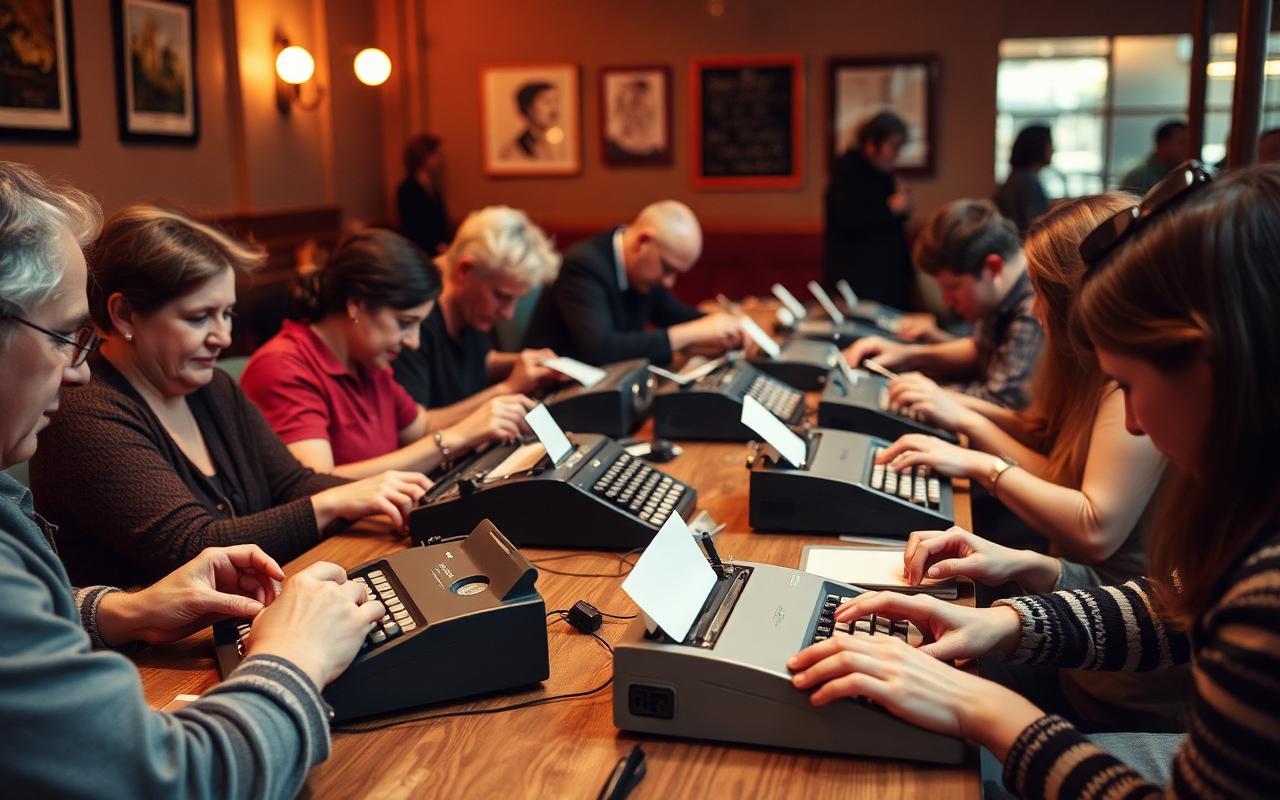
A type-in should be a strange thing to attend. Twenty people sit in a public café with mechanical typewriters, click away for two hours, exchange sheets of typed conversation, and drink coffee. And yet the ritual has become one of the reliable pleasures of the hobby, and — this spring in particular — one of the fastest-growing.
Six correspondents reported back from meetups in March and April. Together they suggest that the type-in tradition, which was quieter through the difficult years of the early 2020s, has returned with unexpected vitality.
London, March 15
The Bloomsbury type-in has been running quarterly since 2014 and attracted forty-two attendees to a first-floor café off Marchmont Street. Host Rosalind Peake reported the highest-ever turnout and a queue for the four spare machines she had brought.
Notable machines observed: two 1930s Corona 3 folding typewriters (both in G2 condition), a rare cream Hermes Baby with the original travel case, and — most surprising — a working 1917 Underwood 5 that a graduate student had inherited and was using for the first time.
Ages ranged from nineteen to seventy-four. Peake noted that of the fifteen first-time attendees, twelve were under thirty. Several had discovered the hobby through short-form video content.
Berlin, March 22
The Kreuzberg meetup at Café Wendel drew twenty-eight attendees. Berlin has an unusually strong tradition of East German portable collecting, and the room was heavy with Erika, Optima, and Groma machines. A working Groma Kolibri, tiny and immaculate, drew a small crowd for the afternoon.
Host Jonas Bauer organised an informal "identify this machine" table, at which two attendees confirmed that a battered blue portable brought by a first-timer was in fact a rare 1966 Adler Tippa S variant with the elite typeface — a machine worth several times what the young owner had paid at a flea market.
Lisbon, April 5
The Príncipe Real type-in was a first-time event, organised by a group of design students at Faculdade de Belas-Artes. Twenty-two attendees, most under twenty-five, most typing on machines borrowed for the occasion.
The Lisbon meetup was notable for what it lacked: none of the anxieties about "correct" collecting or "authentic" restoration that older communities sometimes carry. Participants swapped machines freely, tried typefaces, and photographed pages of typed conversation for social sharing. Two Portuguese-market Olivetti Lettera 32s appeared with their original Portuguese keyboards intact.
Boston, April 12
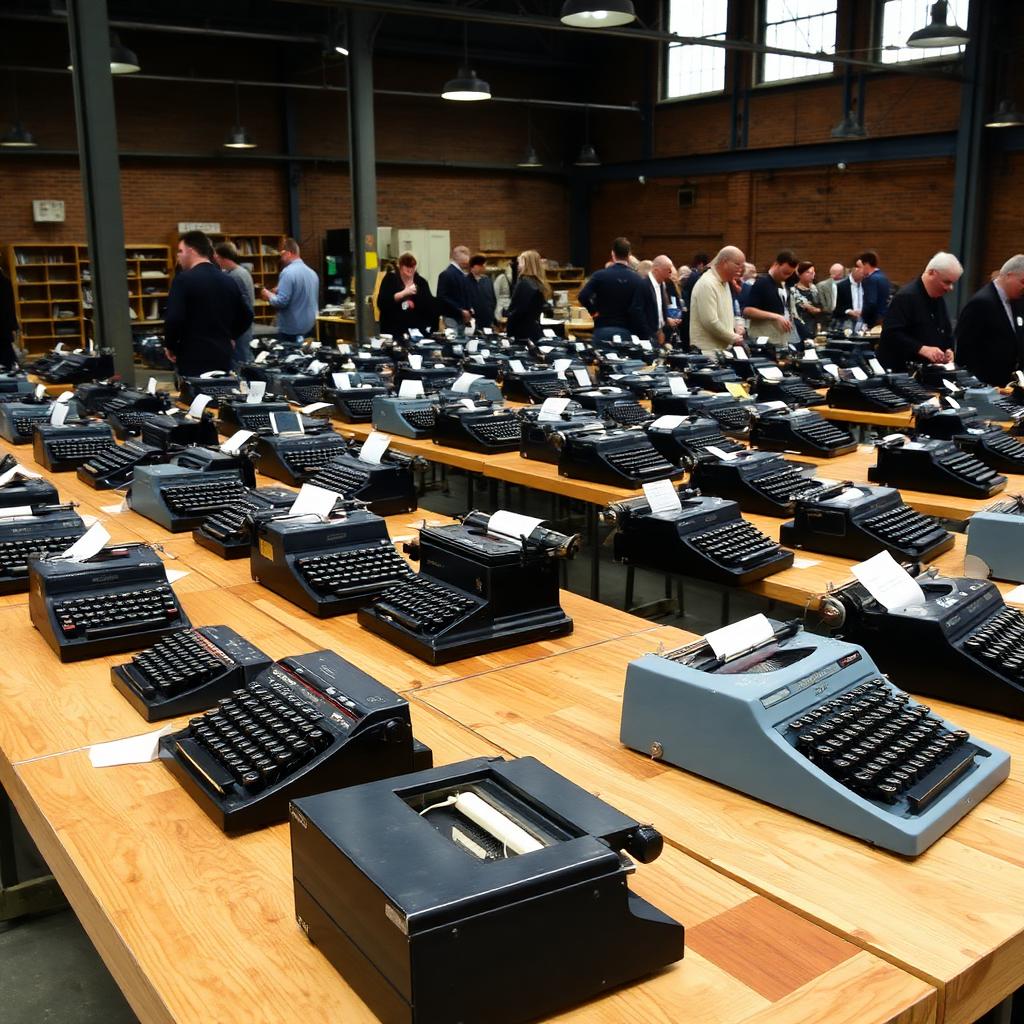
Fifty-one attendees at the Somerville meetup, the largest single type-in reported this spring. The venue — a former print shop converted into a community space — hosted twelve type-in stations, a small repair table, and a ribbon-swap corner.
Notable event: a bring-your-own-project bench where five attendees worked on stuck portables under the guidance of two local restorers. Two machines that arrived non-functional left typing.
Portland, April 18
Portland's type-in is one of the oldest and most established, and this year's attendance of thirty-eight matched pre-2020 highs. The unusual sight of the afternoon was a fully restored 1929 Royal Portable with original travel case, brought by a collector who had spent two years on the restoration and was typing on the machine in public for the first time.
Buenos Aires, April 26
Argentina's growing typewriter community held a first spring type-in in a bookshop on Avenida Corrientes. Twenty-nine attendees, mostly Spanish-keyboard machines, dominated by Olivetti Lettera 32s and Olympia SM4s that had once served in Argentine offices.
Host Mariana Villar reported particular enthusiasm from journalists in attendance who remembered typewriters from professional work. Several returned the following weekend to a local repair shop to have their childhood machines serviced back into working condition.
Patterns worth noticing
Across all six reports, three patterns recur.
First, the average age of attendees has fallen sharply since the last comparable survey (spring 2019). The hobby is no longer dominated by retirees; it is genuinely intergenerational, with younger participants often the majority at first-time events.
Second, the barrier to entry has effectively vanished. First-timers are welcomed, spare machines are provided, and no one is expected to arrive with either knowledge or a pristine example. This inclusiveness was not always the norm and represents a real cultural shift within the community.
Third, the machines being carried are increasingly late-model portables purchased for under fifty dollars. High-end collector machines are still present but are no longer required to belong. The hobby has, in effect, rediscovered the point of a portable typewriter: something to write with, in public, alongside other people who are doing the same.
The next round of type-ins is scheduled through the summer in most major cities. Anyone within travel distance of one is warmly encouraged to attend.
Search 'type-in [your city]' on major social platforms; most meetups are announced two to four weeks in advance. The Typewriter Database calendar lists a running schedule.
No. Bring what you have, or come without a machine. Hosts routinely bring spares for first-timers to try.
Almost never. Attendees usually buy their own coffee; some hosts pass a hat for the venue.
This article is original writing for The Ribbon & Platen and may not be reproduced without permission. Sources consulted:
- Correspondent reports from six cities
- Type-In Registry, spring 2026