Removing Rust Without Removing Metal: A Conservative Descaling Method
Rust on a typewriter is a symptom and a threat. Aggressive removal takes the steel with it and leaves a pit that never types cleanly again. Here is the bench method that removes rust and leaves the metal underneath.
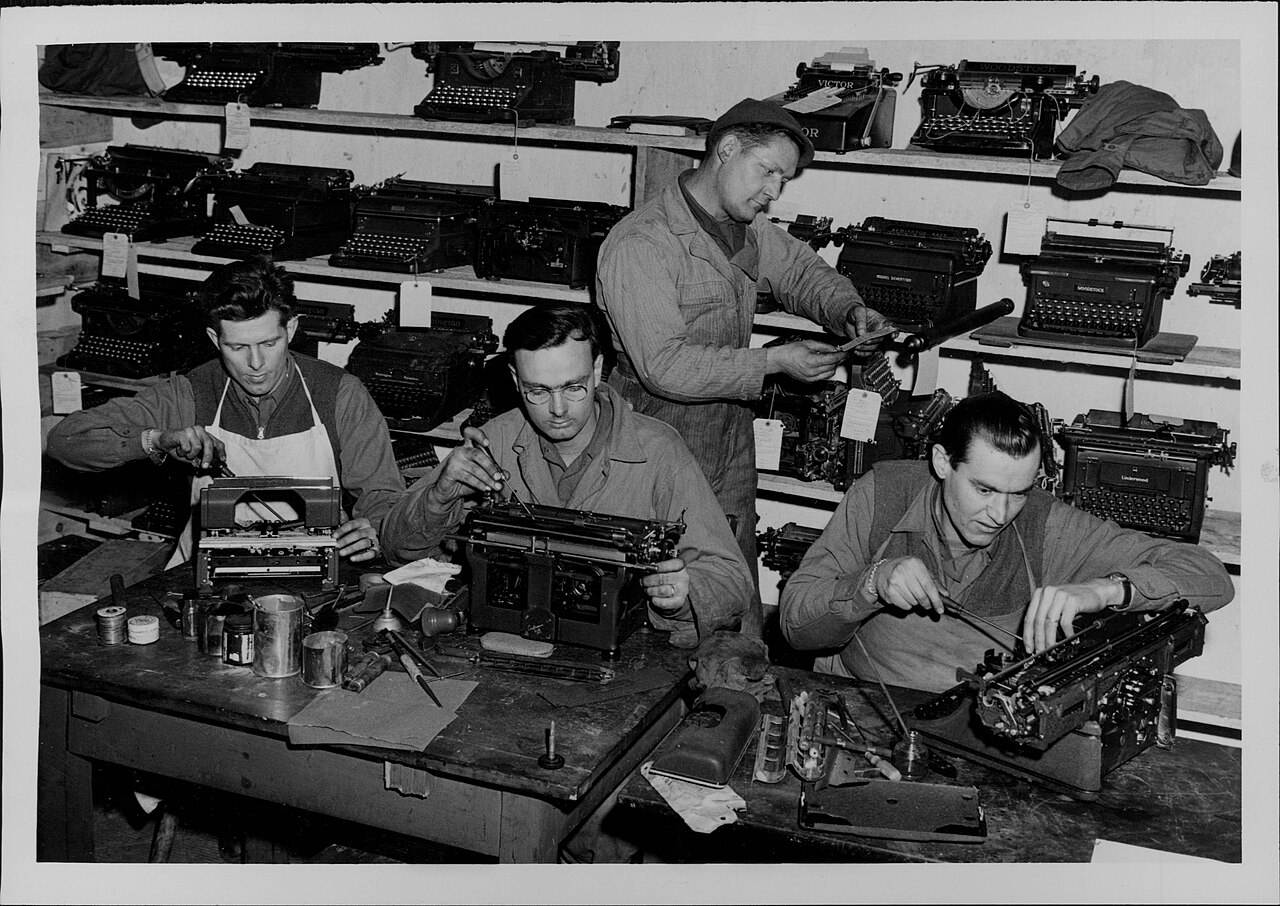
Rust is the thing that turns a repairable typewriter into a parts machine. It seizes pivots, freezes carriages, pits typebars, and destroys the clearances the mechanism needs to function. The instinct when confronted with rust is to remove it — to scrub, to dissolve, to grind it away until the metal shines. That instinct is wrong more often than it is right, because aggressive rust removal takes the steel with the oxide, and the steel that comes back is pitted, undersized, and unable to bear the tolerances it was made to.
The conservative method removes the rust and leaves the metal. It is slower than the aggressive method and it produces a surface that looks less clean, but it produces a part that still works. The choice between the two is the choice between a machine that types and a machine that shines, and the machine that types is the one that matters.
What rust actually is
Rust is iron oxide — the iron in the steel has combined with oxygen and water, and the resulting compound is larger in volume than the steel it replaced. This is why rusted parts seize: the oxide grows inside the clearance between two parts, filling the space that was meant for clean metal, and the parts lock together.
The rust is not the enemy. The rust is a symptom of moisture having reached the steel, and the enemy is the moisture. Removing the rust without addressing the moisture means the rust returns. Removing the rust without removing the metal means the part still fits and still functions. The method below does both.
The conservative sequence
1. Penetrate and free
Do not force a rusted part. A typebar that does not move, a carriage that does not roll, a shift that does not shift — these are seized by oxide, and forcing them breaks the part at the oxide line, which is now the weakest point in the steel.
Apply a penetrating oil and wait. A day, two days, a week for a stubborn joint. Work the part gently by hand after each soak. The oxide breaks down under the oil and the part frees without the steel yielding. Patience here saves parts that no amount of skill can recover once broken.
2. Dissolve the oxide
Once the part moves, the oxide still coats the bearing surface. A mild acid dissolves iron oxide without attacking the base steel aggressively. Evaporust and similar chelating rust removers are the bench standard: they are selective, reusable, and they stop acting when the oxide is gone.
Submerge the part (or apply the gel to the area) and wait. Chelating removers work slowly — hours to overnight — and they do not touch sound steel, nickel, chrome, or paint. This is why they are conservative: the worst case is that you waited too long, and nothing happened to the metal you wanted to keep.
3. Neutralise and dry
Acid leaves the steel active — ready to rust again at the first moisture. Rinse the part thoroughly in water, then in alcohol to displace the water, then dry completely. A heat gun on a low setting or a warm bench lamp drives the last moisture out of the bearing surfaces.
4. Protect immediately
Bare, derusted steel will re-rust within hours in humid air. Apply a light machine oil to bearing surfaces and a wax or oil film to cosmetic surfaces. The protection is not permanent — it needs to be maintained — but it breaks the moisture cycle that caused the rust in the first place.
The methods to avoid
Wire brushing and sanding remove rust by removing metal. They are fast, they produce a bright surface, and they leave the part undersized and pitted. Use them on cosmetic surfaces where the metal loss is invisible, never on bearing surfaces or pivots.
Naval jelly (phosphoric acid gel) is effective on bare steel but attacks nickel, chrome, and paint. It is appropriate for parts that have been stripped for refinishing, not for parts on an assembled machine. It wicks into pivots and cannot be fully rinsed from a mechanism.
Vinegar and other household acids are sometimes recommended and are too weak to be useful and too uncontrolled to be safe. They act slowly, unevenly, and they leave the steel active. Use a product designed for the purpose.
Electrolysis: the severe-case method
For a part that is heavily rusted — a seized carriage rail, a frozen mainspring barrel — electrolysis is the most conservative option. A mild current through a sodium carbonate bath converts the iron oxide back to iron, depositing it on the part, without touching sound metal. The setup is simple (a plastic tub, a sacrificial steel anode, a battery charger, and washing soda) and the result is a part that retains its original dimensions.
Electrolysis has limits. It strips plating, it can damage spring temper if the part overheats, and it must be done with the part removed from the machine. It is the right method for a bare steel part that would be ruined by any chemical approach, and the wrong method for anything plated or assembled.
The rule for rust is the rule for the whole hobby: the least aggressive method that works is the method to try first. Conservative derusting takes longer and looks worse than aggressive derusting, and it produces a machine that runs. The aggressive method produces a machine that shines and does not, and a machine that does not run is not a typewriter.
On bare steel parts removed from the machine, yes, with care. On an assembled machine, no — naval jelly will attack nickel, chrome, and paint, and will wick into pivots you cannot rinse.
For bare steel and iron, yes. For plated parts, springs, and anything with a soldered joint, no. Electrolysis will strip plating and can damage spring temper if the part gets hot.
Yes, immediately. Freshly derusted steel is active and will re-rust within hours if left bare. A light oil film or a wax coating seals it.
This article is original writing for The Ribbon & Platen and may not be reproduced without permission. Sources consulted:
- Ames Supply, Typewriter Repair Manual, rust treatment chapter
- Author's bench logs, 40 derusting jobs