Lubricating a Typewriter: Where Oil Belongs and Where It Does Not
More typewriters are damaged by oil in the wrong place than by oil in the right one. The segment, typebar pivots, and mainspring barrel need a drop each; the escapement and feed pawls need none. Here is the bench map.

The single most common mistake in typewriter maintenance is the belief that oil fixes everything. A machine types stiffly, a typebar is slow to return, the carriage feels gritty — and the owner reaches for the oil can. Half the time this makes the problem worse, because the mechanism that needed attention was not the mechanism that needed oil, and oil in the wrong place creates new problems that are harder to find than the original dryness.
A typewriter is not a single lubrication system. It is four systems with different requirements, and the oil that helps one will damage another. The bench map below is the one I use on every service call, and it is the one that keeps machines running for decades rather than months.
Check the machine before applying anything
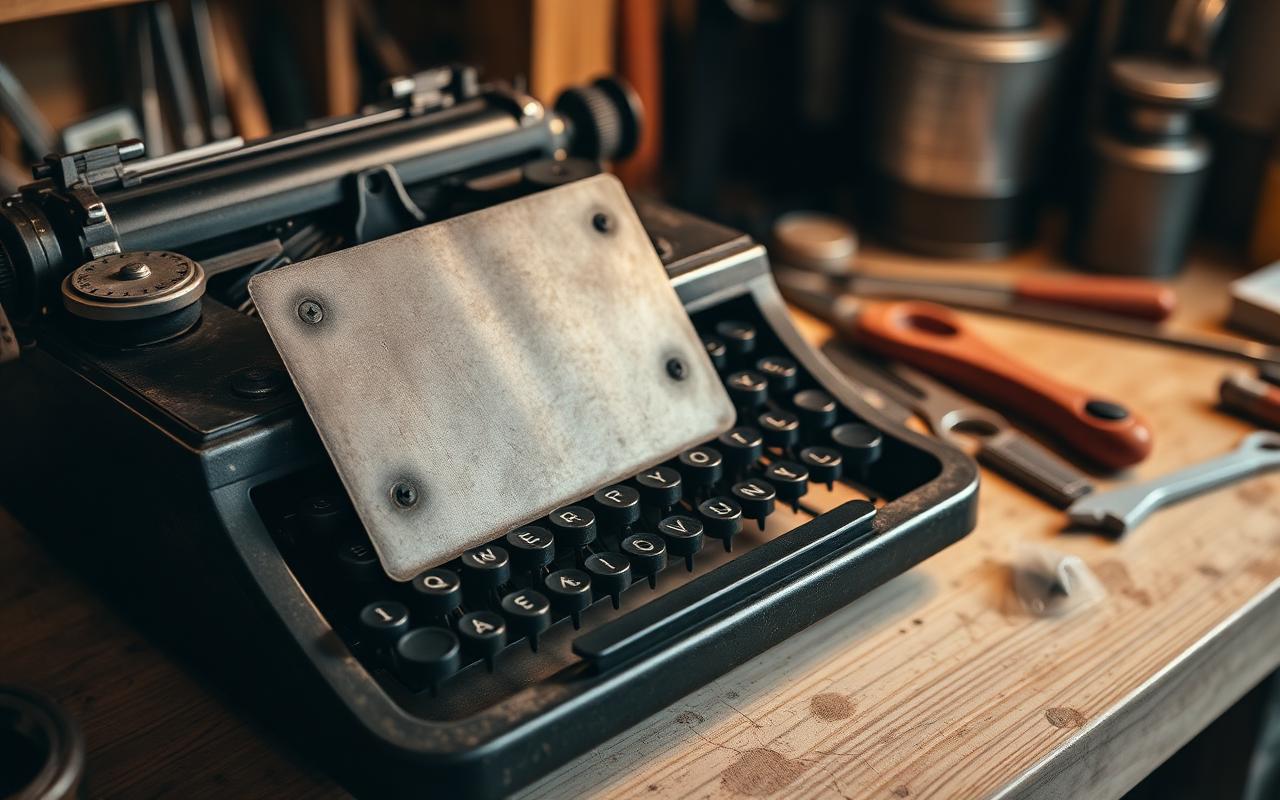
This map is a general starting point, not a substitute for the service manual for your exact make and model. Manufacturers used different materials and mechanisms, and a model-specific manual or an experienced restorer's guidance takes priority when it differs. Disconnect electric machines from power before service. If cleaning requires a solvent, verify that the exact product is compatible with the machine's paint, decals, rubber, and plastics; follow its label and safety data sheet, provide ventilation, and remove ignition sources. NIOSH identifies inhalation, skin, and eye exposure routes for Stoddard solvent. Do not use a spray to flood an assembled mechanism. Stop if safe access or material compatibility is uncertain.
The four lubrication zones
Zone 1 — Pivots: a drop of light oil
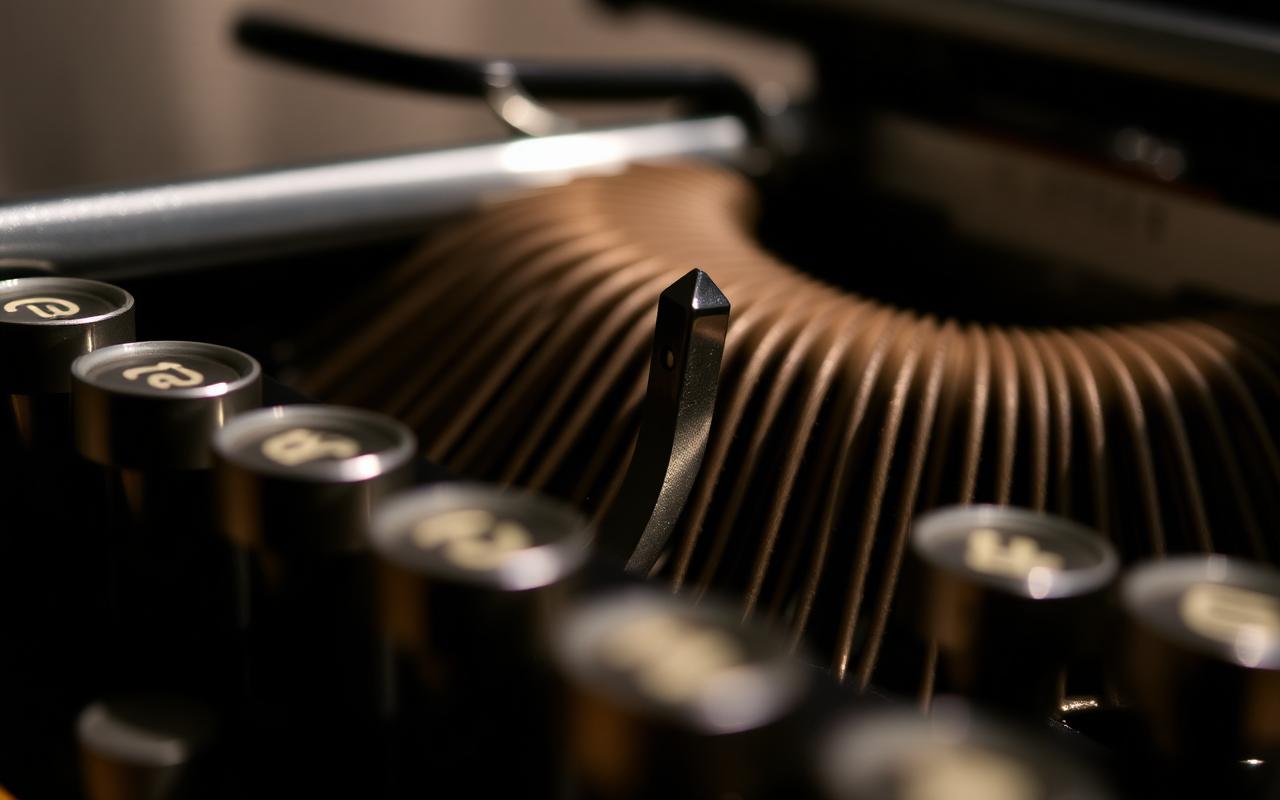
The typebar pivots, the bell crank pivots, and the key lever pivots are the points that benefit from a single drop of light machine oil. These are steel-on-steel or steel-on-bronze bearings with small contact area and high load; they need a thin film that replenishes.
Use sewing machine oil or a dedicated typewriter oil. One drop per pivot, worked in by pressing the key a dozen times, then leave the machine overnight so the oil spreads. Wipe any excess that runs out with a cloth — oil on the segment or the type guide will stain the ribbon and print.
Zone 2 — Carriage rails: a film of grease
The carriage rails — the two hardened steel rods the carriage rolls on — take a light film of grease, not oil. Oil on the rails runs off and pools in the frame; grease stays in place and cushions the ball bearings or rollers.
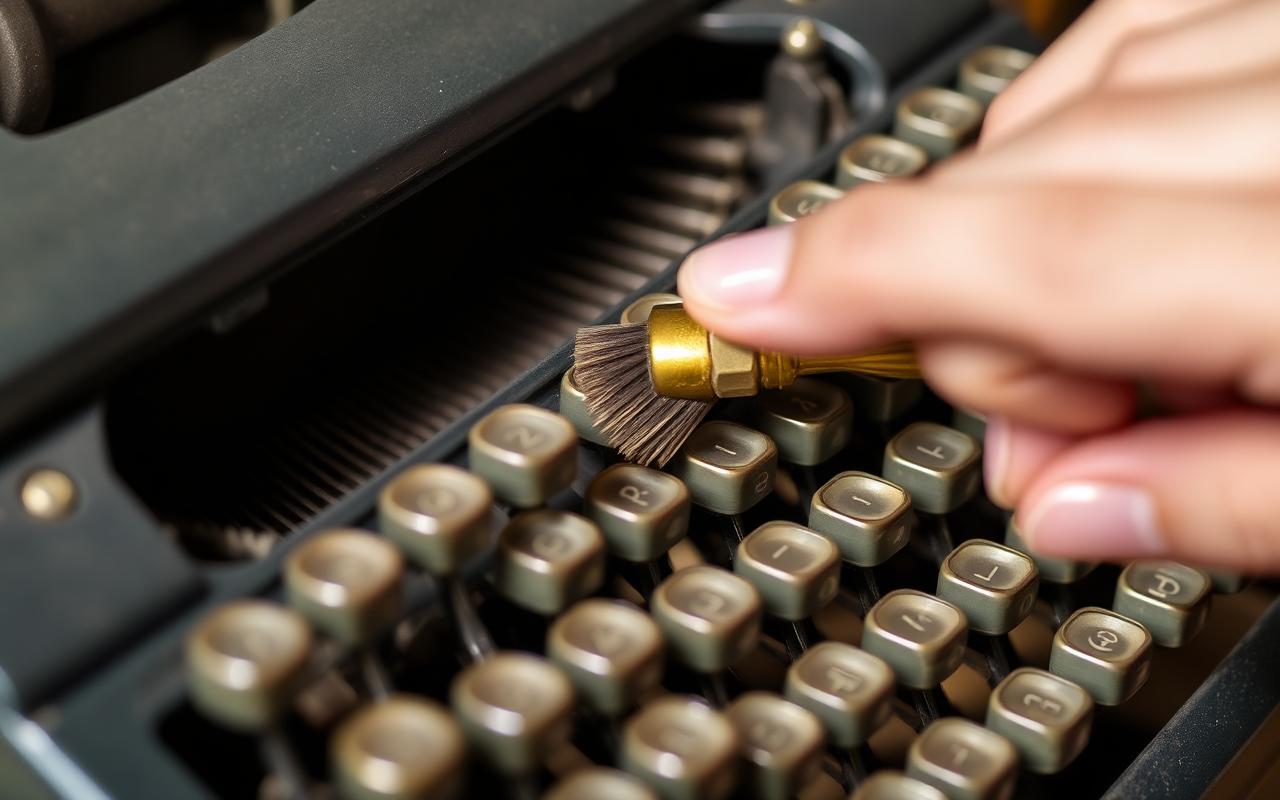
Clean the rails first with a cloth until the cloth comes back clean. Then apply a trace of white lithium grease or a dedicated carriage rail grease — an amount you can barely see, spread along the rail with a finger. Run the carriage end to end a dozen times to distribute. Too much grease collects dust and becomes an abrasive paste; the correct amount is barely visible.
Zone 3 — Mainspring barrel: a drop at the arbor
The mainspring barrel turns on its arbor under high load. A single drop of oil at the arbor every few years reduces the unevenness that develops as the spring winds and unwinds. Do not lubricate the spring itself. Grease on a mainspring attracts grit, thickens the spring's action, and degrades the steel over time. The arbor only.
Zone 4 — Escapement and feed pawls: nothing
This is the zone that gets oiled by mistake and causes the most damage. The escapement wheel, the feed pawl, the check pawl, and the star wheel all depend on friction and precise timing. Oil here changes the timing — the wheel overshoots, the pawl skips, the carriage spaces irregularly — and the resulting behaviour looks like a worn escapement when the actual cause is a drop of oil that should not be there.
If the escapement feels dry or gritty, the correct response is cleaning, not lubrication. Flush the pivots with solvent, let it evaporate completely, and reassemble dry. The escapement was designed to run dry, and it runs best dry.
The oils to use and to avoid
Use: sewing machine oil (20-weight, non-detergent), dedicated typewriter oil, or a synthetic light machine oil of equivalent viscosity. These are thin, clean, and do not varnish.
Avoid: WD-40, which is a solvent and water-displacer that dissolves existing lubricant and dries to a varnish. Household 3-in-One oil, which thickens with age and gums pivots. Motor oil, which is too heavy and too detergent for typewriter pivots. Any oil in a spray can, which over-applies and migrates.
The bottle of sewing machine oil costs less than a single replacement typebar and will service fifty machines. There is no economy in using anything else.
The procedure
Work one zone at a time, and clean before you lubricate. Oil on top of dirt does not lubricate; it makes a grinding paste.
- Clean the rails with a cloth, then apply the trace of grease and distribute.
- Oil the pivots — one drop each, work the keys, wipe excess, leave overnight.
- Oil the mainspring arbor — one drop, wind and unwind the spring a few times.
- Clean the escapement with solvent if it is gritty, and reassemble dry.
- Test type a full page. If spacing is irregular after oiling, you got oil in the escapement; flush it and start over.
The machine that has been oiled correctly types more smoothly, returns more crisply, and lasts longer than the machine that has been oiled generously. The difference is not the oil — it is the map of where the oil went, and where it did not.
No. WD-40 is a solvent and water-displacer, not a lubricant. It dissolves existing lubricant, leaves a thin film that dries to a varnish, and accelerates wear. Use sewing machine oil or a dedicated typewriter oil.
Every six months for a daily writer, once a year for an occasional user, and never for a display machine. Over-oiling collects dust and migrates into places oil should not go.
The mainspring barrel benefits from a single drop of oil at its arbor every few years. Do not lubricate the spring itself; grease on a mainspring attracts grit and degrades the spring over time.
This article is original writing for The Ribbon & Platen and may not be reproduced without permission. Sources consulted:
- Underwood service manual, 1937 edition
- Olivetti shop manual, Lettera 32, 1965
- Author's bench logs from 180 service calls
- NIOSH Pocket Guide: Stoddard solvent (mineral spirits)