How Japan Learned to Type: From Kanji Matrices to Kana Portables
Japan could not use a Western typewriter, and for forty years it did not have a good answer to that fact. Then it invented several at once. Here is how kanji, kana, and Latin typewriters coexisted on Japanese desks.
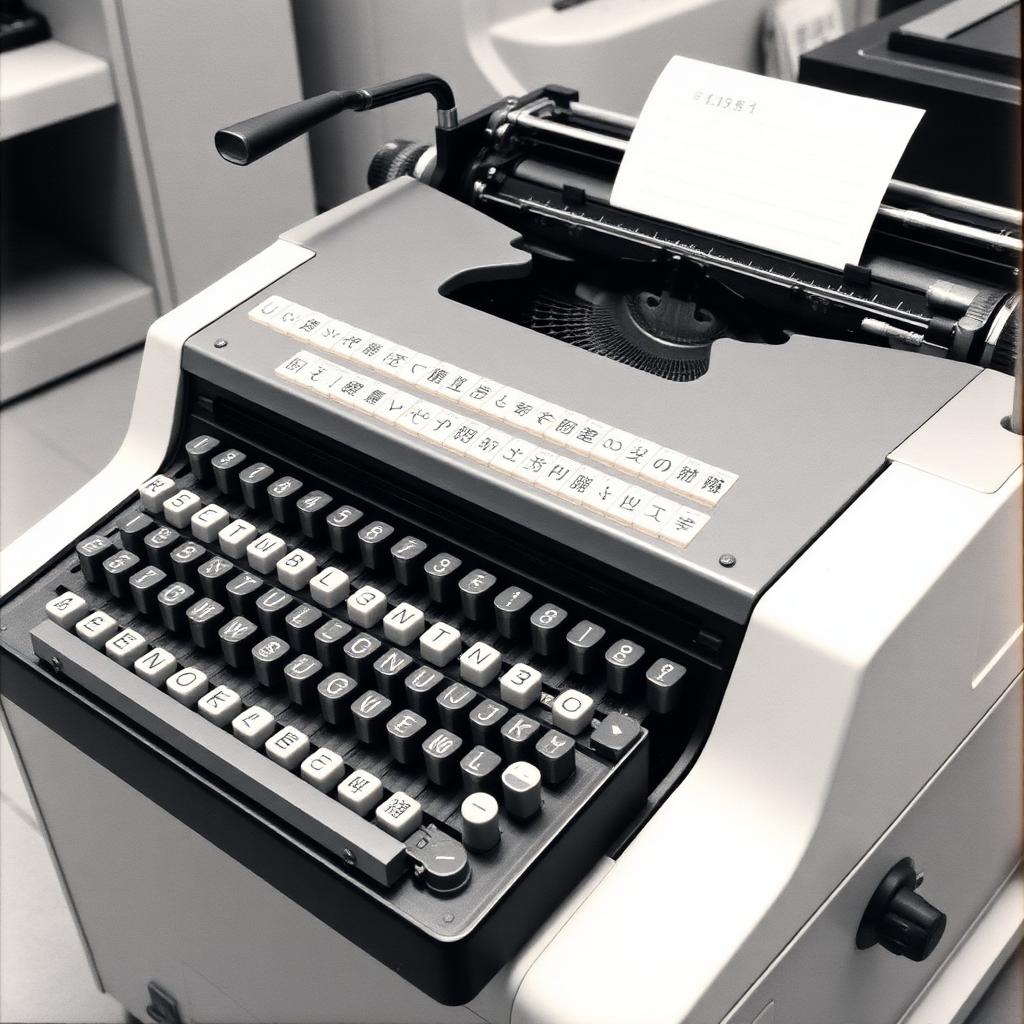
The Japanese typewriter is not one machine but three parallel machines, developed for three different writing needs, coexisting on the same office desk for most of the twentieth century. Understanding how this ecosystem worked is the best way to understand why the personal computer, when it arrived in Japan in the 1980s, replaced typewriting there faster and more completely than anywhere else in the world. There was more to replace, and the replacement was long overdue.
The problem
Japanese uses four scripts. Kanji — Chinese characters — carry most content words and number in the thousands even in daily use. Hiragana handles grammatical inflection and function words. Katakana marks foreign loanwords, technical terms, and emphasis. Latin script (rōmaji) appears in acronyms, foreign names, and numbers. A single business letter typically uses all four.
No conventional Western typewriter can address more than a fraction of this system. The 44-key portable that suffices for English addresses perhaps 1 percent of daily-use kanji. Japan needed a different tool, and by the 1920s it had begun to build one.
The kanji typewriter (1915–1980s)
The first commercially successful Japanese kanji typewriter was the Sugimoto machine of 1915, refined and mass-produced by Toshiba, Nippon Typewriter, and several smaller manufacturers through the following decades. Its architecture had almost nothing in common with a Western typewriter.
A kanji typewriter has no keyboard in the Western sense. Instead, a flat tray holds 2,000 to 5,000 character types, arranged in a grid. A movable printing head runs on rails above the tray. The typist positions the head over the desired character, presses a lever, and the head descends, picks up the character, strikes it against the ribbon and paper, and returns it to its slot.
The physical action is closer to a small hand-operated printing press than to a Remington. Speeds are correspondingly slower — a skilled kanji typist manages perhaps twenty characters per minute against a Western typist's two hundred — but the output is professional-grade Japanese text, indistinguishable from typeset material.
Kanji typewriting became a recognised profession. Training took months, certification was formal, and typists worked in dedicated pools within larger organisations. Government offices, universities, publishers, and law firms employed kanji typists into the 1980s.
The kana typewriter (1930s–1970s)
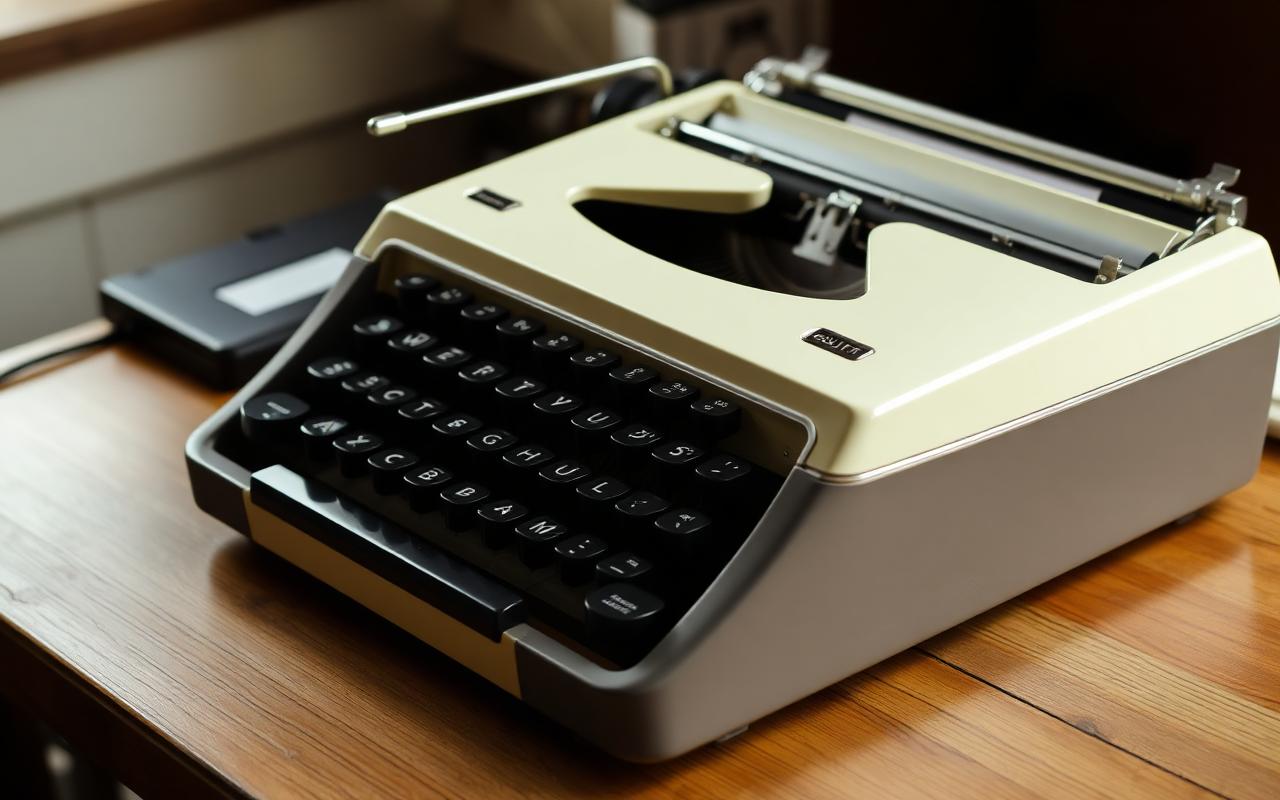
A parallel line of Japanese portables abandoned kanji entirely and typed only kana — hiragana and katakana — plus numbers and Latin letters. The keyboard could be laid out on a conventional 44-key portable design because the kana syllabaries have about 50 characters each and can share keys via shift.
Kana typewriters were used for informal correspondence, telegrams, technical fields where all-katakana output was acceptable, and — importantly — as training machines for Western-style office work. Companies like Olympia, Underwood, and later Brother built kana portables specifically for the Japanese market. They look like Western portables but with an unfamiliar keyboard.
Reading a document typed in pure katakana is difficult for a modern Japanese reader — the script is unpunctuated by kanji and everything runs together — but it was accepted for functional use. Telegrams and early computer output relied on the same convention for the same reason.
The Latin typewriter (all periods)
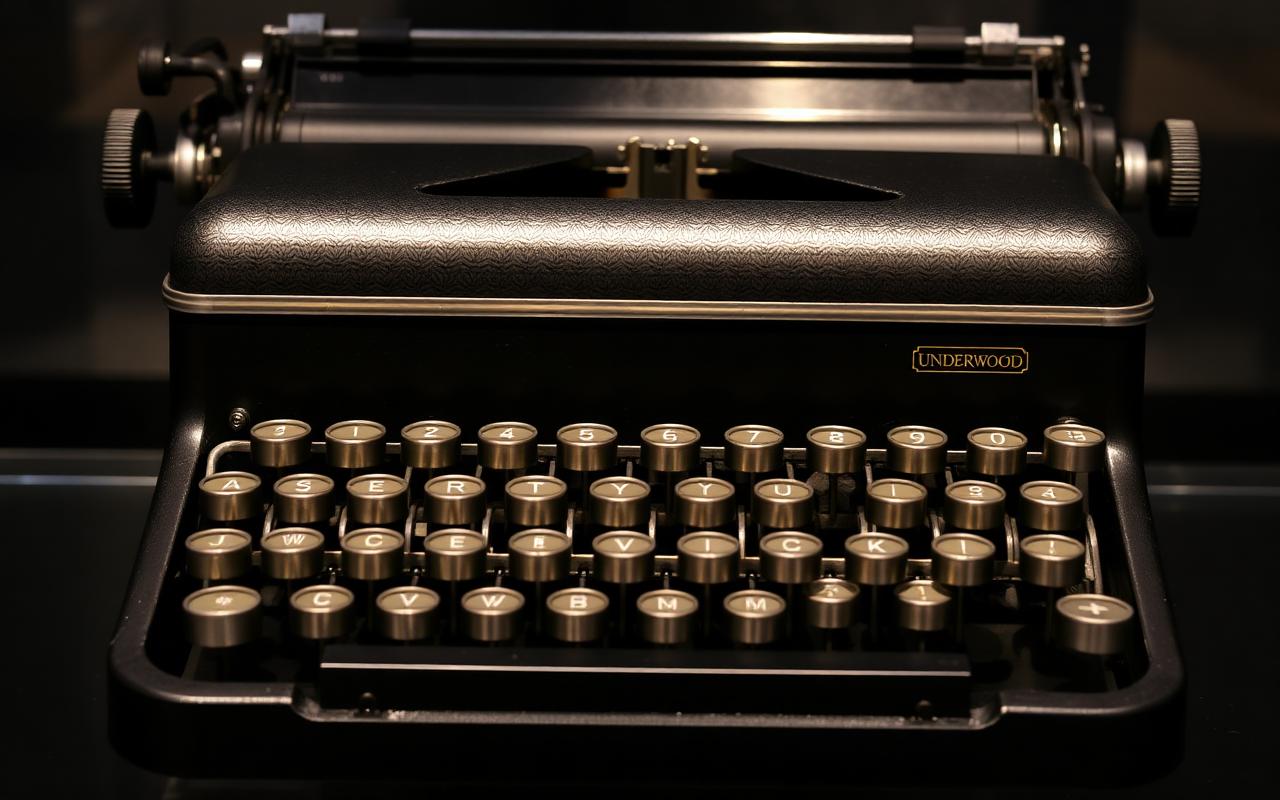
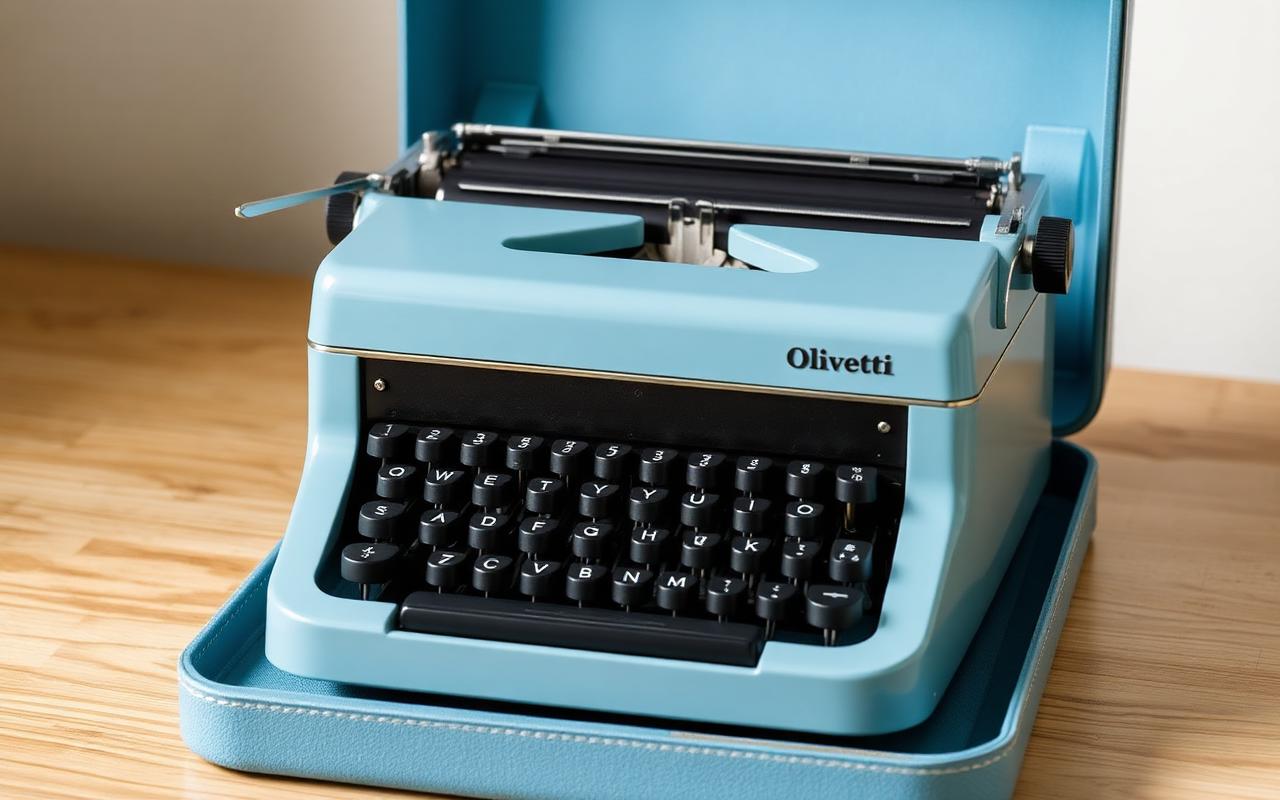
Standard Western typewriters — Underwoods, Royals, Olympias, Olivettis — were also sold in Japan throughout the twentieth century for English-language work, technical documentation, and correspondence with foreign counterparts. Educated professionals were expected to touch-type in English at Western speeds.
The result, on a mid-century Japanese office desk, was often three machines: a kanji typewriter shared among the pool typists, a personal kana portable for informal Japanese notes, and a Latin machine for foreign correspondence. Larger offices simplified by centralising kanji output and leaving individuals with the other two.
The transition
When word-processing computers arrived in Japan in the early 1980s, they collapsed all three machines into one. A software keyboard could handle kana input; conversion algorithms translated kana input into kanji through predictive selection; Latin letters were trivial. Within a decade, the kanji typewriter was extinct as an office tool. The kana portable followed it into obsolescence. Only the Latin typewriter, ironically, survived — as a hobby machine for the same reasons it survived in the West.
What remains
Kanji typewriters are conserved in industrial-design museums in Tokyo, Nagoya, and Osaka. A working example is a rare sight and a slow one; watching a demonstration is closer in feeling to watching a linotype cast a line of type than to watching an office typist work.
Kana portables surface occasionally on Japanese auction sites. Cosmetically they resemble their Western siblings; mechanically they are similar; the keyboards are a curiosity outside Japan and reduce collector demand accordingly.
The Japanese typewriter story is, more than anything, a lesson in how deeply a writing system shapes the tools built to serve it. Where the Roman alphabet allowed a small keyboard to encode all of English, Japanese demanded either a giant tray of characters or a linguistic compromise. That both solutions coexisted for sixty years, and were replaced within a decade when the technology finally allowed it, tells you exactly how much pent-up demand there was for the machine that finally came.
Yes — heavily, in offices and government, from the 1920s into the 1980s. Trained kanji typists were a recognised profession.
Common models had trays of 2,000–3,000 characters; larger office machines exceeded 5,000 with supplementary trays.
Rarely. Their size, weight, and lack of Latin character support limit foreign interest, but examples appear occasionally in industrial-design collections.
This article is original writing for The Ribbon & Platen and may not be reproduced without permission. Sources consulted:
- Toshiba Corporate History Museum: kanji typewriter exhibition catalogue
- Nihon Kikai Gakkai (Japan Society of Mechanical Engineers), typewriter engineering surveys 1955–1975
- R. Mullaney, 'The Chinese Typewriter' (2017), for context on East Asian typewriter development