The Groma Kolibri: An East German Ultralight and Its Politics
Fewer than four centimetres tall when closed, the Kolibri was the thinnest portable typewriter ever produced in serial numbers. Its story runs through the currency of Cold War East Germany.
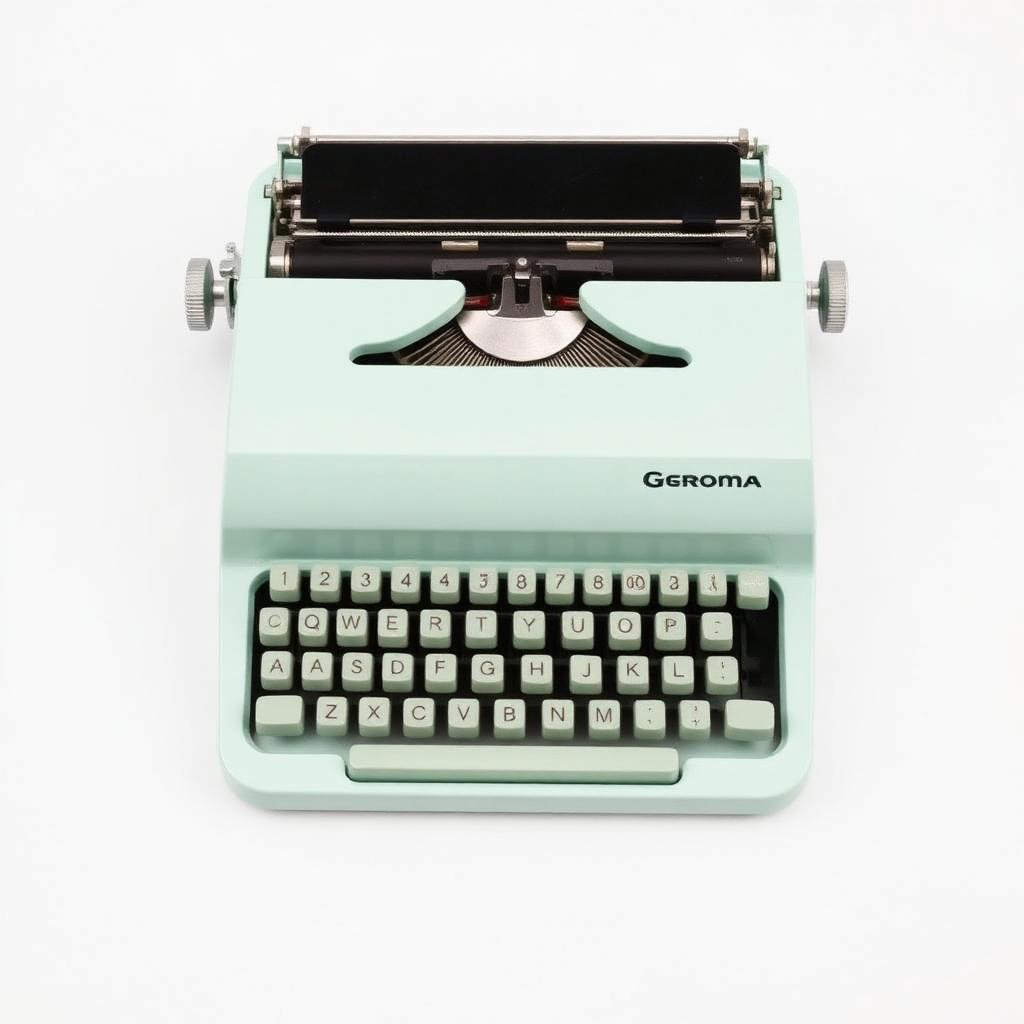
Nothing about the Groma Kolibri makes complete sense unless you understand that it was designed to be sold across the Iron Curtain. It is smaller than it needs to be, prettier than it needs to be, and built to a higher standard than East German domestic production usually managed. All of these features exist because the Kolibri was a hard-currency export product — a machine the German Democratic Republic sold to the West in order to earn the Deutsche marks and dollars it could not otherwise obtain.
That commercial mission shaped every design decision, and it also explains why so many surviving Kolibris are found not in Leipzig or Dresden attics but in Frankfurt, Vienna, London, and New York.
The plant
Groma began before the war as a private manufacturer in Markersdorf, Saxony, producing office and portable typewriters at modest scale. Post-war nationalisation converted it to VEB Groma (Volkseigener Betrieb Groma — People-Owned Enterprise Groma). Under the new arrangement, output was directed centrally, and by the mid-1950s the plant had a specific export mandate.
The Kolibri project began around 1953. The design brief was unusual: build a portable typewriter thin enough to fit into a briefcase alongside papers, quiet enough for a hotel room, and finished well enough to sell against a Hermes Baby or an Olivetti Lettera 22 in a Western department store. The result took two years of prototyping and reached production in 1955.
The form factor
The Kolibri closed to under four centimetres in height. This required a segment redesigned from the ground up: the typebars sit almost horizontal at rest, sweeping up into the printing point on a shallower arc than any conventional portable. The mainspring drum was flattened. The platen was undersized — a 22 cm carriage rather than the 26 cm standard of most portables. The paper support folded flat into the machine and locked with a small chrome catch.
Every one of these decisions was a compromise. The shallow-arc typebars are more fragile than steep-arc ones and more prone to bending under heavy use. The small platen limits paper size. The folded paper support scratches easily. But the total package fit into a briefcase, and no other typewriter of the period did.
The colour options
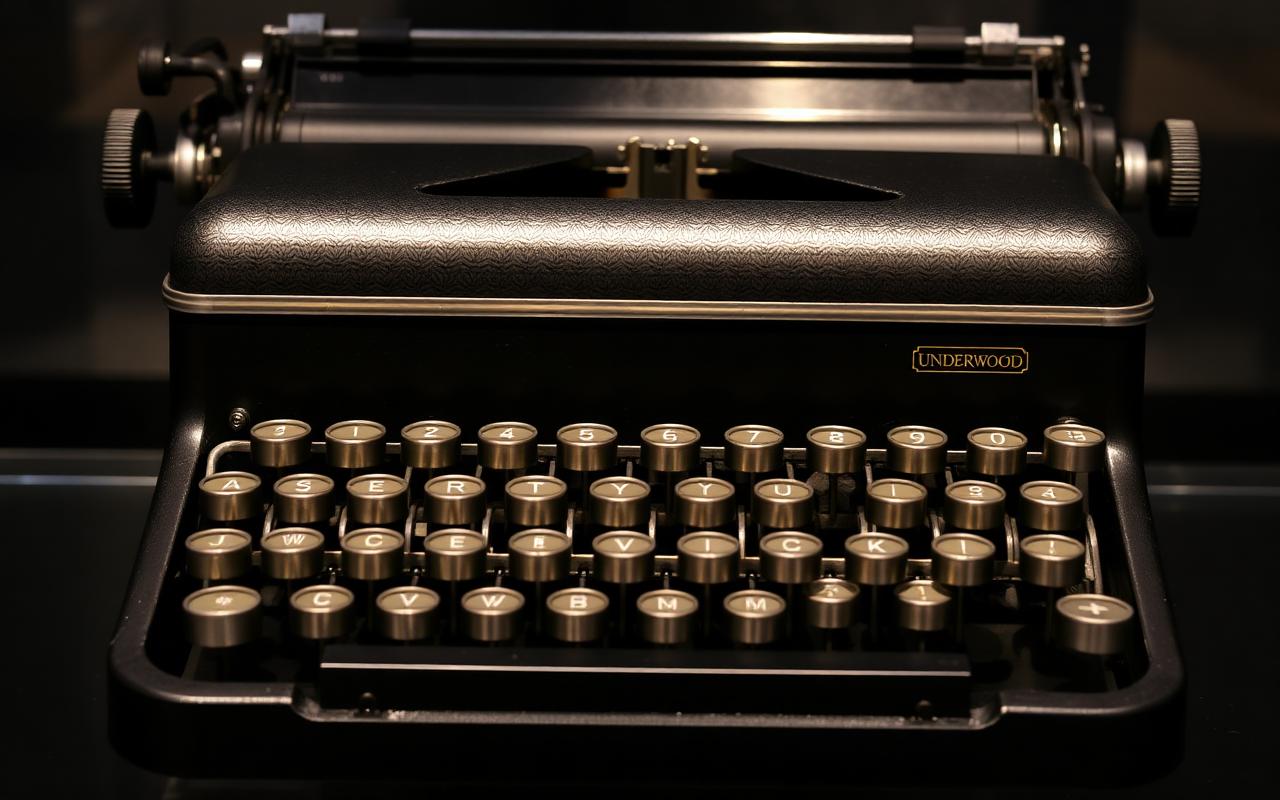
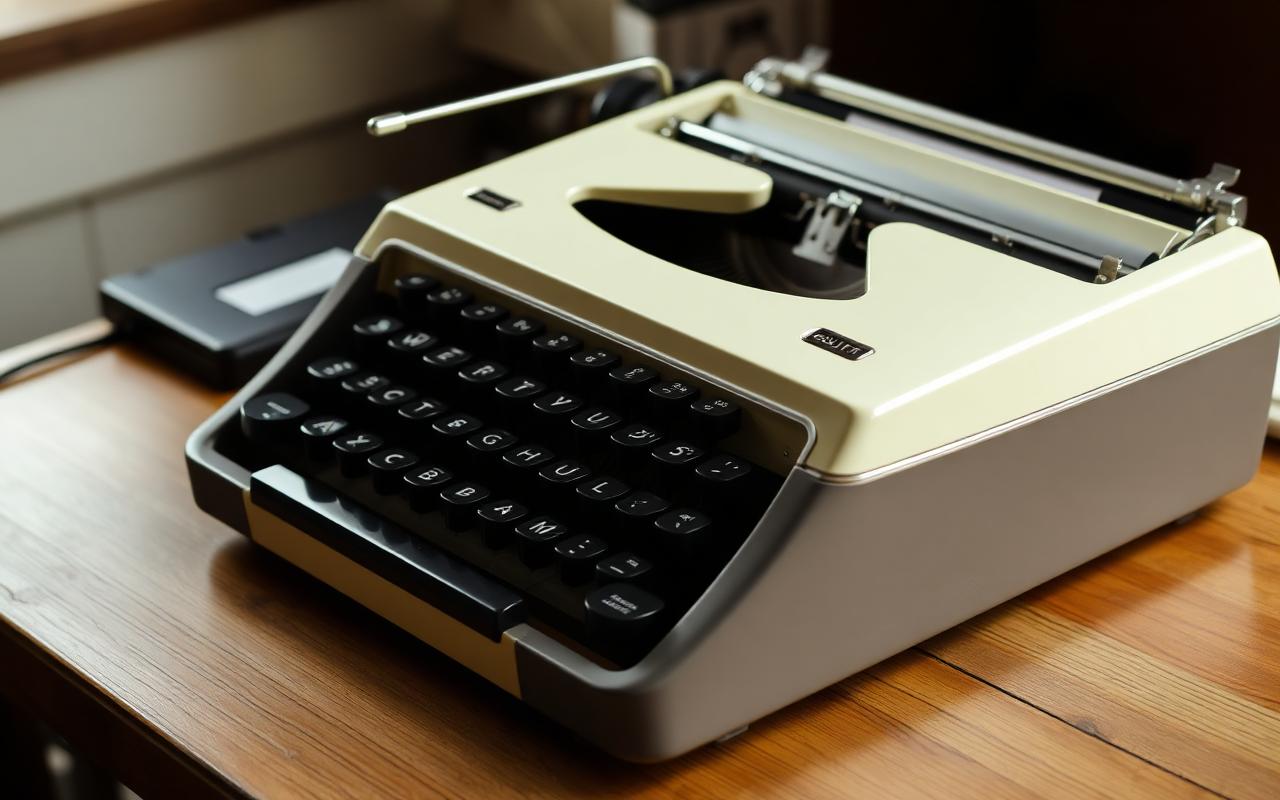
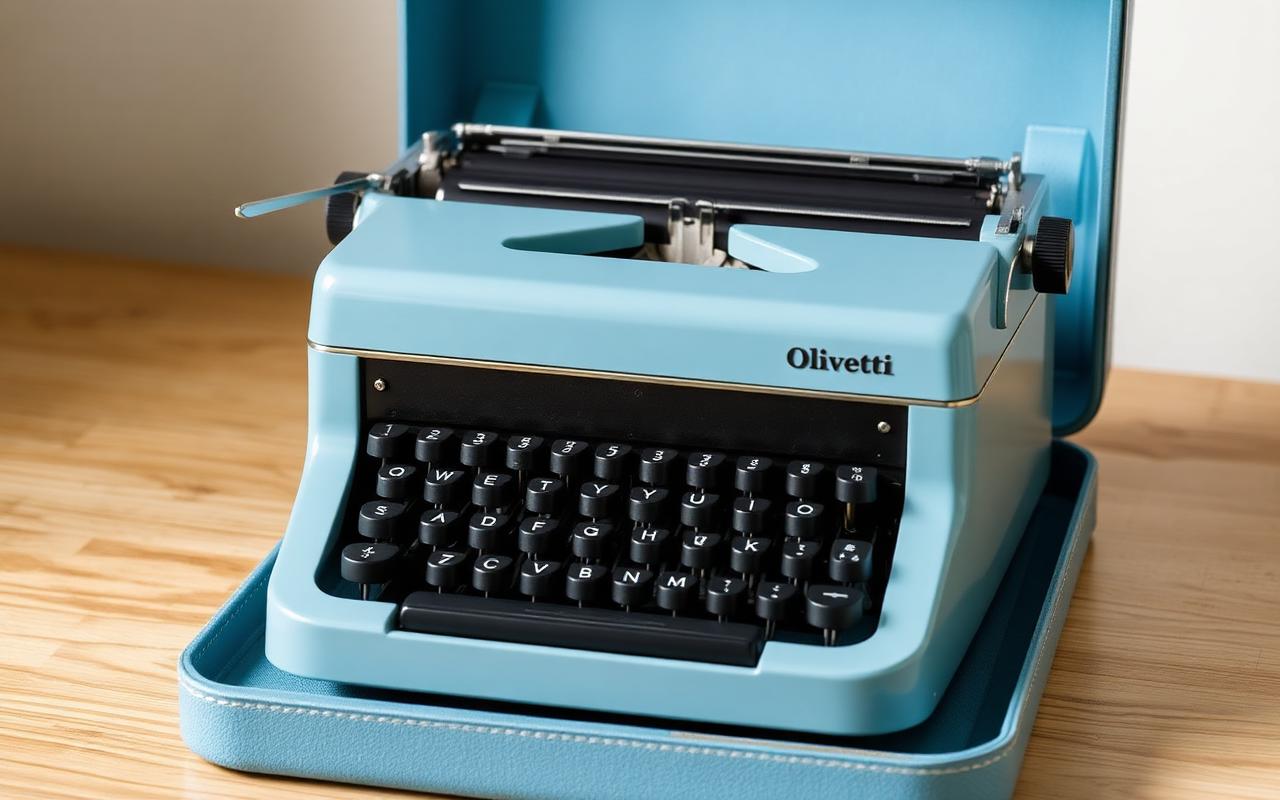
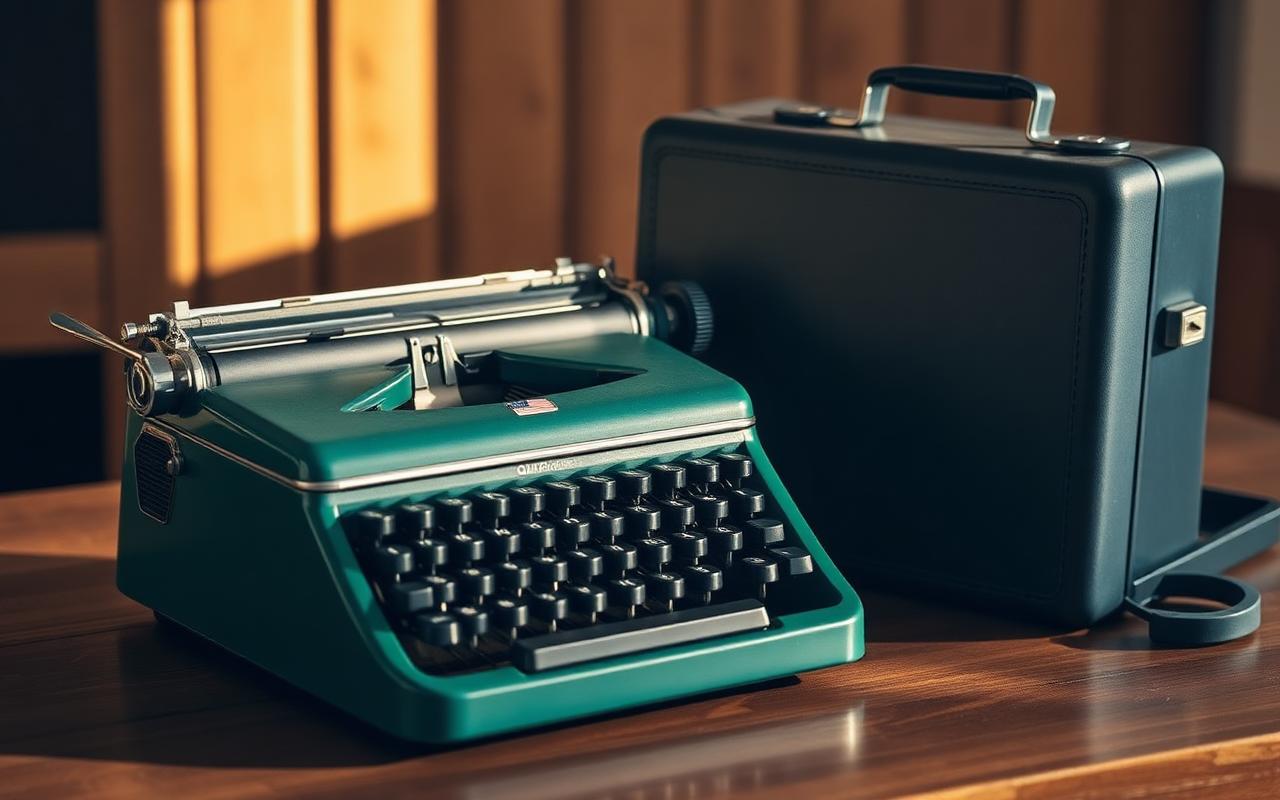
Kolibris were painted in a range of colours that had almost no precedent in East German consumer goods: mint green, coral pink, ivory, pale blue, black. The colours were market research: what would a Western buyer choose from a shop window? The colour options carried a small price premium and were disproportionately shipped abroad. In East Germany itself the plainer black and grey versions were more commonly sold, when they were sold at all — Kolibris were expensive in domestic terms and not widely stocked.
Typing on a Kolibri
For a machine so small, the Kolibri types remarkably well. The action is stiffer than a full portable — the shorter typebar arc gives less mechanical advantage — and the keyboard feels cramped to anyone used to a standard machine, but the escapement is precise, the ribbon lift is crisp, and the finished text on the page is clean and even. Speed typists find the Kolibri fatiguing over long sessions; occasional writers find it charming.
The noise floor is higher than expected. The thin case does not damp the mechanism the way a full portable's case does, and each keystroke is accompanied by a bright metallic ping. Users learned to place a folded towel under the machine on hotel-room writing surfaces.
The market
Kolibris sold well in West Germany, Austria, and Switzerland through the late 1950s. Department stores stocked them as premium portables at prices close to but slightly below the Hermes Baby. In the United States they had a small but loyal following, mostly among journalists and academics who valued their portability. In the Eastern Bloc they were more prestige item than everyday tool.
Production ended in 1963. The reason was partly commercial — the Hermes Baby and Olivetti Lettera 22 had improved and the price gap had closed — and partly political. VEB Groma was reorganised into a larger consolidated enterprise and the Kolibri line was not renewed. Later Groma portables shared the name but not the ultra-flat form factor.
Collecting a Kolibri
Good examples are still findable but no longer cheap. Original paint in mint green or coral commands the strongest prices; black examples are more common and priced accordingly. The important things to check are the typebar alignment (bent bars are common on abused examples), the folded paper support (frequently missing or replaced), and the case latch (fragile, often broken). Cases add real value — a Kolibri without its case is a machine, but a Kolibri with a matched case, keys, and instruction booklet is a piece of Cold War industrial history and priced as such.
The Kolibri sits at an unusual intersection: engineered by a state enterprise, sold to a market that was politically its opponent, priced to earn a currency its makers could not spend at home. It is a small, unlikely machine that could only have been made where and when it was, and every one that survives is a fragment of that specific and now-vanished commercial geometry.
For their size, yes. Compared to a full portable, they are stiffer and noisier, but the mechanism is precise and durable.
Very. Good original examples in colour options like mint green or coral trade at collector-portable prices, sometimes higher.
1957–1960 are the best-built. Very late Kolibris show cost cutting; early ones show teething problems.
This article is original writing for The Ribbon & Platen and may not be reproduced without permission. Sources consulted:
- VEB Groma production records (Sächsisches Staatsarchiv)
- Der Handel (East German trade press), Kolibri feature, 1958
- Author's inspection of 22 Kolibris across three collections