Typewriter Cases: Original, Reproduction, and When to Replace
The case is the part of the typewriter that takes the most abuse and gets the least attention. Original cases crack, lose their lining, and shed their latches. Here is how to evaluate, repair, and replace a case without degrading the machine it protects.
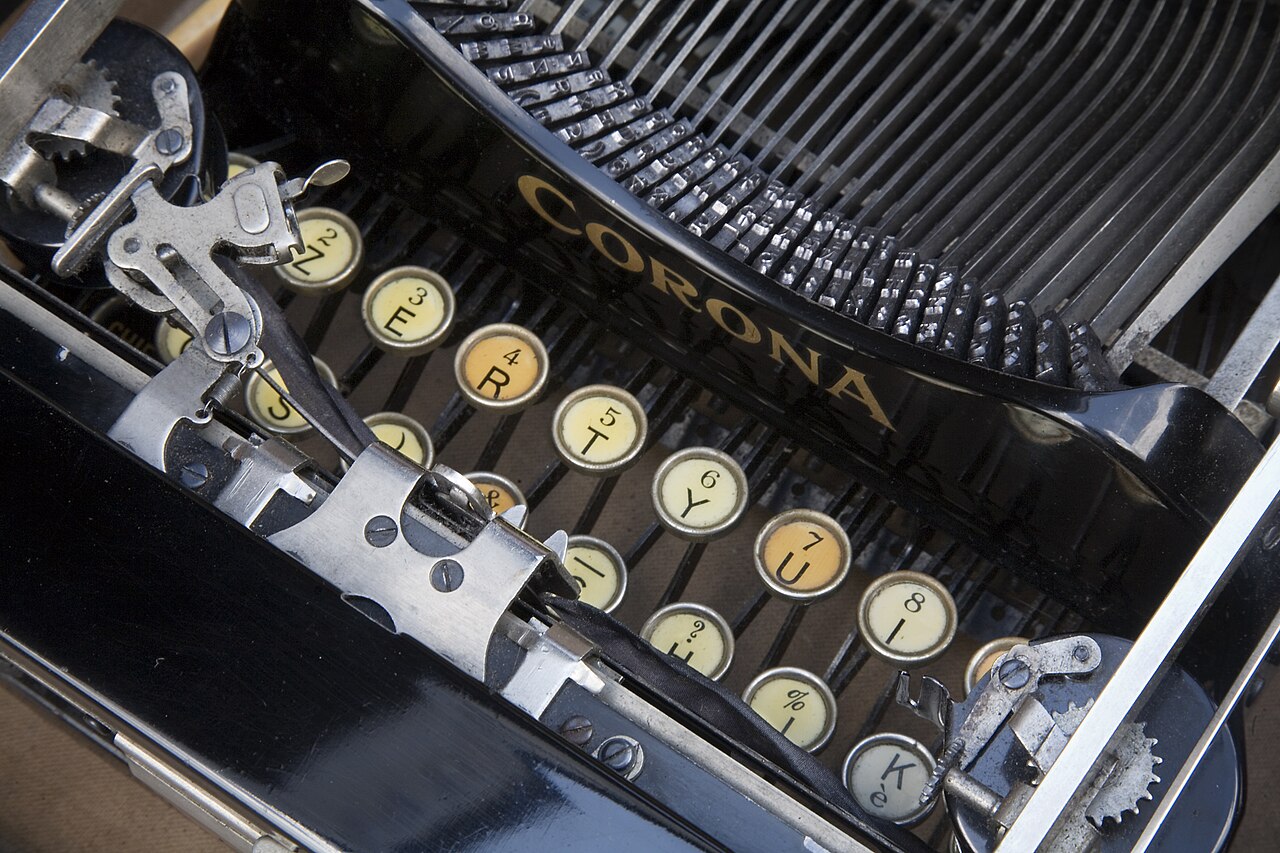
The case is the part of the typewriter that does the hard work. It absorbs every bump the machine encounters in transit, holds the weight of the typewriter by its handle, and keeps dust, moisture, and impact off the mechanism for the decades the machine survives. It is also the part most likely to be missing, broken, or mismatched when a typewriter turns up at a sale — because the case failed first, and the machine survived only because the case took the damage it was built to take.
Evaluating, repairing, and replacing cases is a distinct skill from typewriter repair, and it is the skill that keeps machines from needing typewriter repair.
The four case eras
Cases changed with the machines and with manufacturing economics, and the failures are era-specific.
Tin and leather-covered wood, 1895–1925
The earliest portables came in tin cases covered in leather or leatherette, with felt-lined interiors and brass latches. These cases are durable when intact but fail by denting (tin), delaminating (leather covering peels from the wood core), and latch fatigue (brass work-hardens and snaps). An intact case from this era is rare and adds meaningfully to the machine's value.
Pressed board and fabric, 1925–1955
The interwar period standardised on pressed board (a dense fibreboard) covered in fabric or leatherette, with metal corner brackets and stamped steel latches. These cases are lighter and cheaper than the earlier tin cases and fail by corner splitting (the board cracks at the bracket screws), fabric wear, and lining disintegration. They are the most common case on the most common portables — Olympia SM series, Hermes Baby, Royal Quiet De Luxe — and most are repairable.
Plastic clamshell, 1955–1975
Late portables shifted to plastic clamshell cases, usually in a colour matching the machine. These are light and cheap and fail by hinge cracking, latch breakage, and colour fading. Plastic cases are difficult to repair structurally — a cracked hinge is a permanent weakness — and replacement is often the better path.
Soft and hybrid, 1975 onward
The last typewriters came in vinyl or fabric bags with stiffened bottoms, or in simplified plastic shells. These offer minimal protection and are usually treated as disposable. A machine in its original soft case is worth no more than the same machine without it, for most collectors.
Evaluating a case
When a machine arrives, evaluate the case before the mechanism. The case tells you what the machine has been through.
- The latch. Close the case, lift by the handle, and shake gently. Movement between the halves means the latch is failing. A failed latch is the most urgent repair, because it leads to the machine hitting the floor.
- The lining. The felt or velvet lining that cushions the machine inside the case disintegrates with age into a fine dust that gets into the mechanism. If the lining is shedding, remove it entirely before storing the machine in the case.
- The handle. Lift the loaded case by the handle and hold it for a minute. A handle that stretches, creaks, or feels loose at its attachment is failing and will drop the machine.
- The corners. Press each corner bracket. Movement means the board has cracked underneath and the bracket is no longer holding.
A case that fails any of these is not protecting the machine. It is a container that will, at some point, become the cause of damage.
Repair versus replace
The decision depends on the machine's grade and the case's era.
For a collector-grade machine (G1 or G2), the original case is part of the provenance and should be repaired, not replaced. Corner splits reglue; latches re-rivet; linings re-felt. The work is fiddly but inexpensive, and it preserves the value that a replacement case would lose.
For a user-grade machine (G3), a functional case matters more than an original one. If the original case is beyond economic repair, a correct-period replacement — same model, same era — is the right choice. A mismatched but functional case is better than an original but broken one for a machine that will be carried.
For a parts-grade machine (G4 or G5), the case is a separate asset. Sell or keep it independently; it may fit a better machine later.
The lining problem
The most overlooked case failure is the lining. Original felt and velvet linings were animal-fibre based and disintegrate over decades into a dust that is slightly oily, slightly abrasive, and gets everywhere in the mechanism. A machine stored in a case with a failed lining will arrive with that dust in its segment, its pivots, and its escapement.
Check the lining before storing a machine in its case. If the lining sheds when you rub it, pull it out completely. A bare case interior is less attractive than a lined one but will not damage the machine. A new lining cut from modern felt is a straightforward replacement that protects without shedding.
The case is the typewriter's first and last defence, and it is the part that fails first because it is the part that works hardest. A half-day spent evaluating and repairing a case saves the several days of mechanism work that a failed case eventually makes necessary, and it preserves the provenance that makes a collection more than a row of machines.
For common portables like the Olympia SM3 and Olivetti Lettera 32, reproduction cases are available and acceptable for users. For collector-grade machines, an original case in fair condition is always preferable to a new one.
Tighten the latch screws first; if the screw holes are stripped, fill them with toothpicks and wood glue and re-drill. Replace the latch only if the metal itself is fatigued or broken.
Leather-covered wood cases can be reglued at the crack and reinforced with cloth tape inside. Pressed-board cracks are harder to hide and usually call for a replacement case.
This article is original writing for The Ribbon & Platen and may not be reproduced without permission. Sources consulted:
- Hermes case manufacturing records, 1950s
- Author's restoration logs, 90 case repairs