Ribbon Spools Are Not Interchangeable: A Field Guide
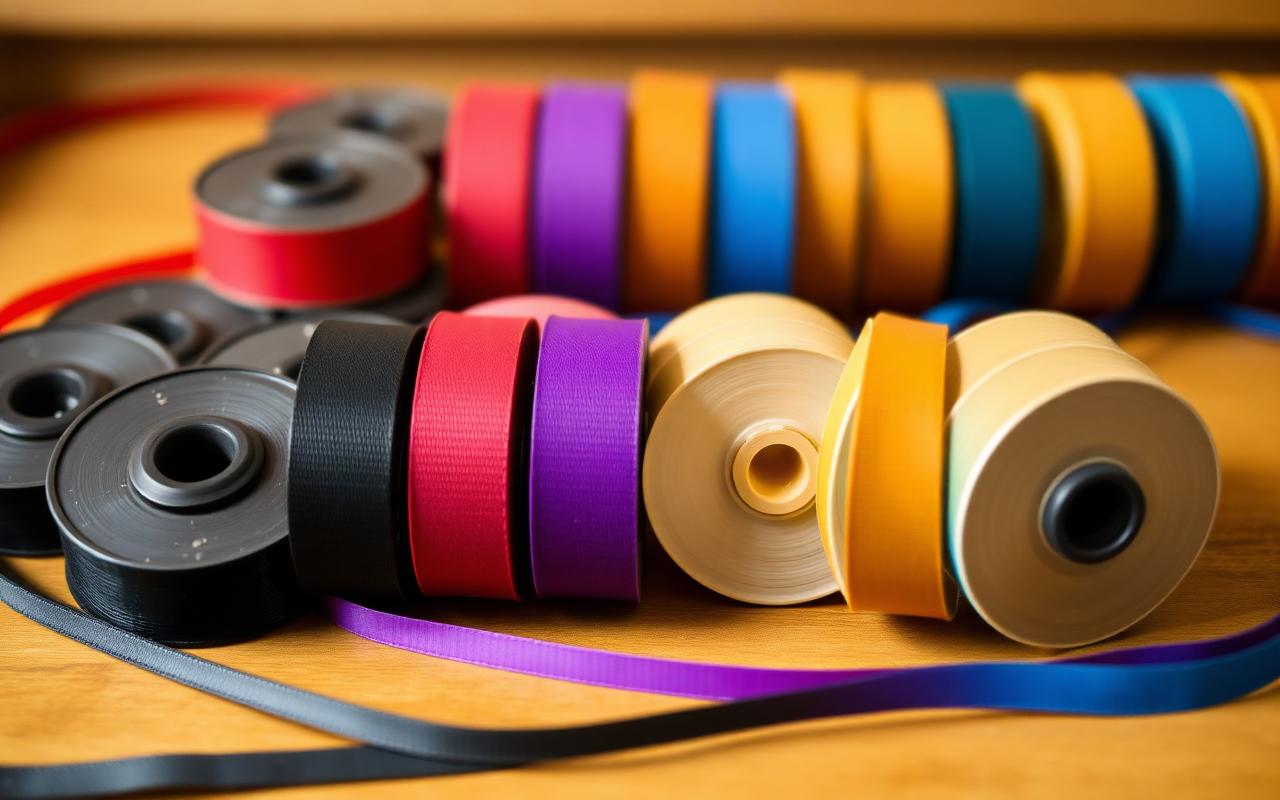
There are at least a dozen incompatible spool designs in common circulation. Buying the wrong size means a ribbon that will not feed. Here is how to identify what your machine actually takes.
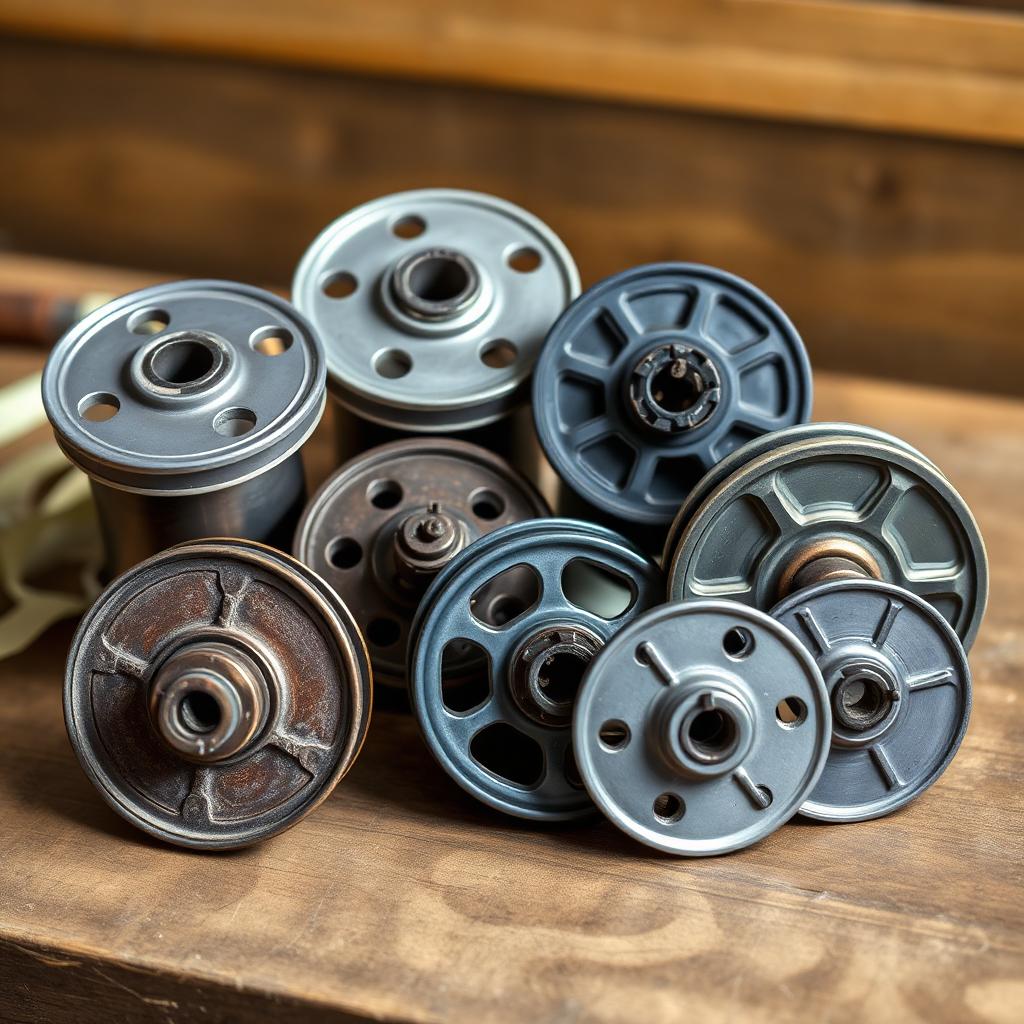
Ask an experienced typewriter mechanic what part of a machine causes the most friction between owners and their hobby, and half of them will say the same thing without hesitation: spools. Not typebars, not platens, not escapements. Spools. The little metal or plastic reels that carry the ribbon are, in aggregate, the single most common reason a working typewriter refuses to type — because someone bought a ribbon on the wrong spool, could not make it feed, and gave up.
The problem is real, it is fixable, and it is entirely a question of pattern recognition.
Why spools vary
Ribbon manufacturers in the first half of the twentieth century competed hard on consumables. A typewriter cost dozens or hundreds of dollars once; ribbons were bought monthly. Locking a customer into your brand of ribbon was worth engineering effort, and the easiest way to lock them in was a proprietary spool that would not accept a competitor's product.
The result, by the 1950s, was a market with at least twelve incompatible spool designs in wide circulation. Manufacturers rationalised toward a few common standards over the following decades, but tens of millions of machines had already been built to the older shapes, and every one of them still needed ribbons.
The dimensions that matter
Four measurements determine whether a spool fits a given machine.
- Outer diameter. The overall size of the spool. Common values are 1.5 inches (small portables), 2 inches (most portables and small offices), 2.5 inches (larger offices), and specialty sizes above and below.
- Hub diameter. The centre hole that fits over the ribbon-cup spindle. This is where most incompatibilities live. Two spools of identical outer diameter can have hubs that differ by a millimetre and simply will not mount.
- Hub keying. Some spools have a flat, square, or D-shaped hub cutout to mate with a matching spindle. A round-holed spool on a keyed spindle will spin freely instead of advancing.
- Rim height. The distance between the two flanges of the spool. If the rim is too tall, the ribbon cup will not close. If too short, the ribbon will jump off.
You need all four to match. Three out of four is not close enough.
The major families
Not every spool has a name, but the ones most owners encounter fall into a handful of recognisable families.
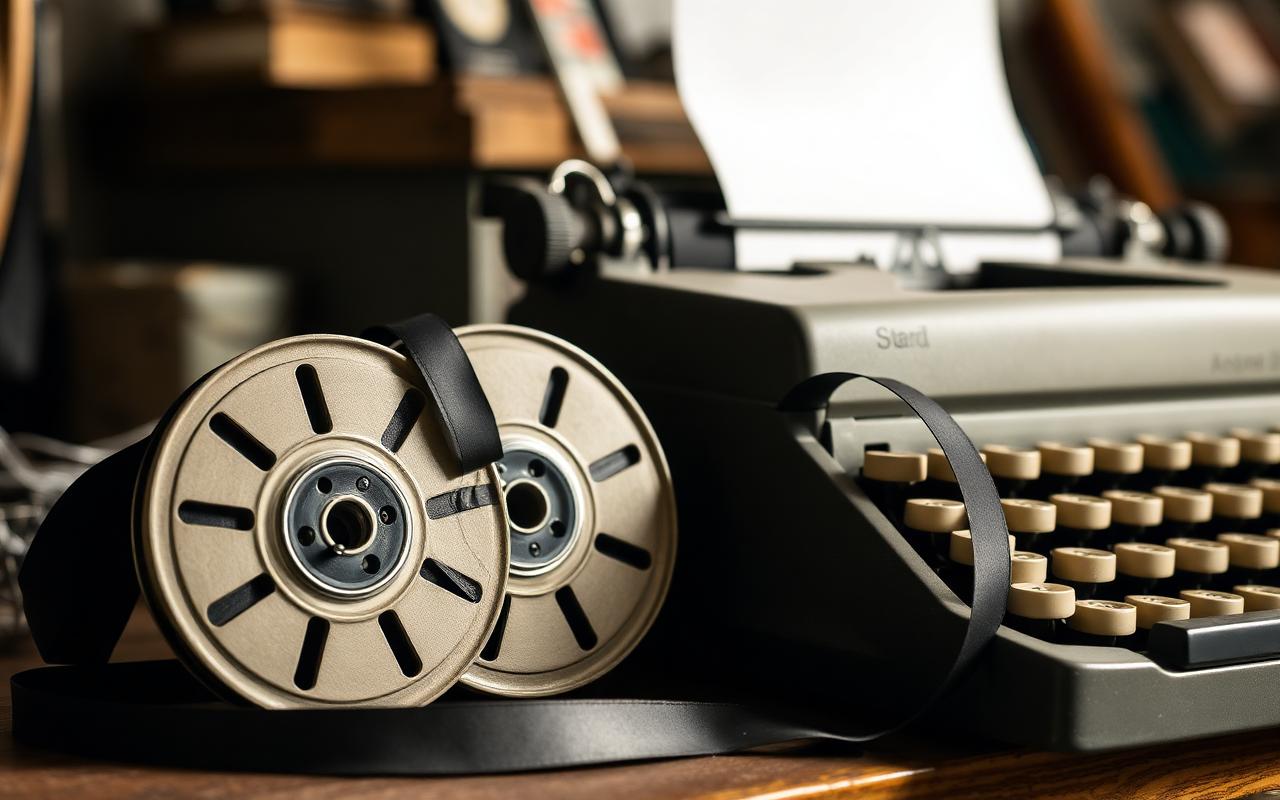
Universal 2-inch metal. The default for most American and European portables and small office machines from about 1935 onward. Two-inch outer diameter, half-inch hub, round hole, rim height roughly seven-sixteenths of an inch. Fits Royal Quiet De Luxe, Smith-Corona 5-Series, Olympia SM3 through SM9, most Hermes portables, and many others. If your machine takes this spool, you have the easy life.
Small portable 1.5-inch. Used on the smallest ultra-portables — Hermes Baby, some early Olivetti Lettera models, Groma Kolibri. Physically similar to the universal but smaller in every dimension. Ribbons for these must be bought specifically; universal ribbons will not fit.
Underwood Standard. The full-size Underwood office machines from the 1920s and 1930s use a distinctive large spool with a keyed hub. Rewinding is nearly always cheaper than buying original Underwood ribbons, which are scarce and expensive.
Royal Standard early. Similar situation to Underwood — proprietary spool, largely unavailable in new ribbons, easily fed by rewinding bulk ribbon.
IBM and later office machines. Purpose-built ribbon cartridges rather than spools. Compatibility is straightforward if you can find them at all; some models are effectively dead as writers because the cartridges are no longer produced.
How to identify what you need
Remove one of the original spools from your machine. Do not throw it away or lend it to anyone. Measure it: outer diameter, hub diameter, hub shape, rim height. Photograph it against a ruler.
Now shop with those numbers. Any ribbon seller who cannot match them is not the right seller. Reputable ribbon suppliers publish compatibility charts by machine model, and the good ones will accept photographs of your spool as a compatibility check before shipping.
Rewinding: the universal fallback
For almost any machine, the cheapest and most flexible ribbon strategy is to keep one pair of original metal spools clean and in service, and to buy bulk ribbon on cardboard cores. Bulk ribbon in black, black-and-red, or specialty colours is inexpensive and easily wound onto original spools with a hand crank or a small motorised jig.
Rewinding is not a compromise. The original spool was designed for your machine and will feed correctly. The bulk ribbon is manufactured to the same specifications as branded ribbons — often by the same factories. You lose nothing and save substantially over time.
When to accept a plastic universal
Modern plastic universal spools are widely sold at low prices. They work adequately in most machines they physically fit. For a writer's daily machine they are fine. For a display piece where original condition matters, they are a small cosmetic downgrade that discriminating buyers will notice.
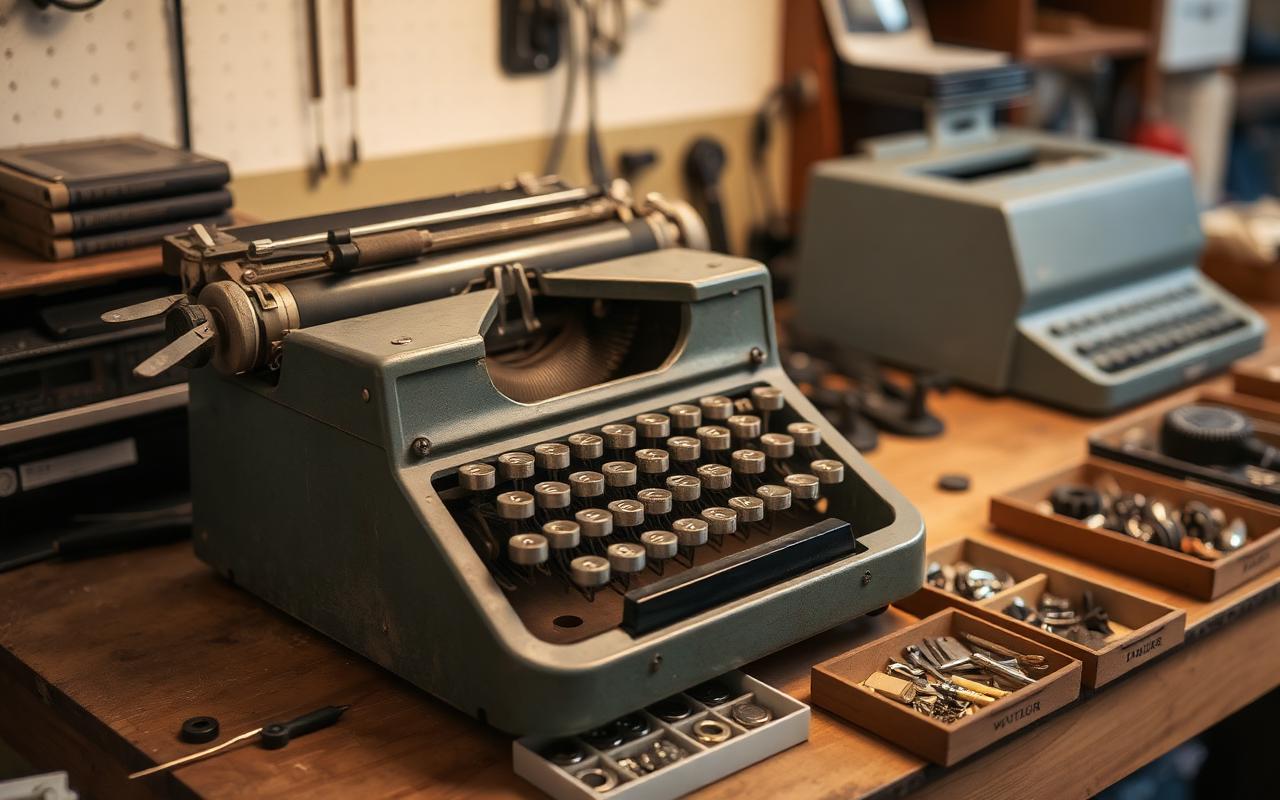
The rule I follow on my own bench: original metal spools stay with the machine, are cleaned when a ribbon is changed, and are used for the life of the typewriter. Modern replacements come out only when an original is genuinely lost or damaged beyond repair. A hundred years of typewriter history has left more than enough original spools in circulation to make this practical, and once you learn to recognise them, they cost almost nothing.
Yes, and this is the cheapest approach. Buy bulk ribbon on cardboard cores and re-wind onto cleaned original metal spools.
For everyday use, yes. For collectors displaying original condition, no — use original metal spools even if you swap the ribbon inside.
A ribbon industry classification for the most common mid-size metal spool (approximately 2 inches diameter). It fits many but not all machines.
This article is original writing for The Ribbon & Platen and may not be reproduced without permission. Sources consulted:
- Kores Ribbons catalogue, 1962
- Ribbons Unlimited compatibility charts, 2010–2020
- Author's inspection of 50 machines and their original spools