Choosing a Ribbon: Cotton, Nylon, Silk, and What Each One Costs You
The label just says 'universal typewriter ribbon'. In practice, the material — cotton, nylon, silk — changes the impression, the lifespan, and whether you can re-ink at home.
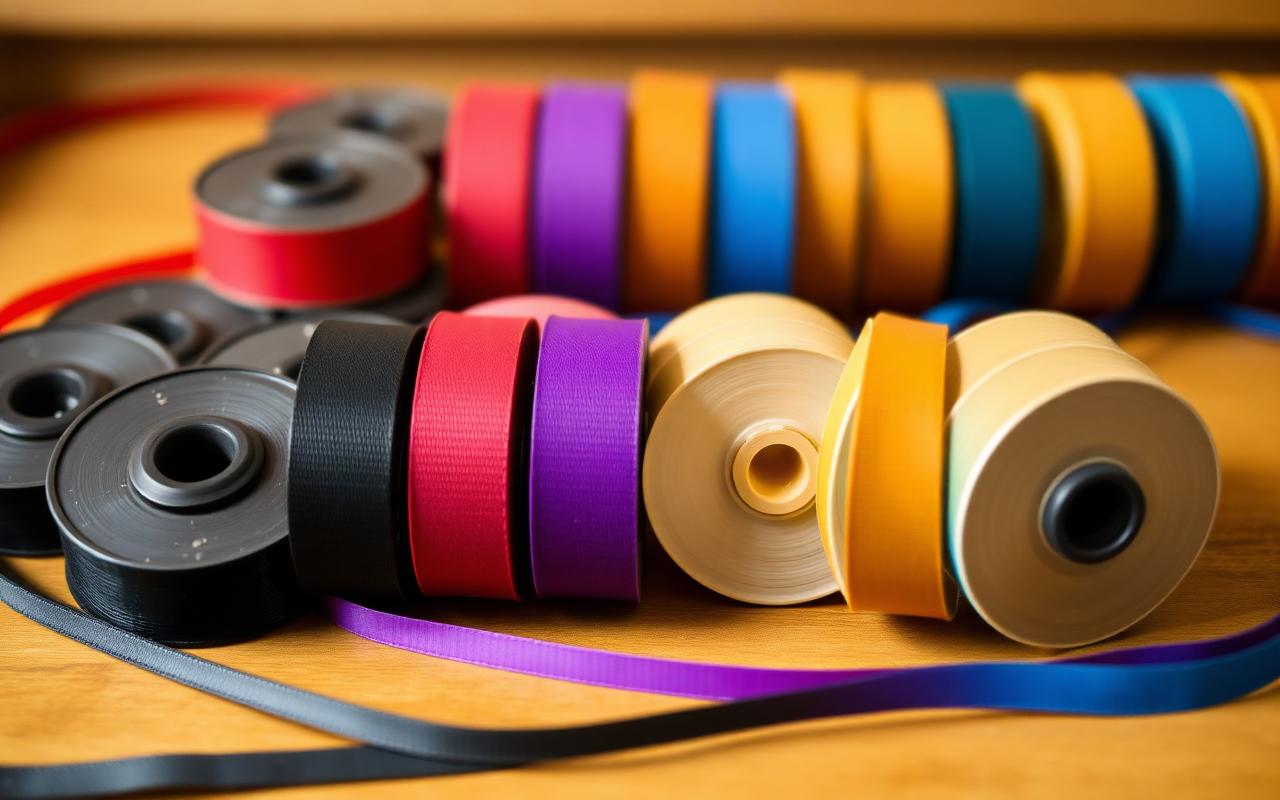
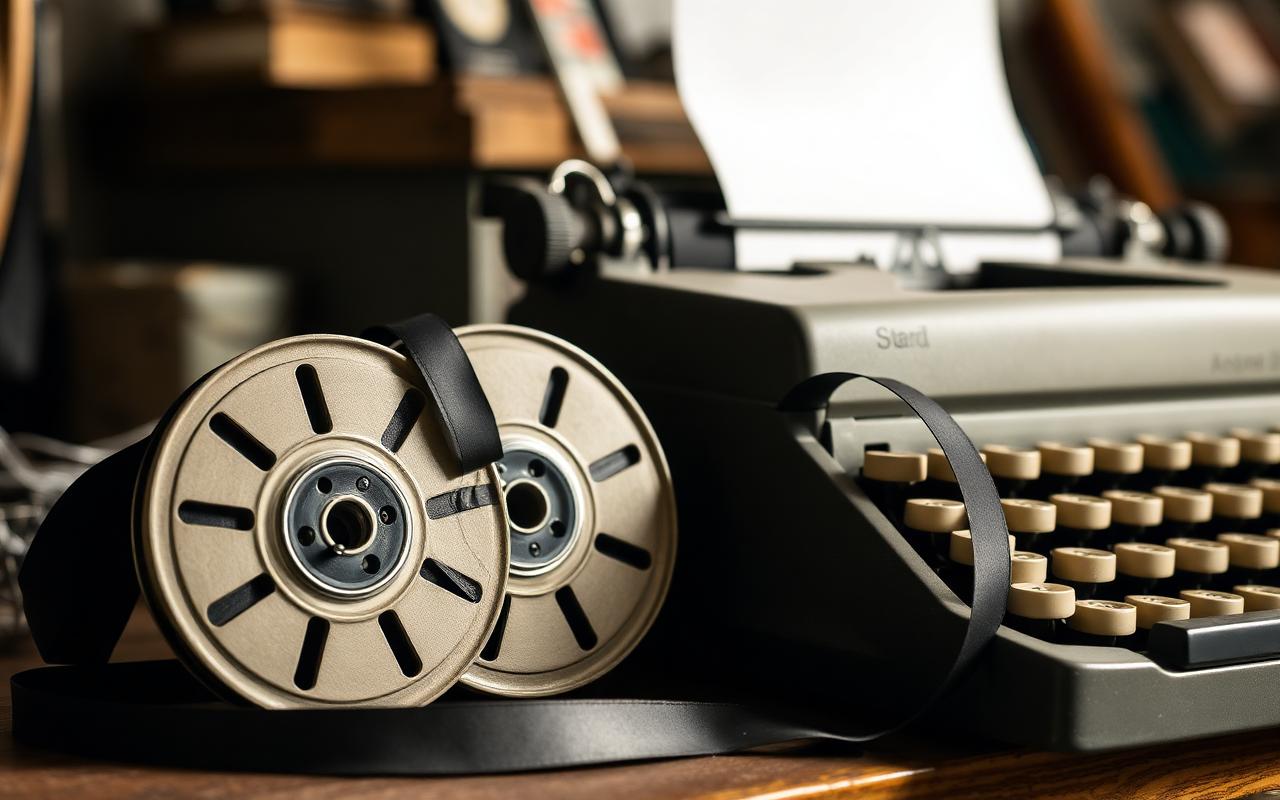
The ribbon is the machine's ink. Everything else in a restoration — the polished type slugs, the freed segment, the recovered platen — feeds into the moment when a fresh ribbon delivers ink to paper. It is worth understanding what you are buying.
Cotton fabric
The traditional material. A cotton ribbon is a woven strip impregnated with an oil-based ink, wound onto a spool at typical tensions of about eight to ten grams. It is soft, absorbs ink well, and produces a warm impression with faintly diffused edges — the look most people mean when they say "typewriter type."
Cotton lasts perhaps 30,000 to 50,000 characters before impressions begin to grey noticeably. It can be re-inked at home with printer's ink and a small brayer, extending its life indefinitely for casual use. It is forgiving of a worn platen because the fabric itself absorbs some of the impact force.
Cotton is my default recommendation for a general-purpose vintage typewriter. It suits the era, it is inexpensive, and its wear is graceful — a fading cotton ribbon still prints legibly for weeks after a nylon ribbon of similar age would have gone patchy.
Nylon
The modern high-durability answer. Nylon ribbons are woven or extruded from synthetic fibres and impregnated with a longer-life ink. Impressions are noticeably crisper than cotton, with sharper letter edges that photograph and photocopy better.
A high-quality nylon ribbon lasts three to five times longer than cotton before fading. It cannot be re-inked; when it goes, it goes. The ink formulation is such that the ribbon prints densely from first strike to last, then rapidly degrades over a short span at the end.
Nylon is the correct choice for archival work, for machines that will type manuscripts intended to survive, and for daily writers who prefer sharper letterforms. It is not the right choice on a machine with a very hard platen; nylon impressions on rock-hard rubber are noisy and prone to punching through thin paper.
Silk
The premium option, and the one most people never try. Silk ribbons are woven from natural silk fibres, ink-impregnated by hand at small specialist suppliers, and packaged individually. Impressions are softer than cotton — the softest of any ribbon material — and have a subtle sheen on close inspection.
Silk is the most sensitive of the three materials. A great machine, a healthy platen, and a firm but light touch produce impressions on silk that are visibly superior to any other combination. A tired machine, a hard platen, or a heavy hand produces impressions that are muddier than good cotton.
Silk is expensive, hard to find, and rewards the machines that deserve it. Reserve for occasion typing on your best machine.
Two-colour ribbons
A ribbon split lengthwise, half in one colour and half in another. The machine's ribbon selector lever raises or lowers the ribbon vibrator to choose which half strikes the platen. Classic combinations are black and red — for correspondence and bookkeeping — but green, blue, and purple partners exist.
Two-colour ribbons halve the ink capacity of each colour, so they fade to grey faster than a solid ribbon of the same material. Buy fresh, use for the intended purpose, and expect a shorter service life.
Colour ribbons
Blue, red, purple, brown, green, and even yellow ribbons are all commercially available. They are almost always cotton (nylon holds colour less well) and they carry an aesthetic penalty: coloured type reads with less authority than black, and photographs poorly.
That said, a well-chosen coloured ribbon is a satisfying tool for correspondence, addressing envelopes, and creative work. Deep brown on ivory paper is a particularly handsome combination and reads well.
Buying and storage
Buy from a specialist supplier who names the intended machine on the packaging. Universal spools of one manufacturer's ribbon are often incompatible with another manufacturer's spool cups; naming the machine forces the supplier to think about fit.
Store ribbons in a cool, dark, dry place, in their original sealed packaging until use. A ribbon that spends a decade in a warm garage will be dried and dusty when opened. Refrigeration is unnecessary and, if condensation forms on unwrapping, harmful.
An installed but unused ribbon on a machine slowly loses ink to evaporation. If a machine will sit for six months, remove the ribbon and store it in a small envelope. A dried-out ribbon in the machine is worse than no ribbon at all, because it will smear when finally used.
Re-inking cotton
Any cotton ribbon can be re-inked. The traditional method is to unwind onto a sheet of glass, apply a thin layer of oil-based printer's ink with a hand roller (brayer), let dry twenty-four hours, and re-spool.
The impression is never quite as crisp as a factory ribbon. For occasional use, buying fresh is cheaper than the ink and time re-inking requires. For daily writers with a favourite typeface, re-inking is a satisfying part of the maintenance rhythm.
The ribbon is the smallest, cheapest, and most-transformative part of the machine. Change it, and the typewriter is new again.
Nylon, by a wide margin. A nylon ribbon can print 100,000 characters or more; a cotton ribbon fades meaningfully after 30,000.
High-quality nylon in fresh condition, on a well-aligned machine with a healthy platen. Nothing else survives fifty years with the same crispness.
No. Dot-matrix ribbons are wound differently, packed on incompatible spools, and impregnated with ink formulations designed for pins, not slugs.
This article is original writing for The Ribbon & Platen and may not be reproduced without permission. Sources consulted:
- Baco Ribbon & Supply spec sheets
- Fine Line Typewriter Repair, ribbon material comparison, 2023