Buying Typewriters at Auction: A Bidder's Practical Guide
Auctions move typewriters that estate sales and shops do not — rare variants, large lots, machines with no reserve. They also move them fast, with no return right and a buyer's premium that can add twenty-five percent. Here is how to bid without overpaying.
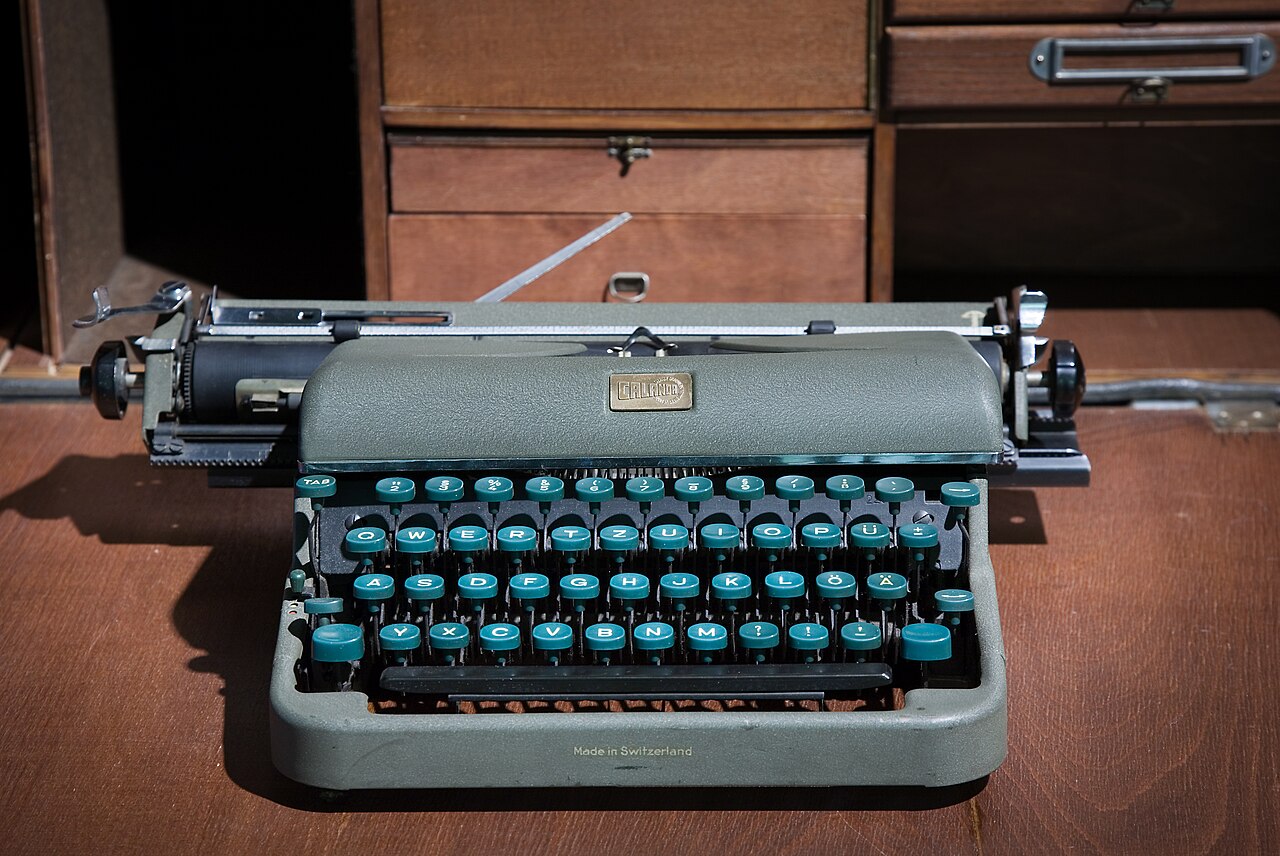
Auctions are where the typewriters you cannot find anywhere else turn up — the rare variant, the large office lot, the machine from a dissolved estate with no reserve and no one to compete with. They are also where buyers pay the most per machine, because the room is competitive, the premium is hidden, and the condition is uncertain. The structure that makes auctions productive is the same structure that makes them expensive, and the bidder who understands it pays less than the bidder who does not.
The three costs you pay
The hammer price is the figure the auctioneer calls when the lot falls to you. It is not what you pay. Three figures sit on top of it.
- The buyer's premium. Fifteen to twenty-eight percent of the hammer price, depending on the house. This is the cost most bidders forget to calculate, and it is the cost that turns a bargain into a retail purchase.
- Sales tax or VAT. Applied to the hammer price plus the premium in most jurisdictions, unless you are a registered reseller buying for stock.
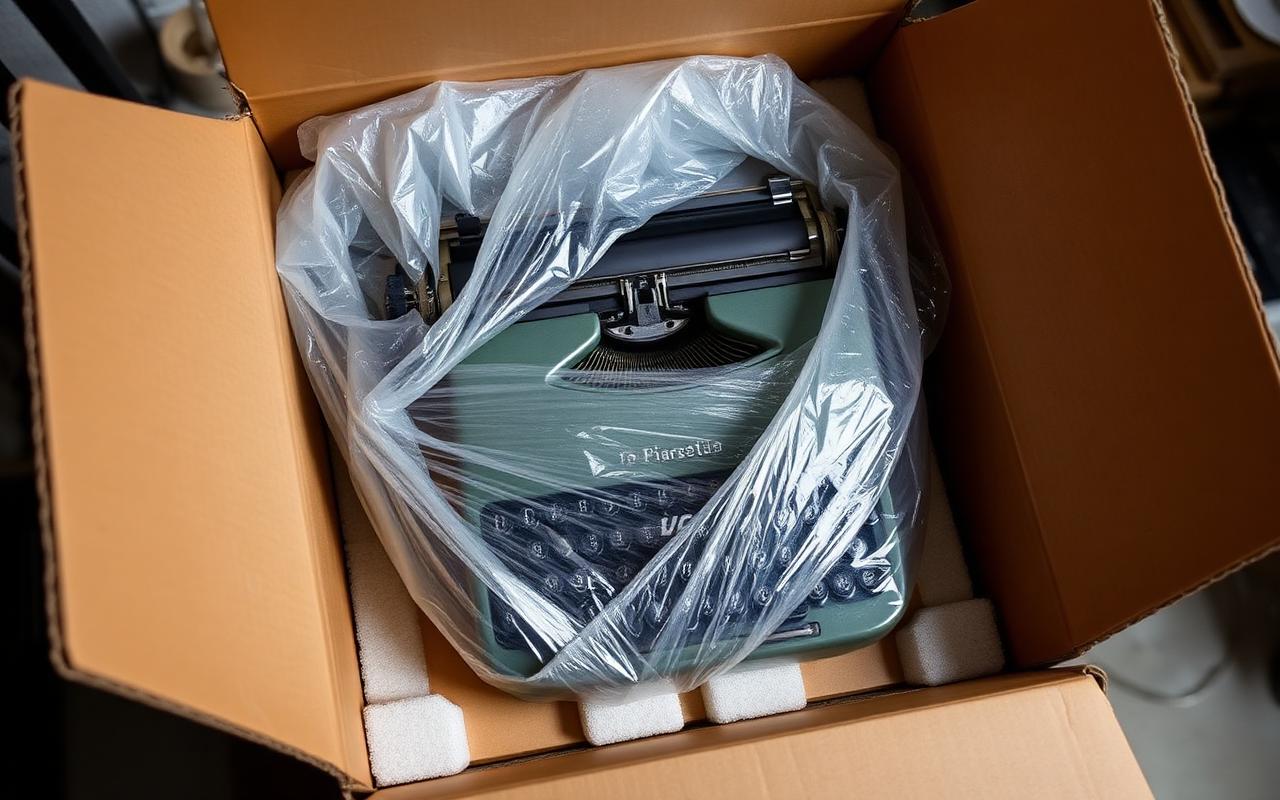
- Shipping and handling. Auction houses pack and ship, but the packing for a typewriter is not always adequate, and the charge reflects it. Collect in person whenever the house is within reach.
Calculate your maximum bid as the total of all three, not the hammer price. A machine that is worth $400 to you means a hammer bid of about $300 at a house with a twenty-five percent premium and tax — not a bid of $400.
Reading the catalogue
Auction catalogue descriptions are written by generalist cataloguers, not typewriter specialists, and they use a vocabulary that sounds more committal than it is.
- "Mechanical appearance" means the mechanism looks present, not that it works.
- "Complete" means no parts are obviously missing, not that all parts are original or correct.
- "Wear commensurate with age" means wear, and does not distinguish honest patina from damage.
- "Untested" almost always means the machine does not type, and the house does not want to say so.
Read every description as a minimum. The machine is at least as described, and almost certainly no better. Bid on the assumption that what is not described is not good.
The viewing
The viewing day is the single most valuable part of the auction process, and the part most bidders skip. Attend it.
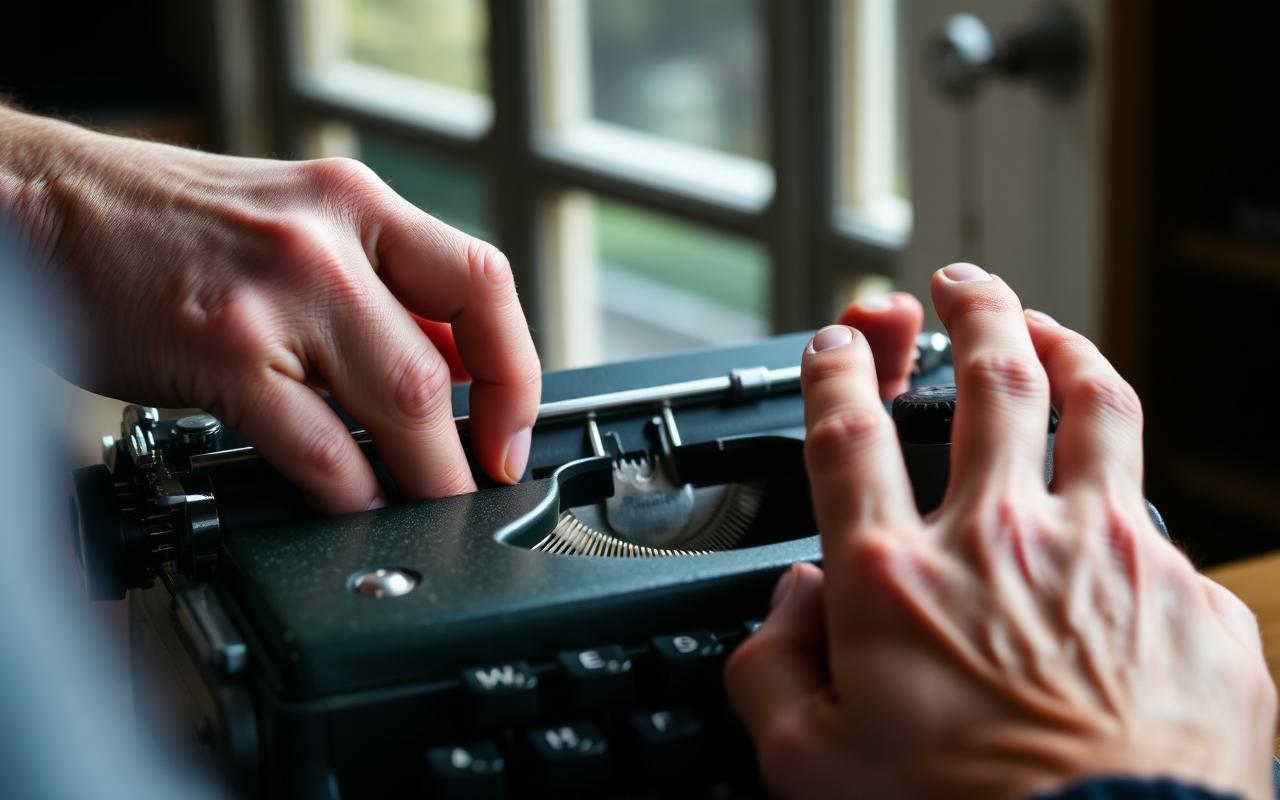
Bring a flashlight, a sheet of paper, and a screwdriver. For each lot you intend to bid on, run the same ten-minute inspection you would run at any sale — segment sweep, carriage rock, platen press, typebar pull, alphabet type test. The house will usually let you type the machine if you ask; if they will not, that is information.
Note the serial number and photograph the machine in the room. Catalogue photographs flatten detail and hide damage that is obvious in person; the machine in the room is the machine you are buying, not the machine in the photograph.
Bidding strategy
Three patterns hold across most typewriter lots.
The underpriced common portable
Common portables — Olympia SM3, Olivetti Lettera 32, Hermes Baby — sometimes appear in general household sales with low estimates because the cataloguer does not know the market. These lots attract little specialist attention and can be bought below retail. Set your maximum at retail minus twenty percent and bid to it; do not chase.
The overpriced 'rare' machine
A machine described as 'rare' in a specialist sale is usually priced for the description, not the machine. True rarity is a narrow variant or a low-production model with documented provenance; most 'rare' typewriters at auction are uncommon but not rare, and the estimate reflects the word rather than the object. Let these pass unless the viewing confirmed something the catalogue did not.
The lot
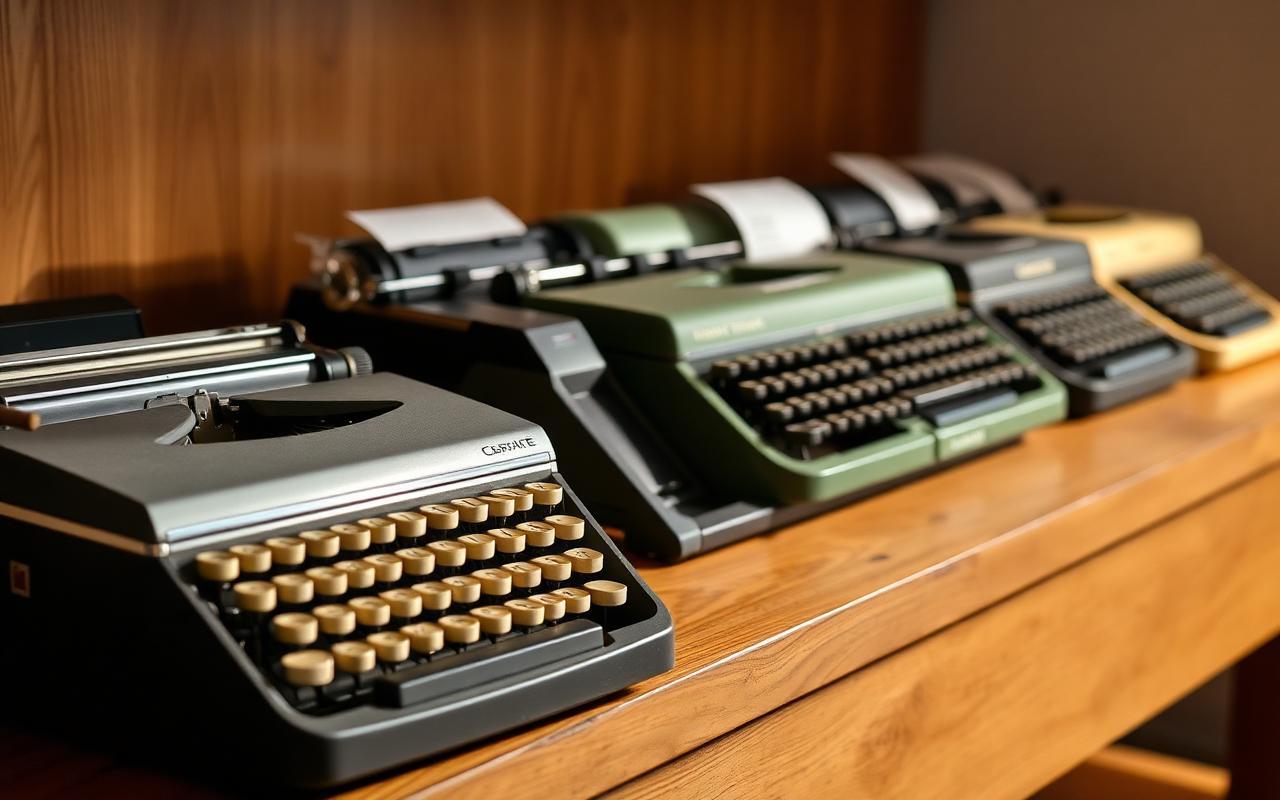
Typewriters are sometimes sold in lots — three to five machines, one bid, one price. Lots are where the genuine value lives, because the lot includes one desirable machine and several parts machines, and most bidders will not bid on a lot they cannot split. If you can identify the desirable machine in the viewing and estimate the parts value of the rest, a lot bid can acquire the machine you want for less than it would cost as a single.
What to skip
Skip any lot described as 'project', 'restoration', or 'spares' unless you have the bench and the parts source to finish it. These lots are cheap because they are work, and the work is always more than the price suggests.
Skip any lot where the viewing was not attended. Bidding blind on a typewriter is a coin toss with a buyer's premium.
Skip any house whose premium you have not confirmed. The premium is on the website and in the conditions of sale; if you have not read it, you are not ready to bid.
Auctions are a tool, not a category. Used well — with viewings attended, premiums calculated, and bids disciplined — they move machines that no other channel offers. Used carelessly, they are the most expensive way to buy a typewriter that exists, and the buyer's premium is the reason why.
A percentage added to the hammer price, paid by the buyer. It ranges from about fifteen percent at regional houses to twenty-eight percent at major city houses, and it applies on top of the bid, not included in it.
Yes, at the viewing day. Attend in person if possible; photographs in catalogues flatten detail and hide damage. Type the machine if the house allows it.
Almost never, unless the catalogue description was materially wrong. A machine that does not type, despite being sold 'as is', is your machine. Bid accordingly.
This article is original writing for The Ribbon & Platen and may not be reproduced without permission. Sources consulted:
- Author's auction purchases across nine houses, 2022–2025
- Sotheby's and regional house buyer's premium schedules, 2025