Valuing Rarity: Why the Rarest Machines Are Not Always the Priciest
A 1902 Blickensderfer 7 sells for less than a 1959 Olivetti Lettera 22 in the same week. That is not a mistake. It is the market telling you what rarity actually means.
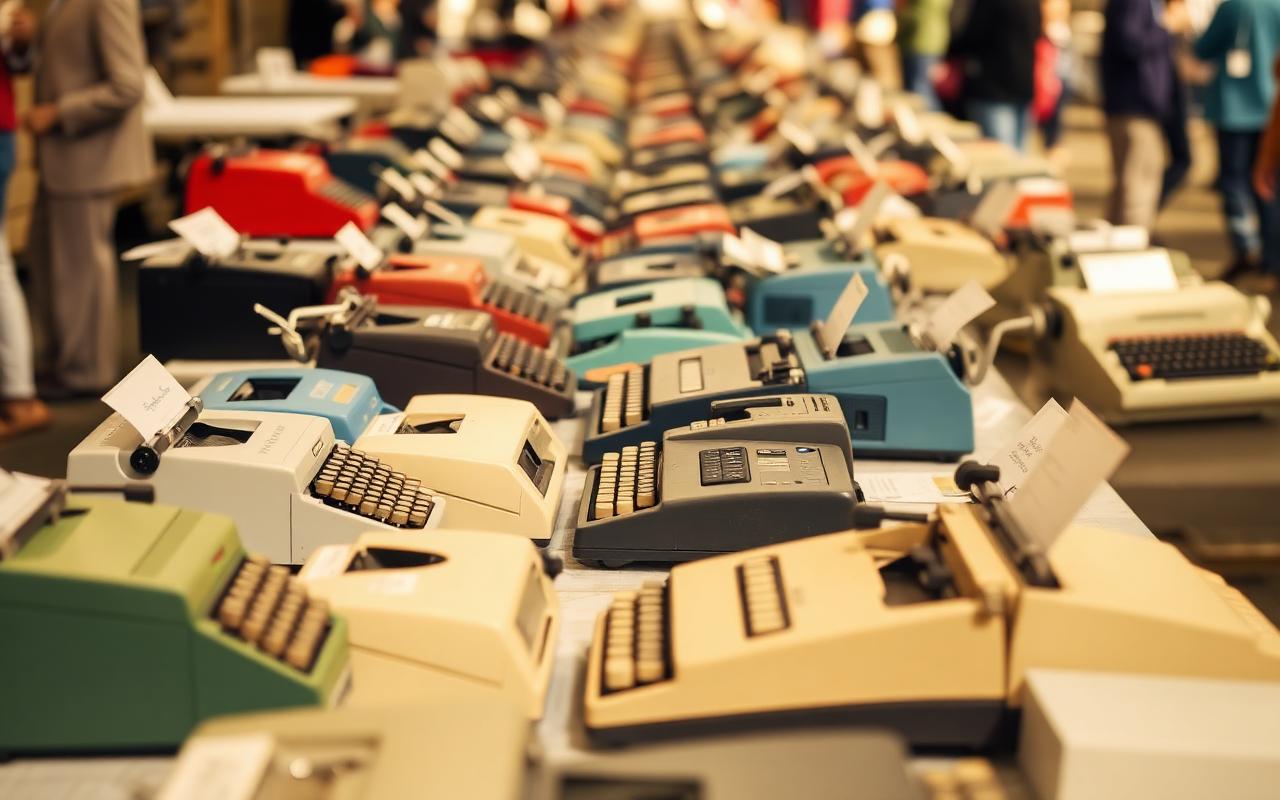
Every year a new collector emails me a photograph of a very old machine and a very confident number. "This is a Crandall New Model," they write, "so it must be worth at least four thousand dollars." Sometimes it is. More often the machine sells, six months later, for six hundred, and the collector concludes that the market is broken. The market is not broken. Rarity is only one of the three levers that move price.
The three levers
Price in a mature hobby responds to rarity, condition, and demand — and demand does most of the work. A 1902 Blickensderfer 7 with a downstrike bar and complete typewheel is genuinely rare; only a few hundred are known to survive worldwide. But the number of collectors actively bidding for one at any moment is smaller still. Meanwhile, a 1959 Olivetti Lettera 22 exists in tens of thousands and finds a buyer in every listing, because writers, designers, and film props departments all want one on any given Tuesday.
Rarity without demand produces low prices and long listings. Demand without rarity produces predictable, steady prices with a thick market. Rarity paired with demand — a chrome-lidded Hermes Baby with the original silver case, for instance — produces the numbers that make newspapers.
Reading the actual market
Public sold-listing archives are the honest source. Ignore asking prices; they are advertisements. Ignore museum valuations; they answer a different question. Instead, take an afternoon each quarter and read through the last ninety days of completed sales for the model you own or want. Note the medians, the outliers, and the reasons for each — a Royal Quiet De Luxe with the tombstone keys will always pull ahead of the flat-top variant, and reading fifty listings makes that pattern obvious.
I keep a spreadsheet with model, year, condition grade, sale price, sale channel, and one sentence of commentary. After a year the spreadsheet knows more than I do.
When rarity really pays
A handful of factors reliably convert rarity into money.
- Named provenance. Documented ownership by a writer, journalist, or public figure. A signed letter tying the specific serial number to the person is worth more than the machine itself.
- Uncommon typefaces. Script, techno, elite italic, and non-Latin faces on otherwise common machines can double or triple the price for a small but persistent buyer pool.
- Matched consumables. Correct case, original ribbons, unbroken instruction booklet, dealer tag. Ten small original things beat one big restored one.
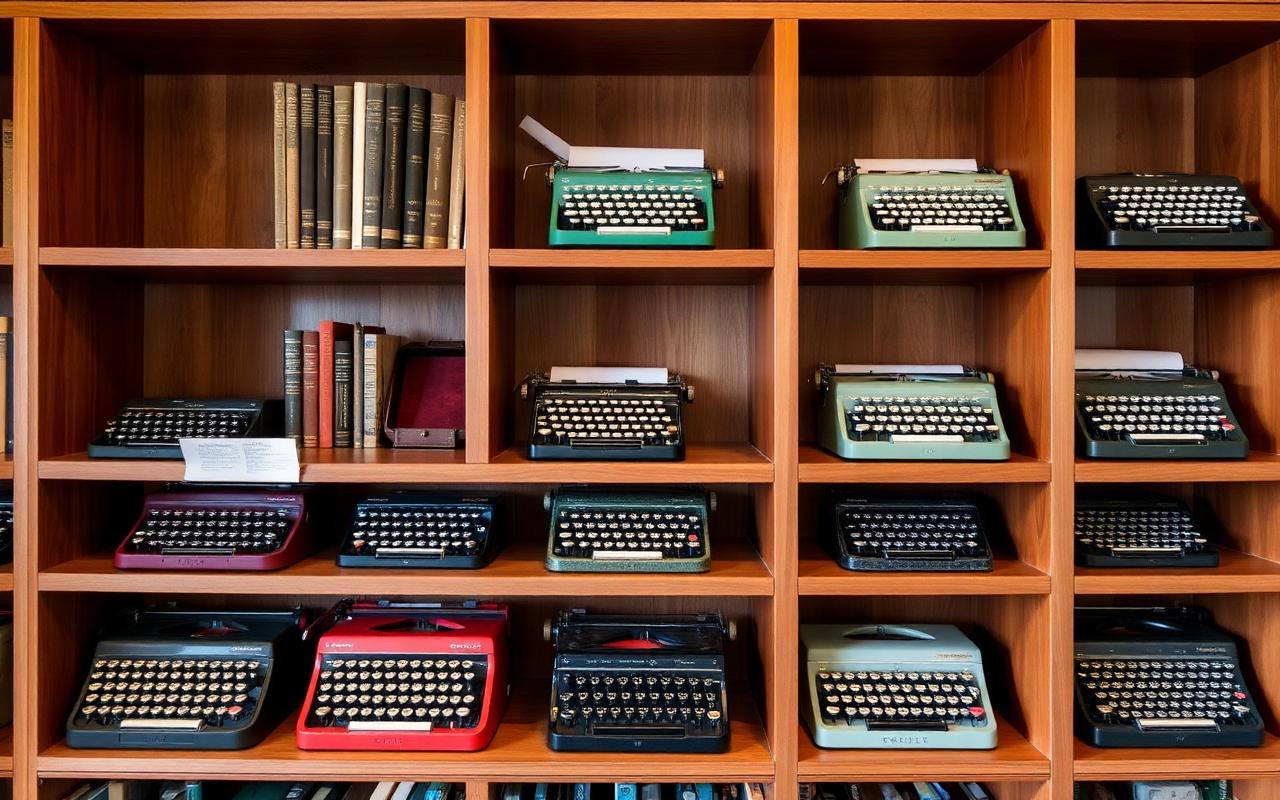
- Colour variants. Factory colours produced in short runs — the pink Royal Royalite, the seafoam Hermes 3000, the burgundy Olivetti Studio 44 — command steady premiums.
- First-year and last-year production. Serial numbers within the first six months of a model tend to reward the patient seller.
When rarity does not pay
Very old is not the same as very valuable. Pre-1900 downstroke machines, index typewriters, and one-off prototypes often languish, because there are more surviving examples than there are people who know what to do with them. The market rewards machines that can be used and enjoyed, and index typewriters — however historically important — are difficult to use and, for most collectors, difficult to love.
A sensible pricing method
For a machine you are selling, I recommend a three-number method. Find the lowest recent sold price for a comparable in worse condition; call that the floor. Find the highest recent sold price for a comparable in better condition; call that the ceiling. Place your machine on the line between them, weighted by condition grade and originality. List at the upper third of that band, expect an offer at the lower third, and settle in the middle. You will finish more sales, faster, and build a reputation for fairness that outperforms any single strong price.
Make the comparisons genuinely comparable: same model and variant, similar condition and originality, and the same typeface or included case when those affect demand. Prefer completed transactions from the same region and a recent time window; normalize currency where needed. An asking price is not a sale. Also compare like with like after costs: a buyer's total may include the hammer price, buyer's premium, tax, and shipping, while a seller's net may be reduced by platform and payment fees or seller-paid shipping. Write down which figure you are comparing so an attractive headline price does not distort the estimate.
Value in this hobby is not a number engraved on the machine. It is a running conversation between the small number of people who actually know what they are looking at. Listen to the conversation for a year before you shout your own number into it.
As a floor and ceiling only. The middle number is almost always wrong for your specific machine, in your specific market, this specific month.
Only when documented. A photograph of the machine on a known author's desk multiplies price; a family story does not.
For high-grade collector pieces, yes. For working machines, a fresh replacement is always preferred and rarely reduces value.
This article is original writing for The Ribbon & Platen and may not be reproduced without permission. Sources consulted:
- Twelve months of ETCA sold-listing summaries
- Auction house catalogues: Breker, Bonhams, Catawiki (2020–2025)