Building a Focused Collection Instead of a Room Full of Machines
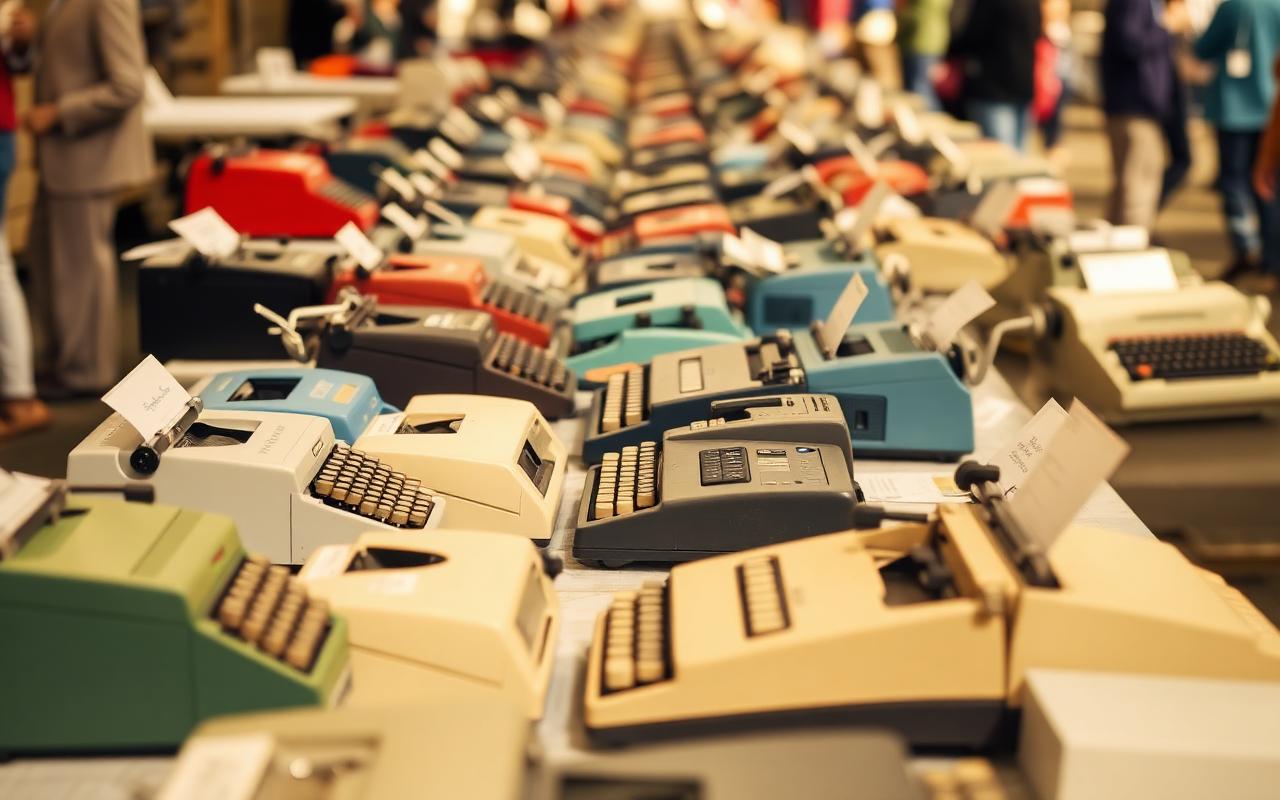
Twenty typewriters chosen around a theme make a collection. Sixty typewriters chosen because they were cheap make a storage problem. Here is how experienced collectors close that gap.
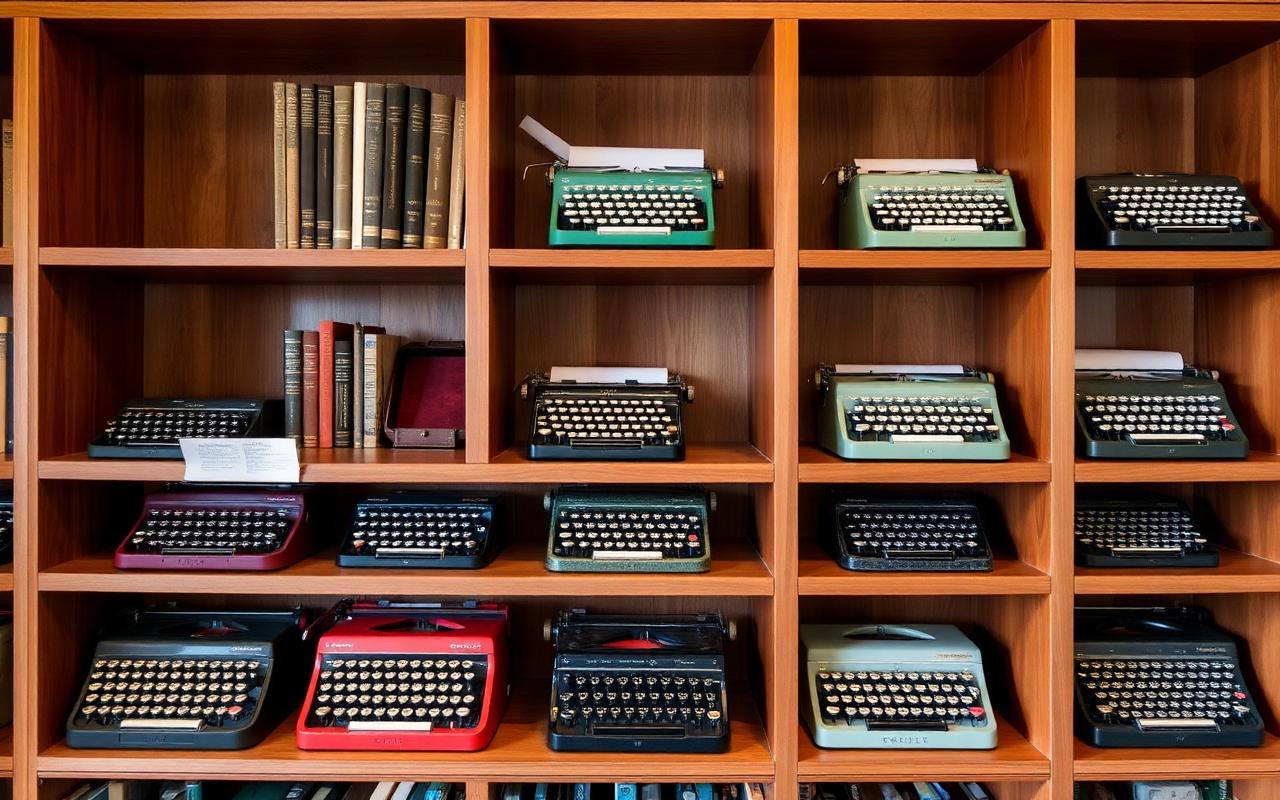
A collector I visited last year had ninety-two typewriters. He could tell me, without hesitation, which one had belonged to his grandmother. He could not tell me a single thing about the other ninety-one. That house is not unusual. It is a common failure mode of a hobby with a low entry price and an easy dopamine loop, and it is worth resisting from the first purchase.
What a focused collection buys you
Focus has practical benefits that get overlooked because they are boring. Insurance premiums are lower for a documented, catalogued group than for an undocumented pile of the same value. Cleaning and maintenance time drops, because you learn one family of machines deeply instead of a dozen shallowly. When something interesting comes on the market, you know within seconds whether it belongs in your collection, and you buy or pass without agonising. When you eventually sell, buyers value a curated group more than the sum of its parts.
Focus also buys you something less measurable. A themed collection tells a story to visitors who otherwise see only "a lot of old writing machines." Story is what turns objects into culture, and culture is what makes a hobby worth having.
How to find a theme
The wrong way is to pick a theme in the abstract and then buy toward it. The right way is to walk through what you already own and notice the pattern hiding in the shelves. Almost every collector who tells me they "have no theme" turns out to have three or four, buried in the numbers. The theme wants to be discovered, not imposed.
Common themes that reward patience:
- One manufacturer across time. Every Olympia portable from 1948 to 1975, for instance, tells the story of a factory's design language, its wartime recovery, and its response to typewriter competition from Asia.
- One model across variants. A dozen Hermes 3000s in every colour and typeface Paillard offered reveals a marketing strategy invisible from a single machine.
- One decade across the world. Every machine you can find made in 1957, from Portugal to Japan, becomes an unintentional history of a specific moment.
- A physical constraint. Portables under three kilograms; machines with folding platens; ultra-portables designed for airline travel. Constraints are surprisingly generative.
How to prune
Pruning is the discipline that separates collections from accumulations. Twice a year, walk your shelves and ask three questions of every machine. Would I buy this today at the price I paid for it? Does it earn its shelf space in the story I am telling? If it left tomorrow, would I look for a replacement?
Any machine that fails two of three questions goes on the sell pile. Not immediately; give it a month in a "leaving" box. If you retrieve it during that month, it stays. If you do not, it is sold, traded, or gifted to a beginner who will use it. Very few machines survive both audits, and the ones that do become the backbone of the collection.
Documentation as part of the collection
A collection without records is a set of anonymous objects. Records need not be elaborate. For each machine, I keep a single card with make, model, year, serial number, source, date acquired, price paid, current condition grade, typeface, and one paragraph on why the machine belongs. The paragraph is the important part. If I cannot write it in five sentences, the machine probably does not belong.
Photograph every machine on the day it arrives, in the same light and against the same wall. Ten years of those photographs is a book, whether you ever publish it or not.
The endgame nobody talks about
Every collector eventually stops. Illness, downsizing, and estate distribution are the three usual doors. A focused, documented collection passes cleanly through all three; a random hoard causes grief. Choose, quietly and early, which two or three institutions or individuals you would want your machines to go to, and make sure the documentation would let them accept the gift without months of research. A collection whose future you have thought about is a collection you can enjoy without unspoken dread.
Twenty machines you can defend beats sixty you cannot lift.
Small enough that you can name every machine's story without notes. For most homes that is eight to twenty pieces.
It is essential. A collection that only grows is a warehouse. Selling refines the theme and funds the next acquisition.
Look at what you already own and ignored the reason for. The pattern is usually already there.
This article is original writing for The Ribbon & Platen and may not be reproduced without permission. Sources consulted:
- Interviews with three museum curators, 2024
- Author's audit of eleven private collections