Smith-Corona Silent-Super: The Reporter's Portable Reconsidered
Overshadowed by the Royal Quiet De Luxe on the collector market, the Silent-Super is arguably the better typing machine. Here is what it does well, where it struggles, and how to buy one.
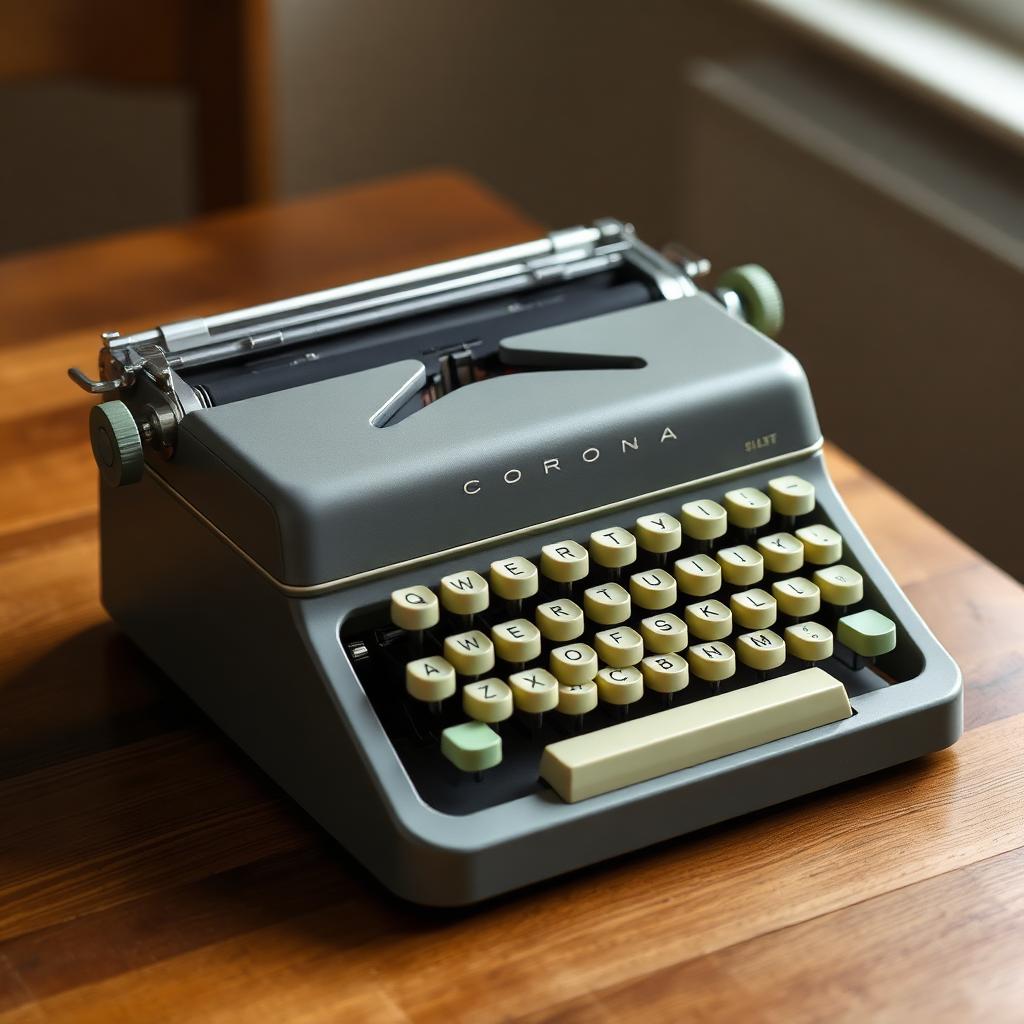
The Smith-Corona Silent-Super has a marketing problem. It sits in the same drawer of collector memory as the Royal Quiet De Luxe, the Olympia SM, and the Hermes 3000, and it loses that comparison on aesthetics almost every time. Its two-tone body is boxier than the Royal, its keyboard less continental than the Olympia, its shell less sculpturally interesting than the Hermes. And yet, if you type on all four for a week, the Silent-Super is the machine most working writers find themselves reaching for. That is worth understanding.
The 5-Series in context
Smith-Corona introduced the 5-Series in 1953 as a complete redesign of its portable line. The Silent-Super sat at the top, above the Silent, the Sterling, and the Clipper. All four shared a body and mechanism; the differences were in features. The Silent-Super had tabulator, ribbon-colour selector, paper support, and the full complement of chrome trim. The Clipper, at the bottom, had none of these and was aimed at students.
Two engineering choices distinguish the 5-Series from its competition. The first is the floating shift. On most portables the entire carriage lifts or lowers when you press shift; on the Silent-Super, the typebasket itself moves. The mass involved is much smaller, so shift effort drops dramatically. After a paragraph you notice; after a page you do not want to go back.
The second is the removable typebasket. With the correct tool and a steady hand, an owner or dealer could swap the entire typeface segment. Elite, pica, script, italic, and technical faces were all listed in Smith-Corona catalogues, and dealers stocked replacement baskets. In practice, few owners bothered; but for a collector today, the option means that a Silent-Super with a boring typeface can be upgraded rather than resold.
Reading the serial
The Silent-Super serial appears on the frame beneath the ribbon cover, and on some examples again on the underside near the front rubber foot. The prefix letters map to production years in the Typewriter Database with high confidence — Smith-Corona's records survived the corporate transitions of the 1960s better than most.
The desirable serial ranges cluster in 1955–1958. Machines from 1953–1954 are early production and have a slightly cruder segment finish. Machines from 1959–1962 are the last of the 5-Series before Smith-Corona shifted to electric portables, and some show the cost cutting that preceded that transition — thinner nickel plating, plastic components where earlier examples used metal.
What to check
The Silent-Super has three common failure points, all diagnosable in a few minutes.
- Escapement pawl. Type a full row of letters at a steady pace. If the carriage occasionally advances two spaces where it should advance one, the escapement pawl is worn. This is a genuine repair — not impossible, but not a beginner job.
- Segment lubricant. As with most American portables of this era, the segment slots collect dried oil that slows typebar return. Test by typing each letter slowly and listening for sluggish bars falling back to rest. A methodical solvent flush restores the action, but budget an evening for it.
- Ribbon vibrator height. The ribbon should lift high enough that the platen never sees ink directly, but not so high that the top of each letter is faint. Watch the vibrator through a full line. Adjustment is available at a small screw on the ribbon cup housing.
Cosmetically, the two-tone paint on Silent-Supers holds up well when it has been kept indoors. Sun-faded examples look chalky and are hard to bring back without a full refinish — a project that erases collector value. Prefer a slightly scuffed original finish to a faded one.
How it types
Two paragraphs into a Silent-Super and the character of the machine is clear. The action is heavier than a Hermes 3000, which some writers find reassuring rather than tiring; the shift is markedly lighter than an Olympia SM, thanks to the floating typebasket; the escapement is crisp and audible, without the muted quality of the Royal Quiet De Luxe. It is a machine that prefers a firm hand and rewards regular rhythm. Speed typists tend to like it more than hunt-and-peck writers.
The bell is loud. This is either a feature or an annoyance depending on temperament. It can be softened by loosening the bell hammer spring a quarter turn — a five-minute adjustment that many owners eventually make.
Price and availability
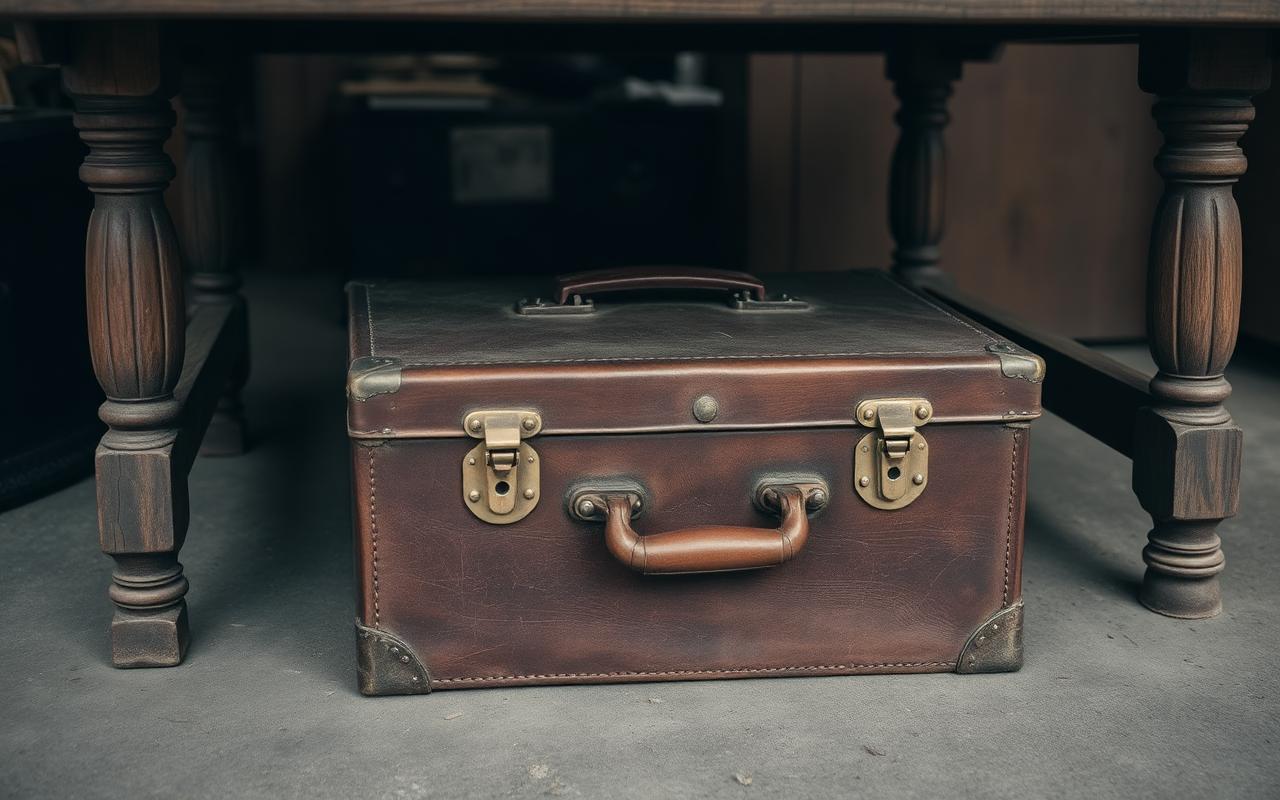
The Silent-Super's collector-market position keeps prices reasonable. A working example in honest cosmetic condition trades for roughly two-thirds the price of a comparable Quiet De Luxe and half the price of a Hermes 3000. Cases are common and add less premium than on Royals — perhaps ten to fifteen percent — because Smith-Corona cases were sturdy rather than beautiful.
For a first collector portable, or for a working writer's daily machine, the Silent-Super is one of the strongest arguments in the American portable market. It is not the prettiest of its generation, and it is not the rarest, and it will never be the machine that makes a magazine cover. But it will type ten thousand pages without complaint, and it will do so with a feel that many writers, given the choice, prefer to anything else in the drawer.
The typebasket moves rather than the carriage on shift. It reduces shift effort dramatically — noticeable within one paragraph of typing.
On 5-Series machines with the removable typebasket, yes — with care and the correct tool. It is one of the model's genuine advantages.
Escapement pawl wear and dried lubricant in the segment. Both are fixable; neither is trivial for a beginner.
This article is original writing for The Ribbon & Platen and may not be reproduced without permission. Sources consulted:
- Smith-Corona 5-Series service manual, 1956 edition
- Author's inspection logs from 60 Silent-Super examples