Photographing a Typewriter: A Collector's Guide to the Record That Outlives the Machine
A good photograph of a typewriter is an insurance document, an identification record, and a listing asset at once. Most collectors take none of the above. Here is the setup, the angles, and the habits that make a photograph worth more than the camera that took it.
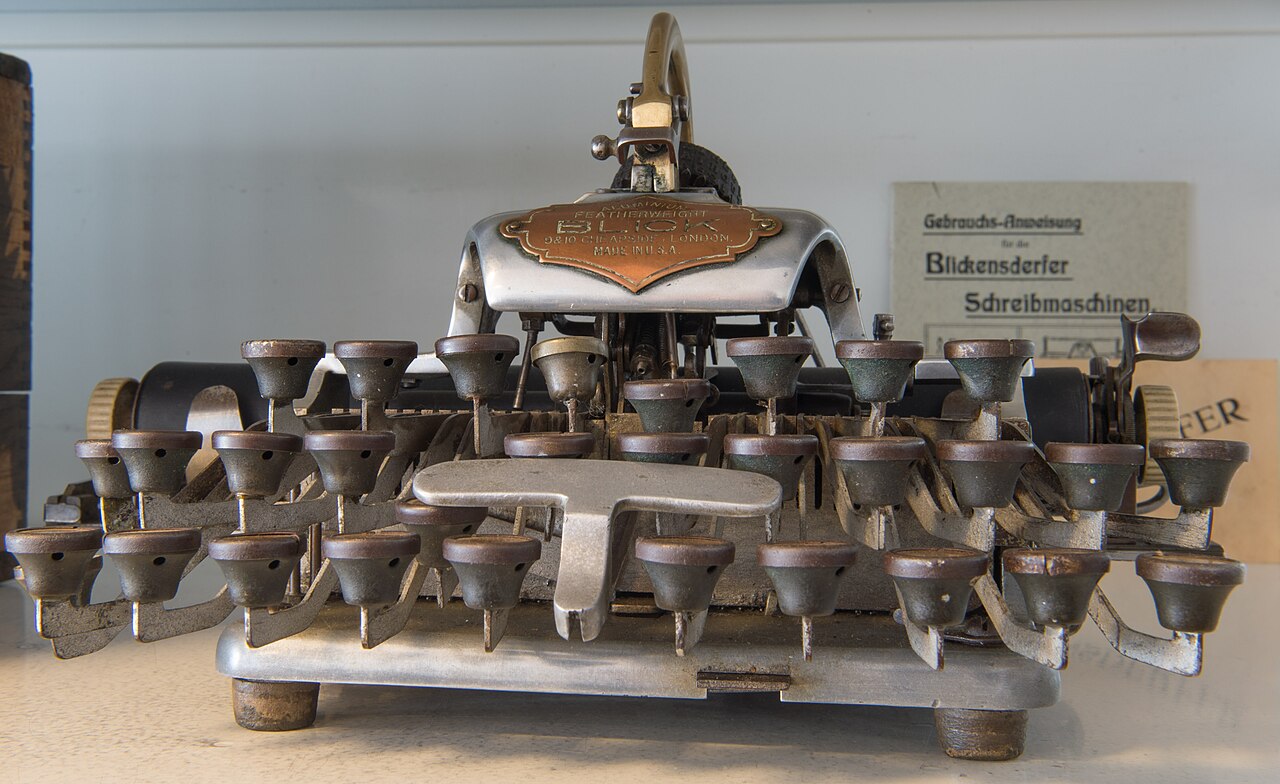
A typewriter collection is a set of physical objects, and physical objects do not last forever. They are sold, damaged, lost in moves, stolen, passed to heirs who do not know what they have. The collection that exists today will not exist in its current form in twenty years, and the only part of it that will survive unchanged is the photographic record. Most collectors do not keep one. The collector who does keeps the part of the collection that lasts.
A good photograph of a typewriter serves three purposes at once. It is an identification document — the model, the variant, the serial number, captured in a way that settles any future question. It is a condition document — the paint, the decals, the damage, recorded at a moment in time. And it is a listing asset — the image you would use to sell the machine, taken once, well, rather than in a hurry when the time comes. The session that produces all three takes twenty minutes per machine and pays for itself the first time you need any of them.
The setup
Typewriters are dark, glossy objects with fine surface detail. They are among the harder things to photograph well, because the conditions that show the detail (soft, directional light) are the opposite of the conditions most people use (on-camera flash or flat overhead light).
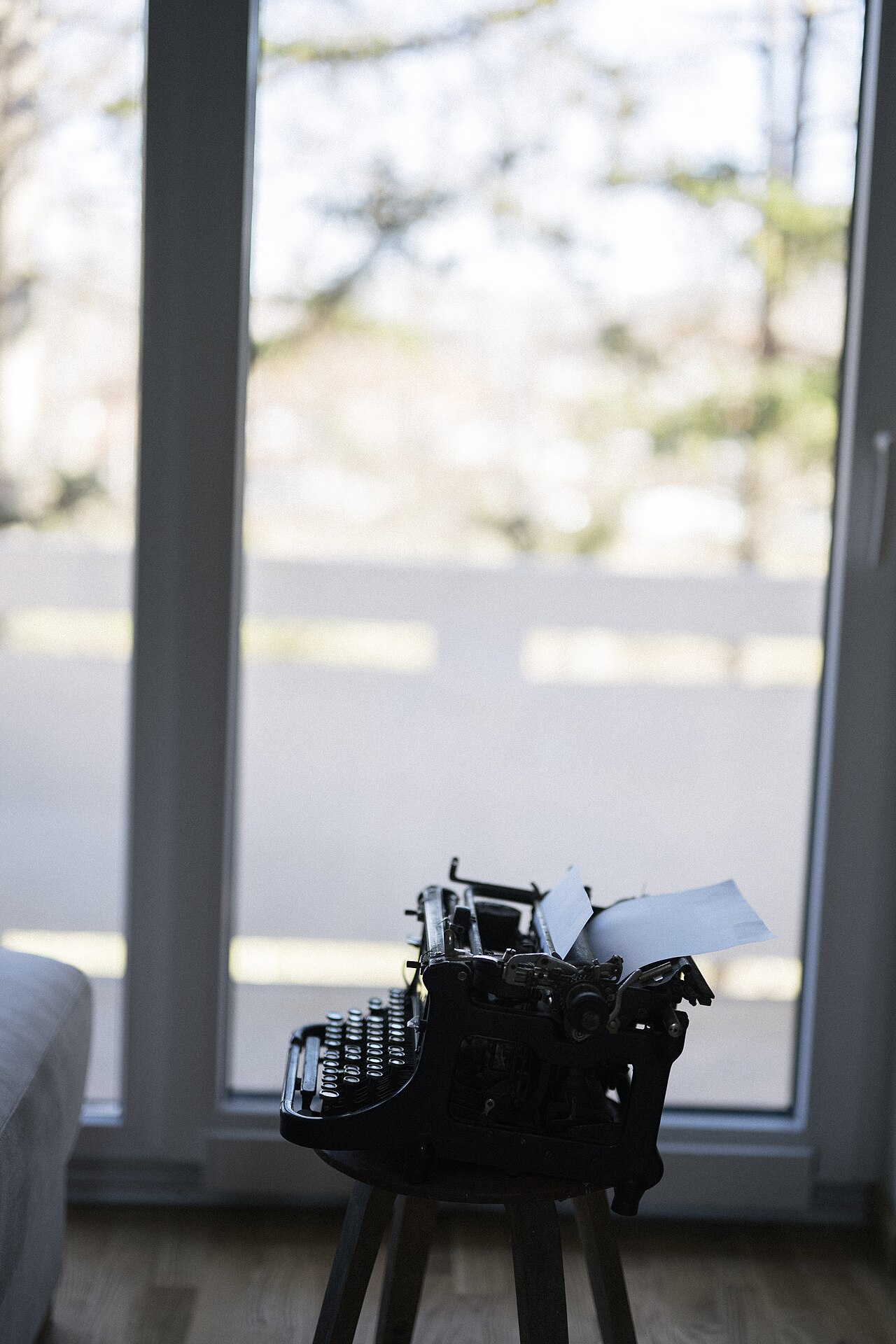
The setup that works is simple. Place the machine on a clean surface near a large window, or under a single soft light source at about forty-five degrees to the machine. Turn off the flash. Use a plain background — a white sheet or a grey card — so the machine is the only thing in the frame. Photograph in the morning or evening if using window light, when the light is soft and directional, not at midday when it is harsh.
The camera does not matter much. A modern phone camera is adequate for identification and condition. A camera with a macro lens is better for the serial number and type slug close-ups, where fine detail matters, but it is not essential. The light and the angles matter more than the equipment.
The six identification angles
Photograph every machine from the same six positions. The consistency is what makes the set useful — you can compare machines, track condition over time, and find any view a buyer or insurer might request.
- Left profile. The side with the carriage return lever, showing the carriage, the margin scale, and the platen knob.
- Right profile. The opposite side, showing the variable line spacer and any model badges.
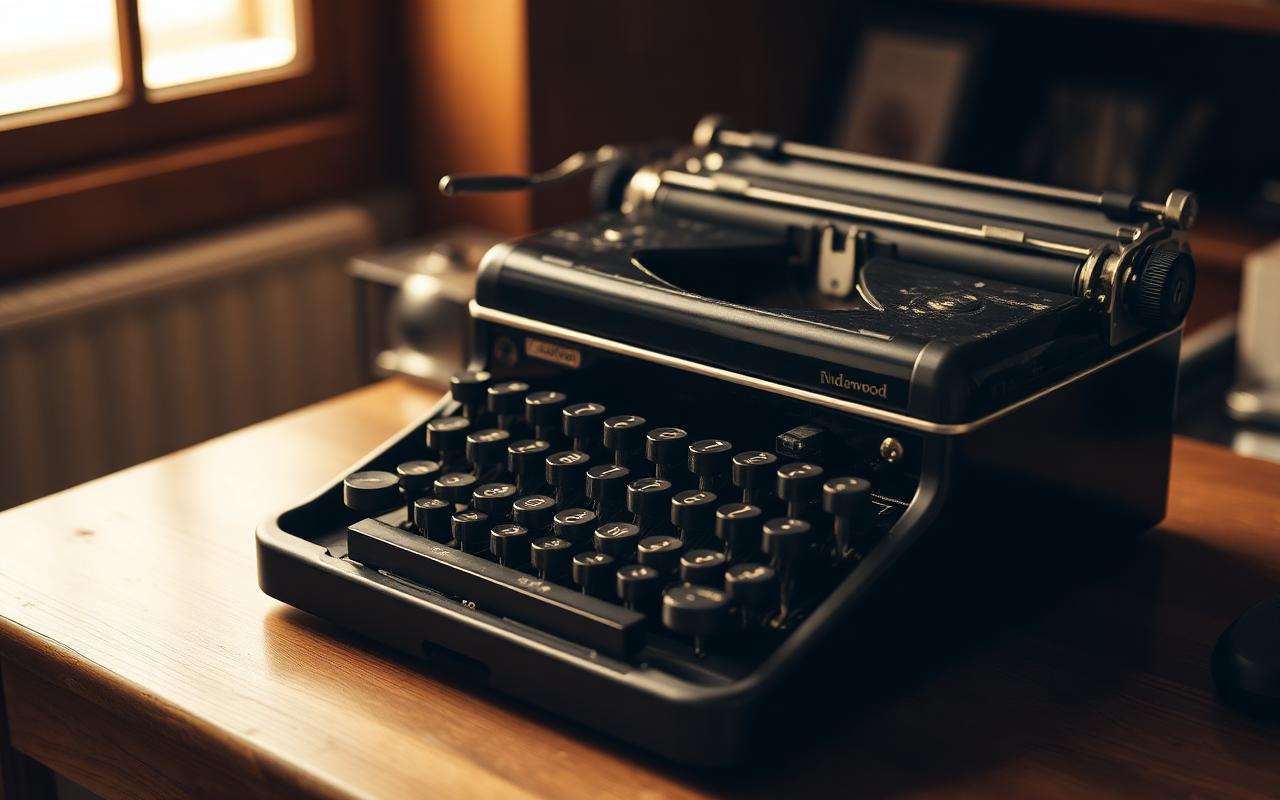
- Front. Dead-on, showing the keyboard, the ribbon spools, and the front of the frame. This is the image most listings use.
- Back. The rear of the machine, showing the segment and the typebars. Less photographed but essential for condition.
- Top. Looking down at the keyboard, showing the keytops and the ribbon cover. This is where decal condition is most visible.
- Type basket. With the ribbon removed, looking down into the type bars. This shows typebar alignment and any bent bars.
Add a close-up of the serial number location with a ruler in frame for scale. The serial number photograph is the single most important image for identification and insurance, and it is the one most often missing.
Condition and damage
After the six identification angles, photograph anything that is not perfect. A scratch, a worn decal, a chip in the paint, a cracked keytop, a dented case — each gets its own photograph, taken close enough to show the detail, with a note on location. These photographs are the condition record that prevents a future dispute about whether a mark was there when you bought the machine or happened on your watch.
Photograph the machine again after any change — a service, a repair, a move — and keep the earlier set. The sequence of condition photographs over time is the history of the machine, and it is the document that makes "I bought it in this condition" a verifiable claim rather than a memory.
The record that outlives the machine
The photographs should be stored somewhere the collection is not, for the same reason as the insurance inventory. A loss that takes the machines should not take the record of what they were. Cloud storage, an external drive kept separately, or a printed set in a binder — any of these works, as long as it is not in the same room as the collection.
Name the files consistently: serial number, model, date, angle. A folder of images named "IMG_4823.jpg" is useless in five years; a folder named "U5-1923-2024-03-left.jpg" is a searchable archive. The naming discipline takes ten extra seconds per photograph and determines whether the record is usable or merely extensive.
The photograph is the part of the collection that does not depreciate, does not break, and does not require shelf space. It is the document that makes insurance, sale, and estate handling possible, and it is the record that lets a dispersed collection be reconstructed on paper after the machines themselves have gone. The twenty minutes per machine it takes to do this well is the highest-return time in collection management, and it is the habit most worth forming before the collection is large enough that catching up is daunting.
No. A modern phone camera is adequate for identification and insurance photographs. A camera with a macro lens is better for type slug and serial number detail, but not essential.
Diffuse daylight from a large window, or a single soft light source at 45 degrees to the machine. Avoid on-camera flash, which creates hot spots on glossy paint and hides decal detail.
Six for identification (both profiles, front, back, top, type basket), plus the serial number close-up and any damage. Twelve to fifteen is a complete record; fewer than six is not enough for insurance.
This article is original writing for The Ribbon & Platen and may not be reproduced without permission. Sources consulted:
- Author's photography logs, 200 machines
- ETCA newsletter, collection documentation guidelines