Reading an Estate Sale for Typewriters Before Anyone Else Does
Estate sales still surface the best machines at the best prices, but only if you know how to read the listing before the sale opens. Here are the signals that separate a productive drive from a wasted morning.
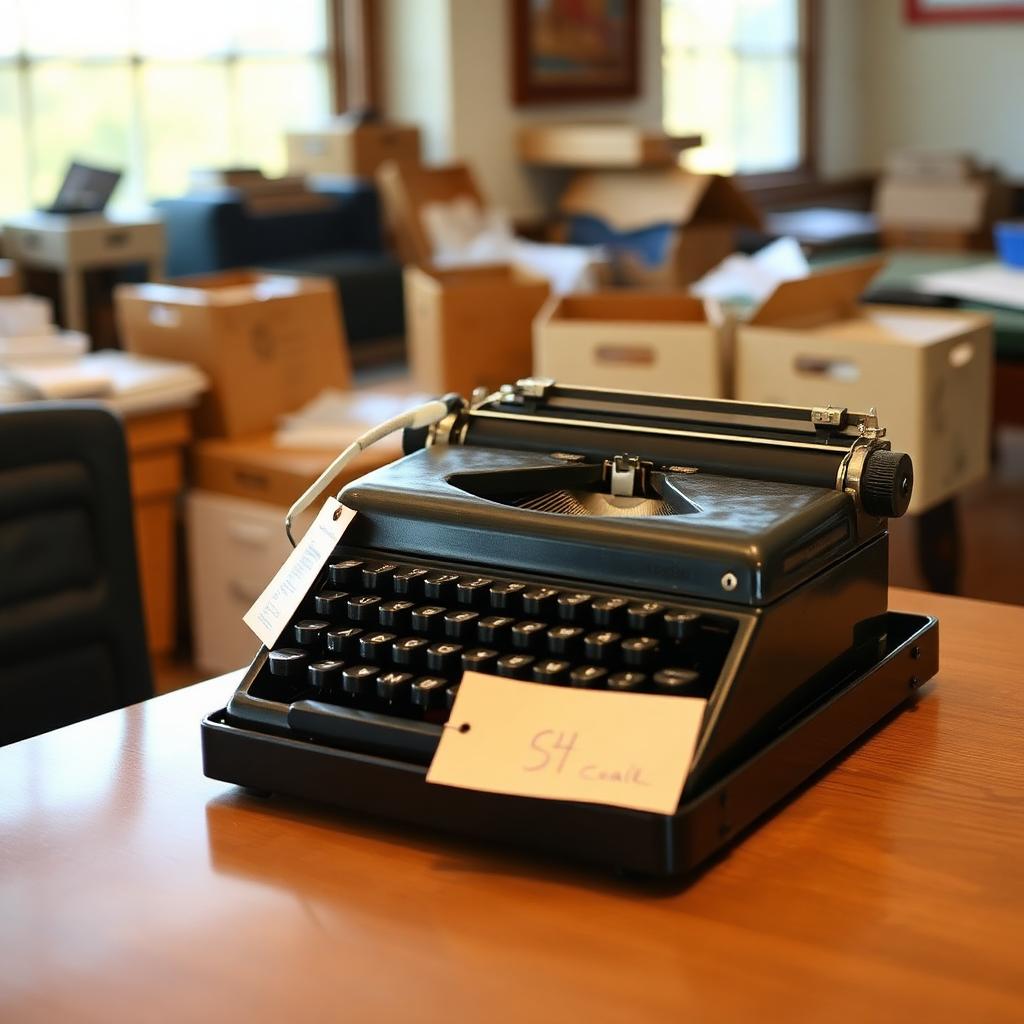
The average estate sale in a middle-sized American town runs three days, lists five hundred objects, and produces one working typewriter — sometimes two — priced by an operator who has never used the phrase "escapement" in a sentence. This is the environment in which most working collectors still do most of their sourcing, and the collectors who consistently find good machines are the collectors who have learned to read the listing before they drive to the sale.
This is a short field manual for that reading.
The listing is the sale
Estate sale companies almost always publish an online listing four to seven days before the sale opens. The listing includes photographs — usually thirty to two hundred — and a rough description of the household. A serious hunter looks at the photographs the day the listing goes live and forms a judgement before ever visiting.
Three things determine whether a listing is worth a drive.
The photograph of the machine. If there is one photograph of a typewriter, from the front, at a resolution that lets you read the model name on the ribbon cover, most of the important questions are answered. You know the brand, you can identify the model from the shape and trim, and you can usually judge cosmetic condition. A photograph from the side that shows only the paper table is nearly useless; one that shows the keyboard tells you almost nothing about mechanical condition; one from behind, showing the paper support, at least tells you the machine is intact.
The rest of the house. Look at the other photographs. A house with matched furniture, art on the walls, and a mid-century sensibility often contained a well-kept mid-century typewriter. A house with heavy accumulation, general clutter, and everything piled together often contained a typewriter that was stored in a damp basement for forty years. This is a soft signal, not a rule, but it is right more often than it is wrong.
The estate context. Older estates often include machines that were used professionally — a lawyer's Royal, an academic's Olympia, a journalist's Smith-Corona — and are likely to have been maintained. Younger downsizing estates often include machines that were inherited, unused, and stored casually. Both can produce good finds; the maintenance profile is different.
The listing price
Most estate sale companies do not price the individual items in the listing. When they do, the pricing is broadly one of three patterns.
- Uninformed low. The typewriter is listed at twenty dollars because it looks like an old typewriter. This is the pattern you are looking for. It usually means the operator does not distinguish between a beige Underwood 315 and a black glass-keyed Underwood 5 and has priced both accordingly.
- Uninformed high. The typewriter is listed at three hundred dollars because "vintage typewriters are expensive." Look at the photograph and ask whether it actually is. Often the machine is a common late model priced at ten times its market value; occasionally the operator has stumbled onto a genuinely rare piece and priced correctly.
- Informed. The pricing is roughly right. Rare on estate sale listings; when it occurs, it usually means the operator has a specialist consultant or has consulted online price guides.
Do not waste time correcting an uninformed high listing. Move on. Do not tip your hand on an uninformed low listing before you have physically inspected the machine.
The first-morning question
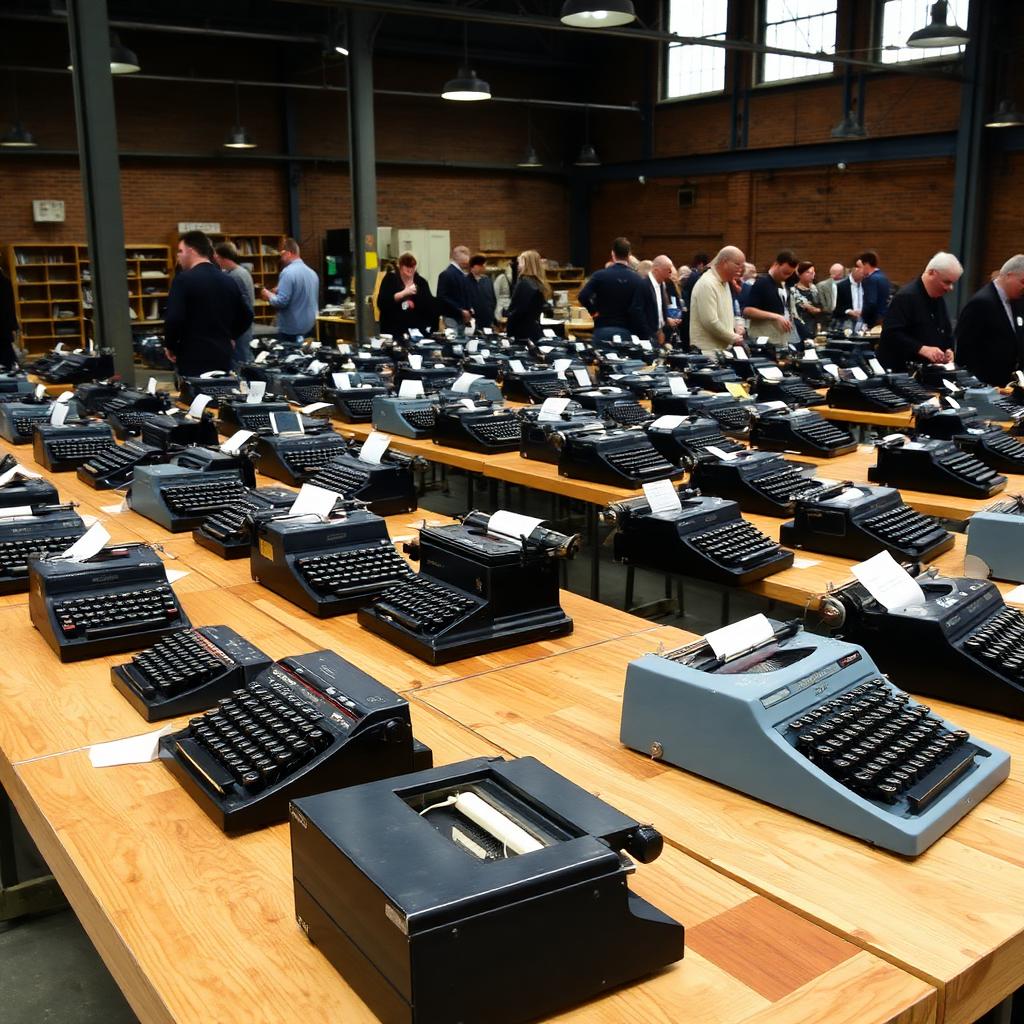
The best machines usually sell in the first two hours of the first day. If you want them, you arrive early. In busier markets — parts of the North-East US, larger German cities — there are numbered lines outside the door thirty minutes before opening.
The etiquette in a numbered line is simple. You take a number from the operator or from a small pad they leave at the door. You return before opening. You enter in numerical order. You do not skip ahead. Regulars know each other by sight and by number; a first-time visitor who behaves respectfully is welcomed. A first-time visitor who tries to cut in front of a regular is remembered permanently and unfavourably.
Once inside, walk straight to the machine. Do not browse first. If there is any competition for typewriters in your area, someone else has walked in with the same intention.
The physical inspection
Estate sale inspections are quick. You have five minutes at most before the operator or another buyer wants your attention or your space.
- Type each letter across the keyboard at moderate speed. Slow returns and sticky bars tell you the segment needs cleaning.
- Move the carriage across its full width by hand. Any resistance points at a mainspring or draw band problem.
- Roll a scrap of paper in and out. Feed problems mean platen or roller work.
- Open the ribbon cover, glance at the ribbon vibrator and the escapement, close it again. You are looking for missing parts more than diagnosing subtle problems.
- Check the case — original case adds real money.
Decide within your five minutes. If you want it, pay and take it. Estate sale operators do not hold items.
The last-day question
The other productive strategy is the last day. Most estate sales discount by fifty percent on the final afternoon, and machines that did not sell at full price often sell at half. This is the right time for machines that need work, common models where cosmetic condition matters most, and any purchase where you are not competing with other collectors.
The trade-off is clear. First day gets you the best machines. Last day gets you the best prices. Which you optimise for is a function of your collection strategy — but the collectors I know who source most steadily do both, on different weekends, without confusing the two.
First day for the best machines, last day for the best prices. Popular pieces sell in the first two hours.
One clear photograph of the machine, from the front, at high enough resolution to read the model badge, is usually enough.
A line before opening is normal. Cutting the line is not. Numbered tickets are sometimes handed out — respect the numbering.
This article is original writing for The Ribbon & Platen and may not be reproduced without permission. Sources consulted:
- EstateSales.net public listings, 2023–2026
- Author's field notes on 40 estate sales in the North-East US and Central Europe